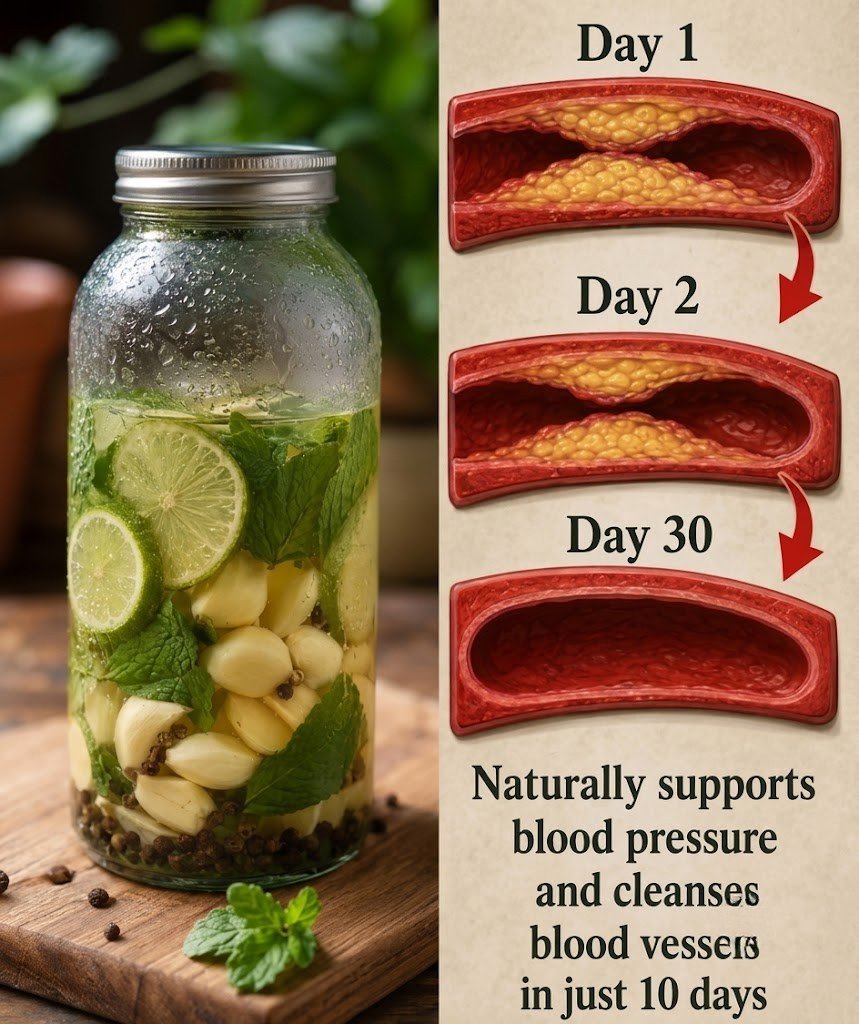
Preparation Time: 20–25 minutes
Fermentation Time: 5–10 days (depending on temperature and taste preference)
Active Work Intensity: Low to Moderate
Fermentation Activity Intensity: Moderate (daily observation required)
Yield: ~1 liter (4 cups) infusion
Difficulty Level: Easy
Ingredients
- 1 large bulb of garlic (10–12 cloves), peeled and lightly crushed
- 4–5 fresh limes (zest + juice + thin slices)
- 1 large handful of fresh mint leaves (about 20–30g)
- 1 liter filtered water (non-chlorinated preferred)
- 2 tablespoons sea salt (non-iodized)
- 1 tablespoon raw honey or jaggery (optional, for fermentation boost)
- Optional: 1 small green chili (for heat)
- Optional: ½ teaspoon black peppercorns (for depth)
Equipment
- 1 sterilized glass jar (1.5–2 liters capacity)
- Wooden spoon (or sanitized hands)
- Fine strainer
- pH-safe lid or cloth cover
- Weight (fermentation weight or small clean stone in a bag)
Preparation Method
Step 1: Preparing the Aromatics (5–10 minutes)
Start by peeling the garlic cloves. Lightly crush them using the flat side of a knife—this helps release allicin, the compound responsible for garlic’s strong antimicrobial properties and flavor depth.
Wash the mint leaves gently in cold water and pat them dry. Tear them slightly to help release essential oils during fermentation.
Wash the limes thoroughly. Slice 2–3 limes into thin rounds, zest one lime, and juice the remaining limes. Keep both juice and slices.
Step 2: Building the Fermentation Base (5 minutes)
In the sterilized glass jar, add:
- Garlic cloves
- Lime slices and zest
- Mint leaves
- Optional chili and peppercorns
Pour in the lime juice first, followed by filtered water.
Add sea salt and stir well using a wooden spoon until fully dissolved. If using honey or jaggery, mix it in at this stage.
Step 3: Submerging and Sealing (5 minutes)
Ensure all solid ingredients are fully submerged under the liquid. Use a fermentation weight if needed.
Cover the jar with a cloth secured by a rubber band or loosely place a lid on top (do not tighten fully if gas release is expected).
Fermentation Process
Days 1–2: Activation Phase
- Temperature: 22–30°C ideal
- Activity Level: High bubbling may begin within 24–48 hours
- Smell: Strong garlic-lime aroma, slightly sharp
- Observation: Stir or gently swirl once daily (if not tightly sealed)
At this stage, natural yeasts and bacteria begin consuming sugars from lime and honey, producing mild carbonation.
Days 3–5: Flavor Development Phase
- Activity Level: Moderate bubbling
- Taste Change: Sharpness softens; mint begins to infuse
- Color: Slight cloudiness increases
- Smell: Citrusy, herbal, slightly fermented tang
You may taste a small spoonful daily to track flavor development. The infusion becomes less aggressive and more balanced.
Days 6–10: Maturation Phase
- Activity Level: Low to stable fermentation
- Flavor Profile: Balanced sour, savory, and herbal
- Garlic: Milder, less pungent
- Mint: Deeply infused, cooling finish
- Lime: Rounded acidity
At this point, the infusion is ready for use.
Flavor and Sensory Intensity Scale
(1 = very mild, 10 = very strong)
- Garlic pungency: 8 → 4 (decreases over time)
- Lime acidity: 7 → 6 (softens slightly)
- Mint freshness: 3 → 7 (increases as infusion deepens)
- Fermentation tang: 2 → 8 (increases steadily)
- Overall aroma complexity: 4 → 9
This transformation is what makes the infusion unique—the sharp raw ingredients evolve into a layered, probiotic-rich liquid.
How to Use
- Add 1–2 tablespoons to salad dressings
- Mix with cold water as a refreshing digestive drink
- Use as a marinade base for chicken, fish, or tofu
- Add to soups or broths for acidic brightness
- Combine with olive oil for a fermented vinaigrette
Storage
After fermentation:
- Strain if desired or keep solids for stronger flavor
- Store in refrigerator for up to 3–4 weeks
- Fermentation slows significantly in cold storage but flavor continues to mature slightly
Always use a clean spoon to avoid contamination.
Safety Notes
- Ensure all ingredients remain submerged to avoid mold growth
- If you see fuzzy mold or smell rotten odor (not sour/fermented), discard immediately
- Slight cloudiness and bubbles are normal and expected
- Do not seal tightly during active fermentation (gas buildup risk)
Nutrition Facts (Approximate per 2 tbsp serving)
- Calories: 8–12 kcal
- Carbohydrates: 2–3 g
- Sugars: <1 g (after fermentation reduction)
- Protein: 0.2 g
- Fat: 0 g
- Fiber: trace amounts
- Sodium: 150–220 mg (depending on salt level)
- Vitamin C: moderate (from lime)
- Probiotics: present (varies based on fermentation success)