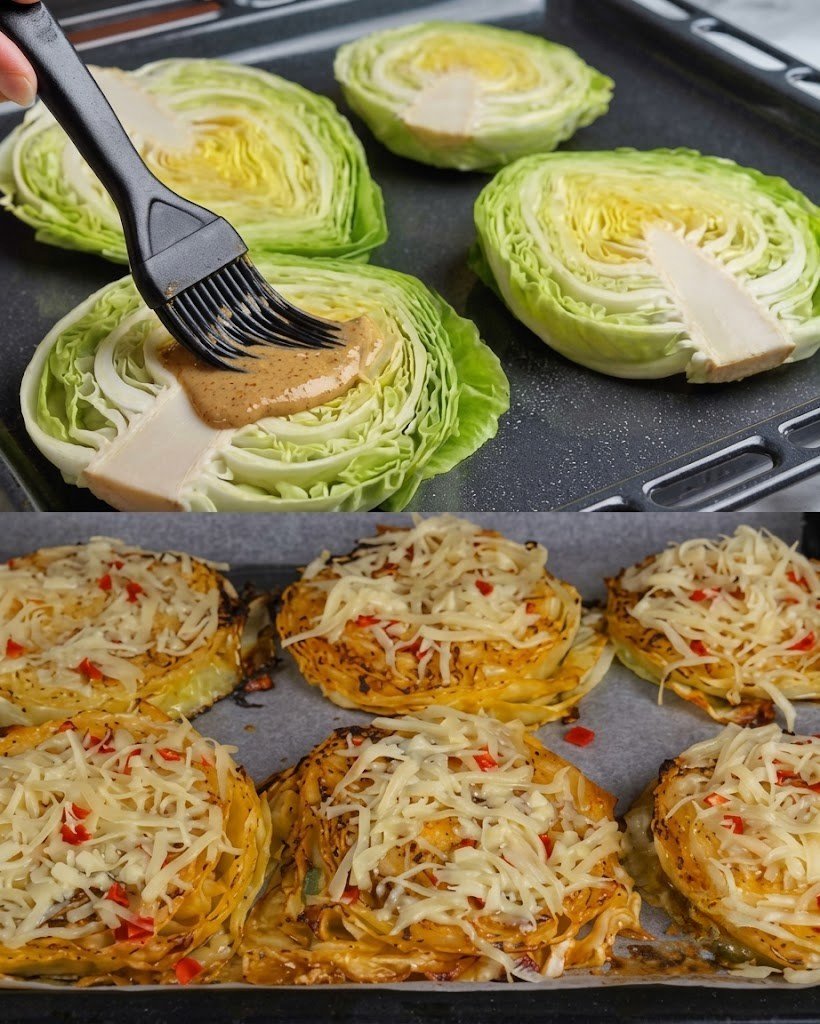
Preparation Time: 15 minutes
Cooking Time: 35–40 minutes
Total Time: 50–55 minutes
Cooking Intensity Levels
- Preparation intensity: Low (easy slicing and seasoning)
- Cooking intensity: Medium (requires oven timing and cheese broiling)
- Flavor intensity: Medium-high (savory, cheesy, roasted umami depth)
- Spice intensity: Mild (can be adjusted from none to spicy)
Ingredients
- 1 large head of cabbage (green cabbage works best)
- 3–4 tablespoons olive oil
- 1 teaspoon salt (adjust to taste)
- ½ teaspoon black pepper
- 1 teaspoon garlic powder
- 1 teaspoon onion powder
- ½ teaspoon smoked paprika (optional but recommended)
- 1 cup shredded cheddar cheese (or a mix of cheddar and mozzarella)
- 2 tablespoons grated Parmesan cheese (optional for extra crisp topping)
- Fresh parsley for garnish (optional)
Equipment Needed
- Sharp knife
- Cutting board
- Baking tray
- Parchment paper or foil
- Pastry brush or spoon (for oil)
- Oven
Step-by-Step Instructions
1. Preheat the Oven
Set your oven to 200°C (390°F). This is a medium-high roasting temperature that ensures the cabbage softens inside while developing crisp, caramelized edges on the outside.
Line a baking tray with parchment paper or lightly grease it with oil to prevent sticking.
2. Prepare the Cabbage Steaks
Remove any loose or damaged outer leaves from the cabbage. Place it upright on a cutting board and slice it into thick rounds, about 2–2.5 cm thick.
Try to keep the core intact in each slice, as this helps hold the “steak” shape together during roasting.
You should get about 4–6 full slices depending on the size of your cabbage.
3. Season the Cabbage
Lay the cabbage slices on the baking tray in a single layer.
Brush both sides lightly with olive oil. Make sure the edges are well coated, as this is what helps create crisp texture.
Sprinkle evenly with:
- Salt
- Black pepper
- Garlic powder
- Onion powder
- Smoked paprika
The seasoning intensity is flexible—add more paprika or pepper if you prefer a stronger flavor profile.
4. First Roast (Softening Phase)
Place the tray in the oven and bake for 20–25 minutes.
During this phase:
- The cabbage becomes tender
- Natural sugars begin to caramelize
- Edges start turning golden brown
At this stage, the texture intensity shifts from raw crunch to soft bite with slight firmness in the core.
5. Add Cheese Topping
Remove the tray from the oven carefully.
Sprinkle shredded cheddar cheese generously over each cabbage steak. For extra richness, add a small amount of Parmesan on top.
Make sure the cheese is evenly distributed, especially toward the center where it can melt into the cabbage layers.
6. Final Bake (Cheese Melting Phase)
Return the tray to the oven and bake for an additional 10–15 minutes.
For a stronger finish:
- Switch to broil mode for 2–3 minutes at the end (optional)
This final stage creates:
- Melted, bubbling cheese
- Golden-brown crispy edges
- Deep roasted flavor intensity
Keep an eye during broiling, as cheese can brown quickly.
7. Rest and Serve
Remove from the oven and allow the cabbage steaks to rest for 3–5 minutes.
This resting period helps the cheese set slightly while keeping a gooey texture underneath.
Garnish with freshly chopped parsley if desired and serve warm.
Flavor Profile
Cheesy Baked Cabbage Steaks deliver a layered flavor experience:
- Base flavor: Naturally sweet, roasted cabbage
- Seasoning layer: Savory garlic, onion, and smoky paprika
- Top layer: Rich, salty, melted cheese
- Texture contrast: Soft interior + crispy roasted edges + gooey topping
The intensity increases as you move from the base vegetable to the browned cheese crust.
Tips for Best Results
- Cut cabbage evenly so all steaks cook at the same rate.
- Don’t overcrowd the baking tray; airflow helps caramelization.
- For stronger flavor, add chili flakes or cayenne pepper before baking.
- If cabbage slices fall apart, secure them with toothpicks before roasting.
- Use a mix of cheeses for better melt and flavor complexity.
Variations
1. Spicy Version
Add chili flakes, cayenne pepper, or hot sauce before baking for a higher spice intensity.
2. Mediterranean Style
Top with feta cheese, oregano, and olives instead of cheddar.
3. Protein Boost
Add cooked shredded chicken or chickpeas before the cheese layer.
4. Low-Dairy Option
Replace cheese with nutritional yeast and olive oil drizzle for a dairy-free version.
Nutrition Information (Per Serving Estimate)
Values may vary depending on cheese type and portion size.
- Calories: 180–240 kcal
- Protein: 7–10 g
- Fat: 12–18 g
- Carbohydrates: 10–14 g
- Fiber: 4–6 g
- Sugar: 5–7 g
- Sodium: 300–500 mg