Prep Time: 15 minutes (plus 30 minutes to bring steak to room temperature) Cook Time: 10-15 minutes (depending on steak cut and desired doneness) Total Time: 25-30 minutes Servings: 1-2 hearty servings
Equipment:
-
Cast Iron Skillet or Heavy-Bottomed Pan: This is non-negotiable for achieving a great sear. Cast iron holds heat incredibly well.
-
Meat Thermometer (Highly Recommended): The only foolproof way to ensure your steak is cooked to your exact preference.
-
Non-Stick Skillet (for the eggs): Makes flipping and sliding the eggs a breeze.
-
Spatula (both slotted and non-slotted): For flipping the steak and carefully moving the eggs.
-
Paper Towels: To pat the steak dry.
Ingredients:
For the Steak:
-
1 (8-10 oz) Steak: We recommend a ribeye, New York strip, or sirloin, about 1-inch thick. Crucial: Ensure it has been out of the refrigerator for at least 30 minutes.
-
1 tbsp Grapeseed Oil or Another High Smoke Point Oil: This prevents the oil from burning during the initial high-heat sear.
-
1 tbsp Unsalted Butter: For a luxurious, nutty finish.
-
1 clove Garlic: Smashed, to infuse the butter.
-
1 sprig Fresh Thyme or Rosemary (optional but recommended): For added aromatics.
-
Generous pinch Coarse Sea Salt and Freshly Ground Black Pepper: Essential for seasoning.
For the Eggs:
-
2 Large Eggs: The freshest possible.
-
1 tbsp Unsalted Butter or Ghee: For a beautiful, buttery flavor.
-
Salt and Freshly Ground Black Pepper: To season.
-
Fresh Parsley (optional, for garnish): Adds a touch of freshness and color.
Step-by-Step Instructions:
Part 1: The Steak
-
Tempering the Steak: This is the secret to even cooking. Remove your steak from the refrigerator and let it sit on a plate at room temperature for at least 30 minutes. This allows the internal temperature to rise, ensuring it doesn’t hit the hot pan as a block of ice. A cold steak in a hot pan can lead to an overcooked exterior and an undercooked interior.
-
Pat it Dry: Right before you’re ready to cook, use paper towels to pat both sides of the steak completely dry. A dry surface is essential for achieving that magnificent, golden-brown sear. Any moisture will create steam, which prevents browning.
-
Season Generously: Season both sides of the steak liberally with coarse sea salt and freshly ground black pepper. Don’t be shy—this is the foundation of the steak’s flavor. The salt also helps to dry the surface further.
-
The Intense Heat: Searing the Crust: Place your cast iron skillet over High Heat. Add the grapeseed oil (or other high smoke point oil). Swirl the pan to coat the bottom evenly. You’ll know the pan is hot enough when the oil starts to shimmer and you see tiny wisps of smoke rising from the surface.
-
The Sear: Carefully lay the steak into the hot pan, dropping it away from you to avoid hot oil splashing. Do not touch it! Let it sear undisturbed for 2-3 minutes. Resist the urge to move it or check it. You want to see a deep, golden-brown color developing on the bottom.
-
The Flip: Using tongs, carefully flip the steak. You should see a beautiful, deeply caramelized crust. Add the unsalted butter, smashed garlic clove, and fresh herbs (thyme or rosemary, if using) to the pan. Turn the heat down to Medium-High.
-
Basting (Optional but Highly Recommended): This adds an incredible layer of flavor and ensures even cooking. Tilt the pan slightly and use a large spoon to baste the steak repeatedly with the flavorful, foaming butter for the remainder of the cooking time. This infuses the steak with the garlic and herb aromatics.
-
Cooking to Doneness: Continue cooking the steak, flipping it occasionally if you are not basting, until it reaches your desired level of doneness. Use your meat thermometer to check the internal temperature.
-
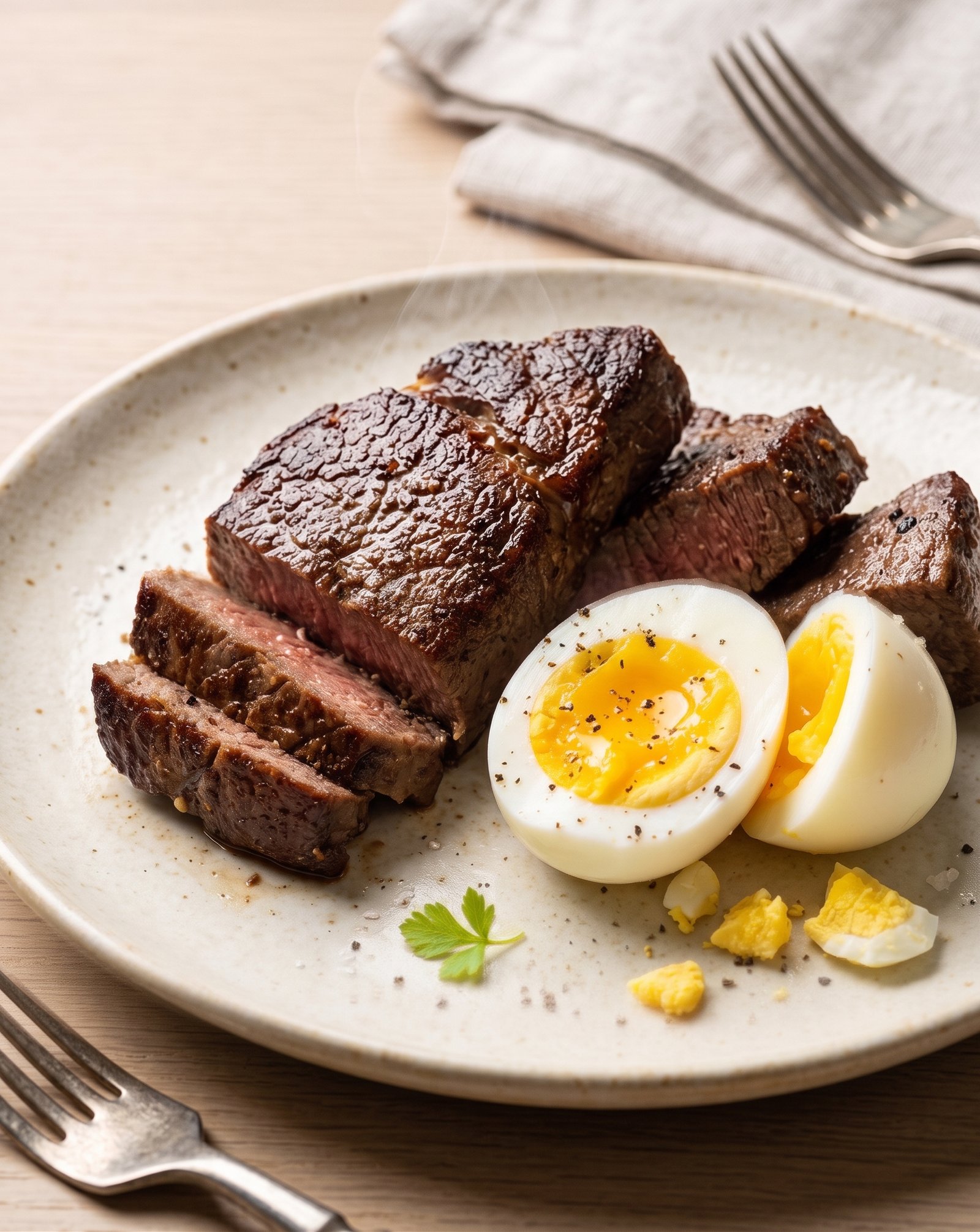
Medium-Rare: 130-135°F (54-57°C) – For the result seen in the photo, aim for around 132°F (55°C) before resting.
-
Medium: 135-145°F (57-63°C)
-
Well-Done: 150°F+ (66°C+)
-
-
The Crucial Rest: Once the steak reaches your target temperature, transfer it to a cutting board. Do not cut into it immediately! Let the steak rest for 5-10 minutes. During this time, the muscle fibers relax, and the savory juices redistribute throughout the meat, ensuring that every bite is perfectly juicy. If you cut into it immediately, all the juices will run out onto the cutting board, leaving you with a dry steak.
Part 2: The Eggs
-
The Non-Stick Advantage: While your steak is resting, get your non-stick skillet ready. Place it over Low-Medium Heat.
-
Melt the Butter: Add the unsalted butter or ghee and let it melt. The heat should be high enough to make the butter sizzle slightly, but not so high that it browns excessively.
-
Cracking the Eggs: Carefully crack your eggs into the pan. This is not the time for speed—go gently to keep the yolks intact. If a piece of shell escapes, use a half-shell to fish it out quickly.
-
Gentle Cooking: Season the eggs with a pinch of salt and fresh black pepper. For Sunnyside-Up Eggs, simply let them cook undisturbed for 3-5 minutes, or until the whites are completely set but the yolks are still runny and vibrant.
-
For Over-Easy Eggs: Once the whites are almost completely set (this usually takes about 2-3 minutes), carefully slide a flexible spatula under the egg and gently flip it. Cook for an additional 30-60 seconds, or until the white is fully cooked and the yolk is slightly warmed but still runny.
-
Serving: Once your eggs are cooked to perfection, carefully slide them onto a warm plate.
Assembling Your Masterpiece
-
Slicing the Steak: After the steak has rested for 5-10 minutes, use a sharp chef’s knife to slice it against the grain. Slicing “against the grain” (perpendicular to the direction the muscle fibers are running) cuts through the fibers, making the meat even more tender to the chew.
-
Plating: Arrange the beautifully seared, sliced steak alongside your perfectly cooked eggs on the plate.
-
Finishing Touches: If using, sprinkle with a few coarse salt flakes, a final crack of black pepper, and some fresh parsley for a burst of color and flavor. The picture shows a simple presentation with a sprinkle of pepper, allowing the main ingredients to shine.
-
Enjoy: Serve immediately and experience the ultimate breakfast—simple, powerful, and deeply satisfying.
Tips for Success:
-
Choose Fresh Eggs: Fresher eggs hold their shape better, making it easier to achieve a perfect sunnyside-up or over-easy egg.
-
Preheat Your Plates: Serving your masterpiece on a warm plate keeps everything hot and delicious until you’ve savored every bite.
-
Let It Rest! We can’t emphasize this enough. The 5-10 minute rest is the single most important step for a juicy steak. Don’t skip it.
Nutrition Information: Steak and Eggs
Please note that this is an estimation for one large serving based on: 1 large (8 oz) raw New York strip steak (lean + fat eaten), 2 large eggs, 1 tbsp butter (for cooking eggs) and 1 tbsp butter (for basting steak). Values will vary based on steak cut, size, and exact cooking method.
| Nutrient | Per Serving (Approx.) |
| Calories | 850-950 kcal |
| Protein | 65-75 g |
| Fat | 60-70 g |
| – Saturated Fat | 28-34 g |
| – Monounsaturated Fat | 20-24 g |
| – Polyunsaturated Fat | 4-6 g |
| Carbohydrates | <2 g |
| – Sugar | <1 g |
| – Fiber | 0 g |
| Cholesterol | 550-650 mg |
| Sodium | 450-550 mg (from natural and added salt) |
| Iron | 6-8 mg (Approx. 40% DV) |
| Vitamin B12 | 4-6 mcg (Approx. 200% DV) |
| Zinc | 8-10 mg (Approx. 80% DV) |
| Choline | 250-300 mg (Approx. 50% DV) |