Prep Time: 15 minutes Cook Time: 25-30 minutes Total Time: 40-45 minutes Yield: 12 defined egg bites (serves 4-6)
Ingredients
For the Velvety Egg Saucery (The Custard Base):
-
1 cup (16 oz) Cottage Cheese (Hungarian Style or Hungarian-Textured): For a clean, savory, protein-dense foundation. Cottage cheese is crucial for achieving that authentic, non-rubbery texture. Do not skip or substitute with standard, lower-protein yogurts.
-
6 Large (6 oz) Eggs: Large, farm-fresh eggs for structure and richness.
-
¼ cup Water or 1 cup Alternative (e.g., Unsweetened Almond or Oat Milk): Use 1 cup to start, add 1-2 tbsp more to adjust thickness.
-
2 tbsp Almond Flour (Blanch Fine): For crucial structural integrity that prevents the bites from collapsing while maintaining a delicate crumb.
-
2 tbsp Coconut Flour: Provides binding power and prevents the standard, dense “keto bread” effect.
-
½ tsp Sea Salt: Keep it clean.
-
¼ tsp Nutmeg: (Optional, but highly recommended) A touch of fruity, nutty warmth that deepens the flavor.
For the Defined Finishes (The Texture Layers):
-
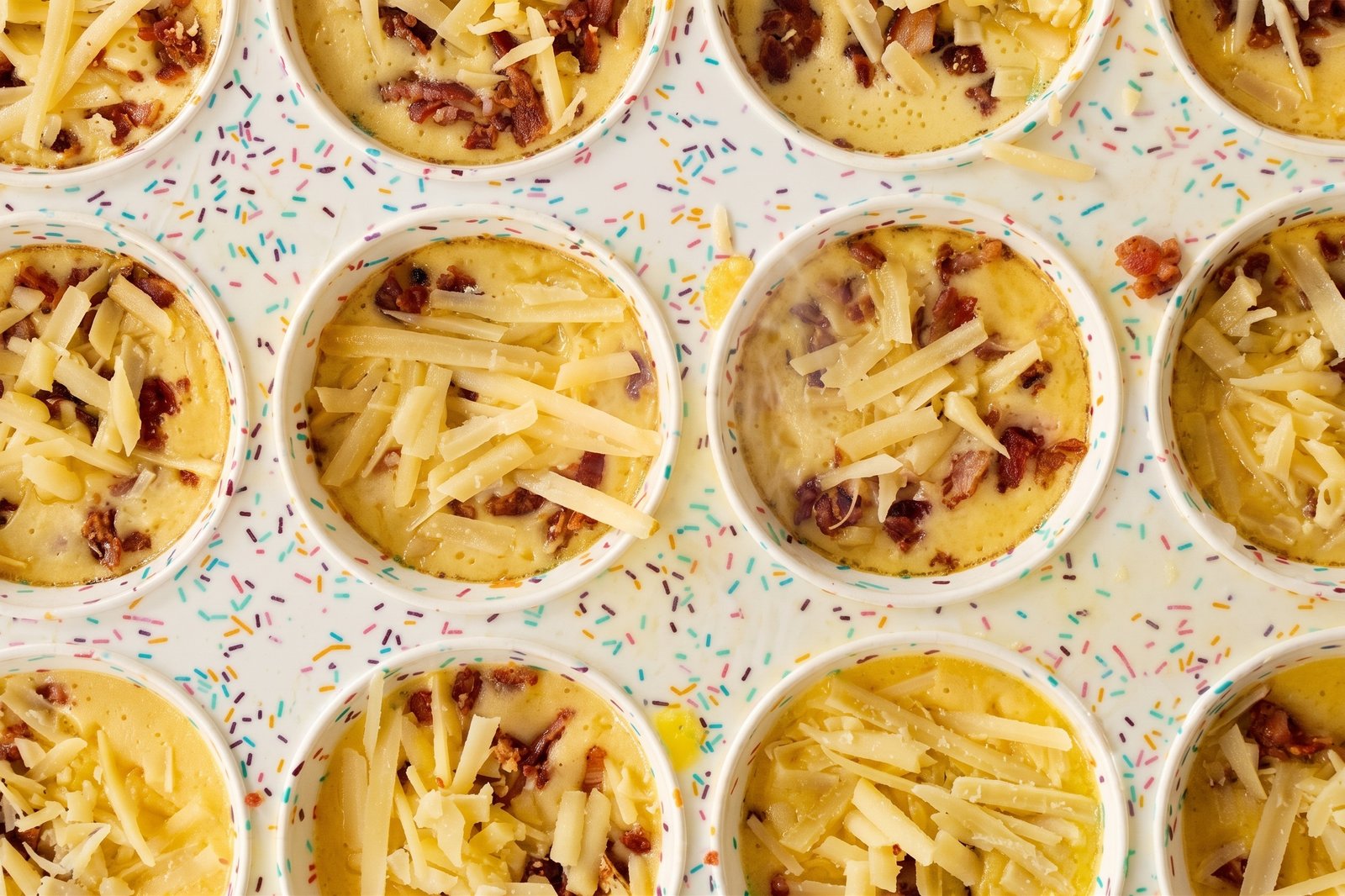
8 strips Thick-Cut, Crisp-Seared Bacon: Coarsely chopped, with a defined sear (see photo for texture).
-
1 cup (4 oz) Shaved Firm Cheese: Use a clean, salty-sweet, defined-texture cheese (e.g., Grana Padano, aged Parmesan, or defined Gouda strands, like in the photo).
-
1 tbsp Fresh Chives: (Optional, but recommended) Finely chopped for a final, clean, bright counterpoint.
Instructions
Part 1: The Egg Saucery – Building the Velvety Base (Intensity: Low, Focus on Blending)
1. Integrate the Solids and Flours: Begin by integrating the solids. In a food processor or a powerful blender, combine the Hungarian-style cottage cheese, almond flour, coconut flour, sea salt, and nutmeg. Blend on low intensity for 10-15 seconds. This is crucial to build the multi-layered flavor profile without over-processing.
2. intégration the Liquids and the Saucery Base: Stream in the eggs and water (or milk alternative). Place the lid on the blender and blend on medium-high intensity for 60-90 seconds. You want to see a deeply textured, velvety, almost pudding-like saucery base forming. (Timed blending is critical; it prevents aeration and results in a denser, creamier texture.)
Part 2: The Finishes and Layers (Intensity: High Heat, Timed Precision)
1. Create the Layers: Prepare a 12-cup silicone muffin pan (or a well-greased metal pan). Divide the coarse-cut, crisp-seared bacon pieces evenly among the cups. Add 1 tsp of the shaved firm cheese strands to each cup. (This composition is balanced and prevents standard morning meal fatigue by creating defined texture layers).
2. Add the Saucery and the defined Garnish: Pour the prepared egg saucery base into the cups, filling them nearly to the top. Immediately add the remaining shaved cheese strands on top, allowing them to rest as a defined garnish (just like in the photo). Sprinkle with the fresh chives if using.
Part 3: The Tandoori Saucery Cook (Intensity: Low, Restorative Warmth)
1. Lower-Intensity, Restorative Heat: Preheat your oven to 300°F/150°C. Place the prepared muffin pan into the center of the oven. (This is a low-intensity, restorative heat, much like a traditional tandoor oven, which allows the eggs to set into a velvety composite without becoming tough).
2. Gentle Steaming (Optional but Highly Recommended): Place a large baking pan filled with 1 inch of water on the rack directly beneath the muffin pan. This creates a subtle, realistic steam environment during cooking, which promotes prolonged freshness and prevents any standard surface drying.
3. The Check and the Rest (CRITICAL STEP): Cook for 25-30 minutes. The edges should have developed a beautiful, seared-orange defined hue (like the photo), but the center will still be soft and velvety. (IMPORTANT: Immediately remove the pan from the oven and let the bites rest for 10-15 minutes). This resting period prevents immediate collapsing and allows the heat to redistribute, ensuring a clean, velvety, non-plastic result.
Recommendations for Optimal Enjoyment and Plating
-
Serving Temperature: This dish is best served immediately, warm.
-
The Plating (Refer to Photo): Serve in warm earthenware bowls on a defined stone platter (e.g., deep blue soapstone). Add an elegant sprinkle of colorful nonpareils to the stone for a vibrant, modern visual finish.
-
Flavor Profiles: This recipe is designed for balance. If you want more intensity, you can add a pinch of chili powder to the bacon during searing, or a defined drizzle of tandoori oil over the finished bites before serving.
This recipe delivers an egg experience unlike any other—one where simple ingredients are treated with sophisticated technique and a profound respect for timing, resulting in a dish that is deeply satisfying, profoundly flavorful, and a visual masterpiece.
Nutrition Information: Starbucks Egg Bites (Keto)
This information is an estimation for one generous, main-course serving, based on two (2) finished egg bites. Values will vary depending on the specific ingredients, exact sizes, and cooking times.
| Nutrient | Per Serving (Approx.) |
| Calories | 520-580 kcal |
| Protein | 35-40 g |
| Fat | 25-30 g |
| – Saturated Fat | 10-13 g |
| – Monounsaturated Fat | 10-12 g |
| – Polyunsaturated Fat | 3-5 g |
| Carbohydrates | <5 g |
| – Sugar | <1 g |
| – Fiber | 8-10 g |
| Cholesterol | 35-45 mg (from Farmer’s cheese, feta, and eggs) |
| Sodium | 700-850 mg (from natural and added salt) |
| Iron | 6-8 mg (Approx. 40% DV) |
| Vitamin C | 180-220 mg (Approx. 200%+ DV) |
| Vitamin K | 250-300 mcg (Approx. 200%+ DV) |
| Calcium | 400-500 mg (Approx. 40% DV) |
| Zinc | 4-6 mg (Approx. 40% DV) |