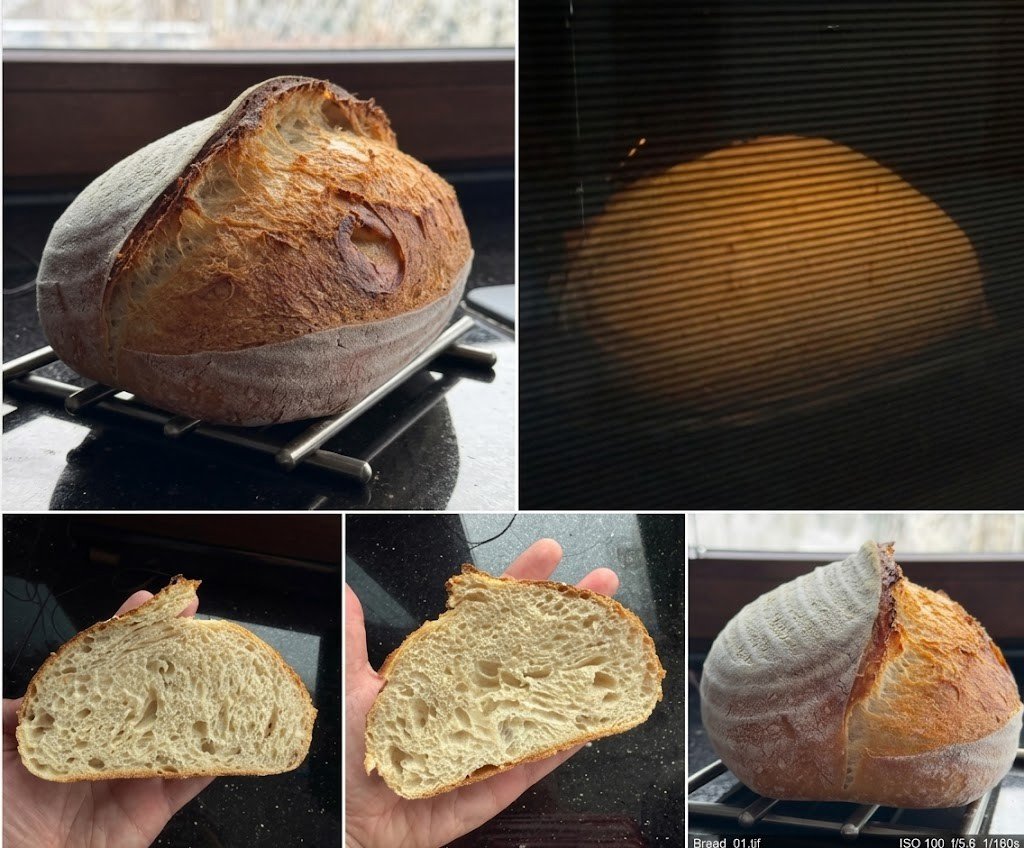
Preparation Time: 30 minutes
Bulk Fermentation Time: 4–6 hours
Cold Proof Time: 8–12 hours
Baking Time: 45 minutes
Total Time: Approximately 14–19 hours
Servings: 12 slices
Ingredients
For the Dough
- 500g bread flour
- 350g water, room temperature
- 100g active sourdough starter
- 10g fine sea salt
Optional Toppings
- Rice flour for dusting
- Sesame seeds
- Poppy seeds
Equipment Needed
- Large mixing bowl
- Dutch oven or baking stone
- Dough scraper
- Banneton basket or bowl lined with a kitchen towel
- Sharp bread lame or razor blade
- Kitchen scale
Instructions
Step 1: Mix the Dough
In a large mixing bowl, combine the water and active sourdough starter. Stir until the starter is mostly dissolved.
Add the bread flour and mix until no dry flour remains. The dough will appear shaggy and rough.
Cover the bowl and allow the dough to rest for 30 minutes. This process, known as autolyse, helps develop gluten and improves dough structure.
Step 2: Add Salt
Sprinkle the salt over the dough. Using wet hands, fold and squeeze the dough until the salt is fully incorporated.
Cover the bowl and let the dough rest for 30 minutes.
Step 3: Stretch and Fold
Perform a series of stretch-and-folds every 30 minutes for the next 2 hours.
To do this:
- Grab one side of the dough.
- Stretch it upward.
- Fold it over itself.
- Rotate the bowl and repeat four times.
After each set, cover the bowl and let the dough rest.
Step 4: Bulk Fermentation
Allow the dough to ferment at room temperature for 4–6 hours.
The dough should increase in volume by approximately 50%, appear puffy, and show small bubbles on the surface.
The exact time depends on the temperature of your kitchen. Warmer environments will ferment the dough faster.
Step 5: Shape the Dough
Lightly flour a work surface and gently turn out the dough.
Shape it into a round loaf by folding the edges toward the center and tightening the surface tension.
Allow the dough to rest for 20 minutes.
Perform a final shaping and place the dough seam-side up into a floured banneton basket.
Step 6: Cold Proof
Cover the basket and refrigerate for 8–12 hours.
This overnight proof develops deeper flavor and improves scoring results.
Step 7: Preheat the Oven
Place a Dutch oven inside the oven and preheat to:
Temperature: 250°C (482°F)
Allow at least 30–45 minutes for the Dutch oven to heat thoroughly.
Step 8: Score the Loaf
Carefully remove the dough from the refrigerator.
Turn it onto parchment paper or a floured peel.
Using a bread lame or razor blade, score the top of the loaf with one long slash about 1 cm deep.
Step 9: Bake
Transfer the dough into the preheated Dutch oven.
Cover with the lid and bake at:
250°C (482°F) for 20 minutes
Remove the lid and reduce the temperature to:
230°C (446°F)
Continue baking for an additional 20–25 minutes until the crust becomes deep golden brown.
The internal temperature should reach approximately 96°C (205°F).
Step 10: Cool
Remove the loaf from the oven and place it on a wire rack.
Allow it to cool completely for at least 1 hour before slicing.
Cutting too early may result in a gummy texture.
Expert Tips
- Use an active starter that has doubled in size before mixing.
- Weigh ingredients for consistent results.
- Avoid adding excess flour during shaping.
- Longer cold fermentation produces a more complex flavor.
- Steam during baking helps create a crisp, crackly crust.
Storage Instructions
Store the loaf at room temperature in a paper bag or bread box for up to 3 days.
For longer storage:
- Slice and freeze for up to 3 months.
- Toast frozen slices directly from the freezer.
Nutrition Information
Per Slice (Approximate)
- Calories: 145
- Carbohydrates: 29g
- Protein: 5g
- Fat: 0.6g
- Saturated Fat: 0.1g
- Fiber: 1.5g
- Sugar: 0g
- Sodium: 195mg
- Cholesterol: 0mg