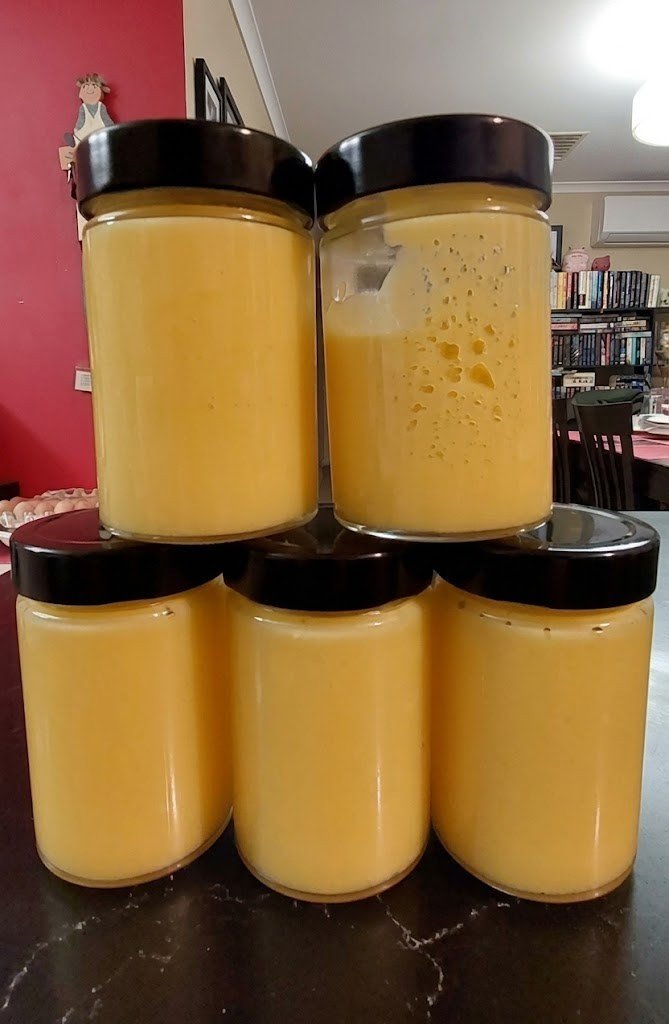
- Preparation Time: 15 minutes
- Cooking Time: 10–15 minutes
- Total Time: 25–30 minutes
- Yield: Approximately 2 cups (16 servings)
- Serving Size: 2 tablespoons
Ingredients
- 3 large lemons, zested and juiced
- 1 cup (200g) granulated sugar
- 3 large eggs
- 3 large egg yolks
- ½ cup (115g) unsalted butter, cut into cubes
- Pinch of salt
Equipment Needed
- Medium heatproof bowl
- Medium saucepan
- Whisk
- Fine-mesh strainer
- Measuring cups and spoons
- Airtight glass jar or container
Instructions
Step 1: Prepare the Lemons
Wash and dry the lemons thoroughly. Using a fine grater or microplane, zest the lemons, taking care to avoid the bitter white pith. Juice the lemons and strain out any seeds. You should have approximately ½ cup of fresh lemon juice.
Step 2: Combine the Ingredients
In a heatproof bowl, whisk together the granulated sugar, lemon zest, eggs, egg yolks, and salt until fully combined. Slowly whisk in the fresh lemon juice until the mixture becomes smooth and uniform.
Step 3: Create a Double Boiler
Fill a medium saucepan with about 2 inches of water and bring it to a gentle simmer over medium heat. Place the bowl containing the lemon mixture over the saucepan, ensuring the bottom of the bowl does not touch the water.
Step 4: Cook the Curd
Cook the mixture over medium-low heat, whisking constantly. Continue stirring for 10 to 15 minutes. The curd will gradually thicken and become smooth and glossy.
The lemon curd is ready when it coats the back of a spoon and reaches approximately 170°F (77°C). Avoid allowing the mixture to boil, as excessive heat can cause the eggs to scramble.
Step 5: Add the Butter
Remove the bowl from the heat. Add the butter cubes a few pieces at a time, whisking continuously until completely melted and incorporated. The butter adds richness and creates the signature silky texture of lemon curd.
Step 6: Strain the Mixture
For an exceptionally smooth finish, pour the curd through a fine-mesh strainer into a clean bowl. This step removes any bits of cooked egg and larger pieces of zest.
Step 7: Cool and Store
Allow the lemon curd to cool at room temperature for about 15 minutes. Transfer it to sterilized jars or airtight containers. Cover the surface with plastic wrap if desired to prevent a skin from forming.
Refrigerate until fully chilled. The curd will continue to thicken as it cools.
Tips for Perfect Lemon Curd
- Use freshly squeezed lemon juice for the brightest flavor.
- Stir constantly while cooking to prevent lumps.
- Cook over gentle heat rather than high heat.
- Straining the curd ensures a professional-quality texture.
- For extra citrus flavor, add additional lemon zest.
- Store only in clean, airtight containers to maximize freshness.
Serving Suggestions
Lemon curd is incredibly versatile and can be used in many ways:
- Spread on toast, muffins, or biscuits.
- Serve alongside scones for afternoon tea.
- Use as a filling for cakes, cupcakes, and macarons.
- Spoon into tart shells for easy lemon tarts.
- Layer into parfaits with yogurt and granola.
- Swirl into cheesecake batter before baking.
- Top pancakes, waffles, or crepes.
- Mix into whipped cream for a light dessert filling.
Storage Instructions
Refrigerator
Store lemon curd in an airtight container in the refrigerator for up to 2 weeks.
Freezer
Freeze lemon curd in freezer-safe containers for up to 3 months. Thaw overnight in the refrigerator before using.
Common Questions
Why Did My Lemon Curd Turn Lumpy?
Lumps usually occur when the eggs cook too quickly. Maintaining low heat and whisking continuously helps create a smooth consistency.
Can I Make Lemon Curd Without a Double Boiler?
Yes. You can cook it directly in a saucepan over very low heat, but constant whisking is essential to prevent curdling.
Can I Use Bottled Lemon Juice?
Fresh lemon juice is highly recommended because it provides a brighter, more natural citrus flavor.
How Do I Know When Lemon Curd Is Done?
The curd should coat the back of a spoon and leave a clear line when you run your finger through it. A temperature of 170°F (77°C) is ideal.
Nutrition Information
Per Serving (2 tablespoons)
- Calories: 95
- Total Fat: 4.5g
- Saturated Fat: 2.5g
- Cholesterol: 55mg
- Sodium: 15mg
- Total Carbohydrates: 13g
- Sugars: 12g
- Protein: 1g
- Fiber: 0g
- Vitamin C: 6mg