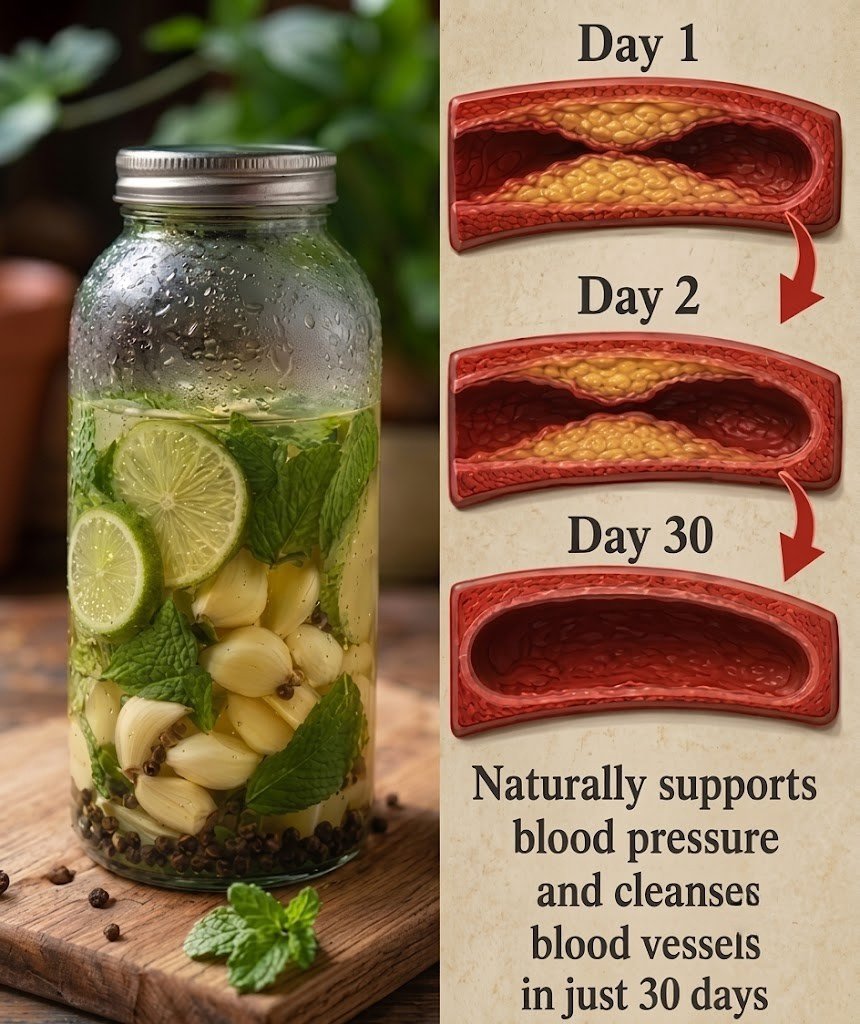
Preparation Time: 20–25 minutes
Fermentation Time: 5–10 days (recommended: 7 days)
Total Time: 5–10 days + 25 minutes
Yield: ~750 ml infusion
Difficulty Level: Medium
Fermentation Intensity: Medium-High (active fermentation expected)
Flavor Intensity: High (bold, sharp, aromatic)
Ingredients
- 1 whole bulb of garlic, peeled and lightly crushed
- 2–3 medium lime, sliced thin (with peel)
- 1 large handful fresh mint
- 1 liter filtered water (non-chlorinated preferred)
- 1.5 tablespoons sea salt (unrefined)
- 1 tablespoon raw honey (optional, helps fermentation kickstart)
- Optional: 2–3 black peppercorns or a small slice of ginger for extra complexity
Equipment Needed
- 1 clean glass jar (1–1.5 liter capacity)
- Cloth cover or fermentation lid
- Wooden spoon
- Fine strainer or cheesecloth
- Clean glass bottle for storage
Step 1: Preparation of Ingredients (Intensity: Low)
Begin by preparing your aromatics.
Peel the garlic cloves and lightly crush them using the flat side of a knife. Crushing helps release allicin, the compound responsible for garlic’s sharp aroma, which will mellow during fermentation.
Wash the lime thoroughly, especially if you are using the peel. Slice it thinly, keeping both juice and rind intact, as the oils in the peel are essential for flavor development.
Rinse the mint leaves gently and pat them dry. Tear them slightly to increase surface area and release essential oils.
At this stage, your kitchen should already smell sharp, citrusy, and herbal.
Step 2: Building the Fermentation Base (Intensity: Medium)
In your sterilized glass jar, add the crushed garlic, lime slices, and mint leaves.
Pour in the filtered water slowly to avoid bruising the herbs excessively. Add the salt and stir with a wooden spoon until fully dissolved. If using honey, mix it in at this stage to give beneficial bacteria an initial food source.
The salt concentration is important. It controls microbial activity, encouraging beneficial lactic acid bacteria while suppressing unwanted growth. This is what transforms your mixture from a simple infusion into a living fermentation.
Step 3: Initiating Fermentation (Intensity: High)
Cover the jar with a cloth or fermentation lid. Do not seal it airtight—this mixture needs to breathe.
Place it in a cool, shaded area at room temperature (ideally 20–27°C). Avoid direct sunlight.
Within 24–72 hours, you should begin to notice:
- Tiny bubbles forming
- A slight cloudiness in the liquid
- A developing sour, citrus-herbal aroma
This is the fermentation activating.
During this phase, gently stir or swirl the jar once a day using a clean spoon to redistribute microbes and prevent mold formation on floating ingredients.
Step 4: Fermentation Development (Days 3–7)
As fermentation progresses, the sharpness of garlic begins to soften. The lime peel oils integrate into the liquid, and the mint shifts from fresh-green to deep aromatic herbal tones.
You may notice:
- Increased effervescence (light fizz)
- Stronger sour aroma
- Slight color deepening (pale golden-green)
Taste testing can begin after day 5. Use a clean spoon each time. The flavor should be tangy, slightly salty, citrus-forward, and herbal with a warming garlic undertone.
If you prefer a stronger infusion, allow fermentation to continue up to 10 days. The longer it ferments, the more intense and sour it becomes.
Step 5: Straining and Bottling (Intensity: Low)
Once the desired fermentation level is reached, strain the liquid through a fine strainer or cheesecloth into a clean glass bottle.
Press gently on the solids to extract maximum liquid but avoid over-squeezing, which can introduce bitterness from lime pith.
Discard or compost the solids.
Seal the bottle tightly and store it in the refrigerator. This slows fermentation significantly while preserving flavor and probiotic content.
Flavor Profile
The final infusion delivers a layered sensory experience:
- Top notes: Bright citrus, mint freshness
- Middle notes: Herbal complexity, slight sweetness from honey
- Base notes: Deep garlic umami, mild saltiness, fermented tang
It is refreshing when diluted in cold water but can also be used as a culinary enhancer.
Serving Suggestions
- Mix 1–2 tablespoons into a glass of cold water as a probiotic tonic
- Use as a salad dressing base with olive oil
- Add to marinades for chicken or vegetables
- Stir into yogurt or raita for a tangy herbal twist
- Use as a digestive shot before meals
Storage
- Refrigerated shelf life: 2–3 weeks
- Flavor continues to develop slowly over time
- Always use clean utensils to prevent contamination
Nutrition Information (Approximate per 100 ml)
- Calories: 18–25 kcal
- Carbohydrates: 4–6 g
- Sugars: 2–3 g (natural from lime and honey)
- Fat: 0 g
- Protein: 0.3 g
- Fiber: <1 g