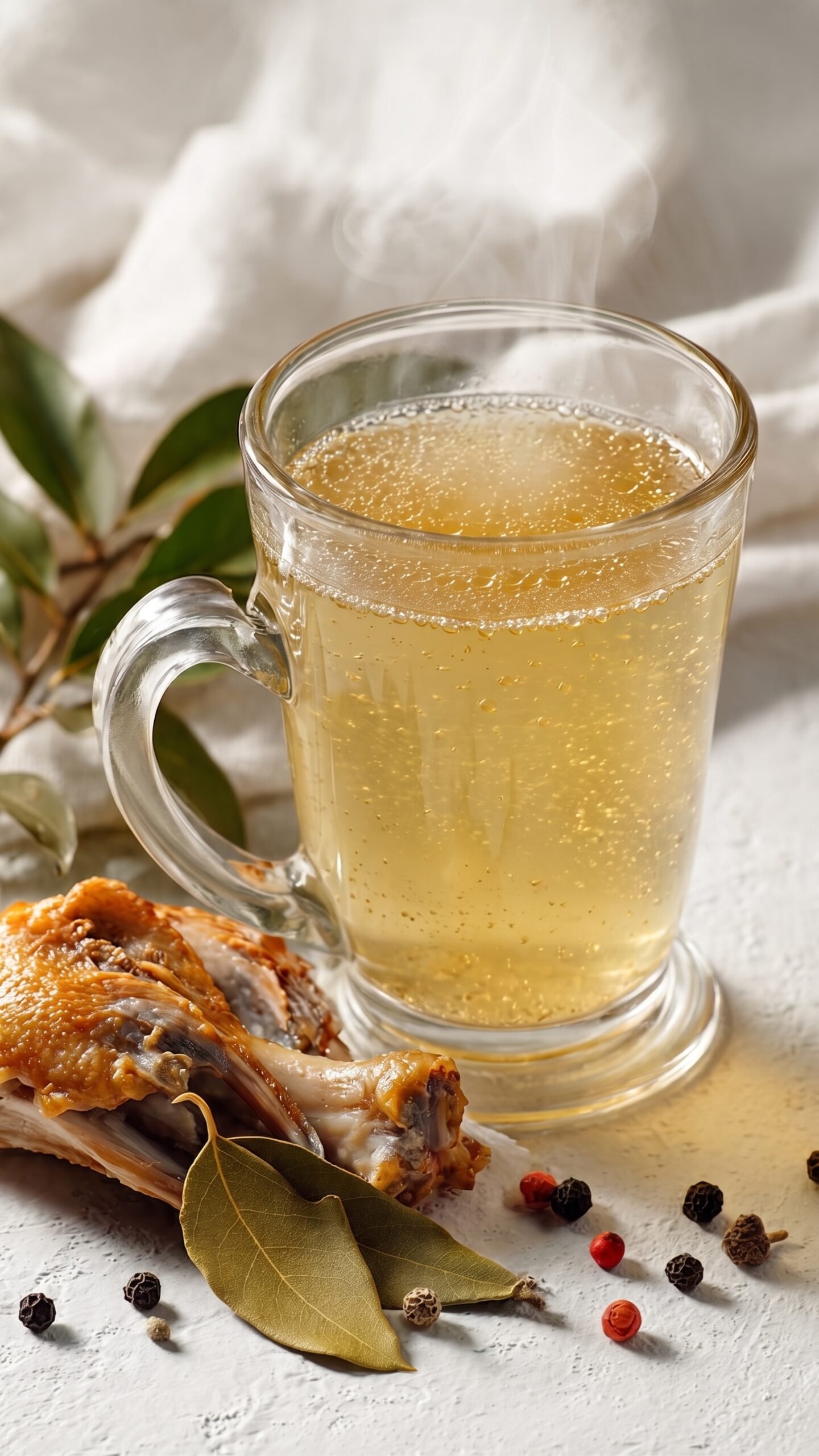
-
Prep Time: 20 minutes
-
Roast Time: 35 minutes
-
Slow Simmer Time: 12 to 24 hours
-
Total Time: Up to 25 hours
-
Yield: Approx. 12 cups (3 quarts / 12 servings)
-
Extraction Intensity: Low & Steady (Gentle Thermal Extraction)
-
Skill Level: Easy / Hands-Off
Ingredients
The Bone Base
-
4 lbs mixed chicken parts (chicken frames/carcasses, backs, wings, and chicken feet for maximum gelatin)
-
2 tbsp raw apple cider vinegar (essential to help break down collagen and draw out minerals)
Aromatics & Vegetables
-
2 medium yellow onions, unpeeled and halved
-
3 large carrots, washed and roughly chopped
-
3 stalks celery with leafy tops, roughly chopped
-
1 whole head garlic, halved crosswise
-
2 medium leeks, white and light green parts only, rinsed and chopped
Herbs & Seasoning
-
3 dried bay leaves
-
10 whole black peppercorns
-
4 whole allspice berries
-
5 fresh thyme sprigs
-
4 fresh flat-leaf parsley sprigs
-
14–16 cups cold filtered water (enough to submerge ingredients by 1–2 inches)
-
1 tsp fine sea salt (adjust to taste when using as a sipping broth)
Equipment Needed
-
Large rimmed baking sheet
-
8 to 10-quart heavy-bottomed stockpot, slow cooker, or electric pressure cooker
-
Fine-mesh sieve
-
Cheesecloth or unbleached coffee filter
-
Large stainless steel ladle
-
Glass mason jars for storage
Step-by-Step Cooking Instructions & Process Intensities
Phase 1: High-Heat Browning (Intensity: 200°C / 400°F Dry Roast)
-
Preheat Oven: Set the oven to 200°C (400°F).
-
Arrange Bones: Spread the chicken carcasses, backs, wings, and feet across a large rimmed baking sheet in a single layer. Add the halved onions and garlic head cut-side down.
-
Roast for Caramelization: Roast for 35 minutes, turning the bones halfway through, until deeply golden brown and aromatic. This caramelization builds the foundation for a rich, amber hue and deep flavor.
Phase 2: Acidic Rest & Extraction Setup (Intensity: Ambient / Cold Rest)
-
Transfer to Pot: Transfer the roasted bones, roasted garlic, and onions into an 8–10 quart stockpot or slow cooker. Deglaze the baking sheet with 1 cup of hot water, scraping up all browned fond, and pour it into the pot.
-
Add Acid: Add the raw apple cider vinegar and cover everything with cold filtered water.
-
Cold Rest: Let the mixture rest cold for 20 minutes before applying heat. The acid begins breaking down dense collagen matrices.
Phase 3: The Slow Extraction (Intensity: Gentle Micro-Simmer)
-
Bring to Gentle Boil: Set the heat to medium and bring the liquid to a bare boil. Skim off any gray surface foam or impurities that rise during the first 15–20 minutes using a wide spoon.
-
Add Vegetables & Herbs: Add the chopped carrots, celery, leeks, bay leaves, peppercorns, allspice, thyme, and parsley sprigs.
-
Reduce Heat: Drop the heat to the absolute lowest setting. Cover with a tight-fitting lid, leaving a tiny crack for steam release.
-
Simmer Duration:
-
Stovetop / Slow Cooker: Maintain a gentle, lazy micro-bubble (approx. 85°C–90°C / 185°F–195°F) for 12 to 24 hours.
-
Electric Pressure Cooker: Run on High Pressure for 120 minutes, followed by a full natural pressure release.
-
Phase 4: Straining, Cooling & Clarification (Intensity: Gentle Filtering)
-
Initial Strain: Remove large bones and vegetables with tongs. Pour the liquid through a fine-mesh sieve into a large heat-safe container.
-
Fine Clarification: Line the sieve with double-layered cheesecloth and strain a second time to remove micro-sediments for a clear, pristine broth.
-
Rapid Cool Down: Place the container in an ice bath to bring the temperature down safely before refrigerating.
-
De-Fatting: Once thoroughly chilled (4–6 hours), a solid layer of pale fat will solidify at the top. Lift and discard or reserve the rendered chicken schmaltz for cooking.
Storage & Preservation
-
Refrigeration: Store in sealed glass jars for up to 5 to 6 days.
-
Freezing: Freeze in airtight glass jars (leaving 1 inch headspace) or pour into silicone freezer trays for up to 6 months.
-
Reheating: Heat gently in a saucepan over medium-low heat until steaming. Season with sea salt, lemon juice, or fresh herbs to taste.
Nutritional Information
Values are calculated per 1 cup (240 ml) serving of strained, defatted broth: