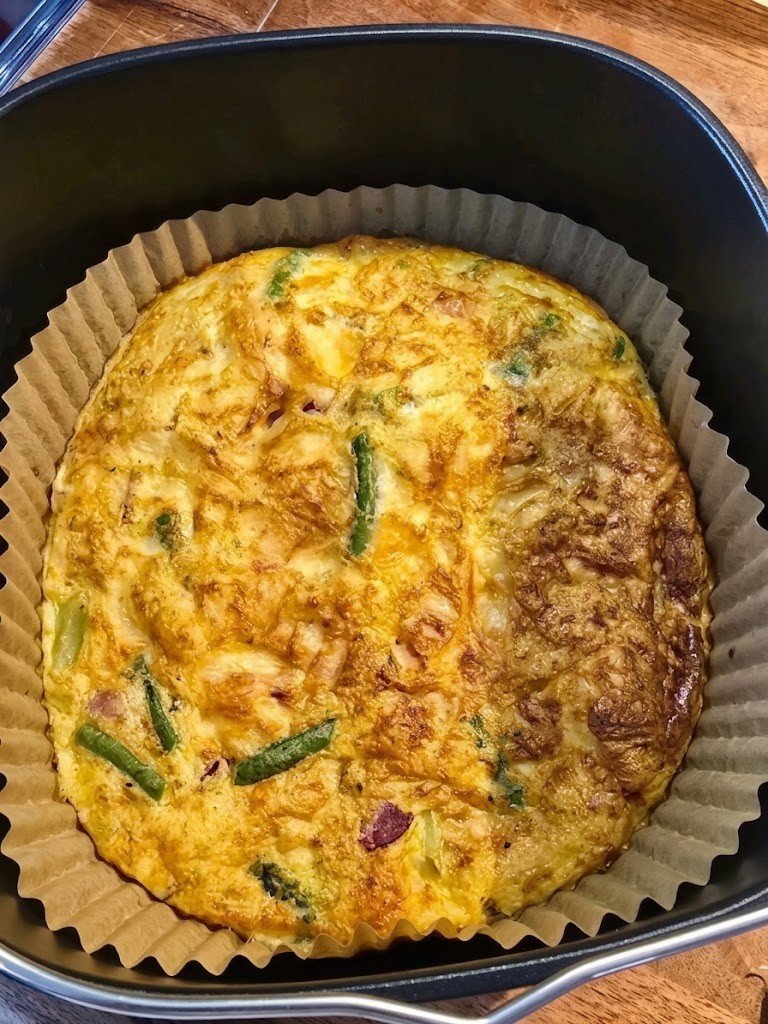
- Preparation Time: 8–10 minutes
- Cooking Time: 10–12 minutes
- Total Time: 18–22 minutes
- Skill Level (Intensity): Easy (2/10)
- Cooking Intensity Description: Low effort, low monitoring, beginner-friendly. Requires only basic whisking and chopping skills.
Ingredients (Serves 2)
- 4 large eggs
- 2 tablespoons milk (or cream for richer texture)
- ½ cup shredded cheese (cheddar, mozzarella, or your choice)
- ¼ cup chopped onions
- ¼ cup chopped bell peppers (any color)
- ¼ cup chopped tomatoes (seeded for less moisture)
- 2 tablespoons chopped spinach (optional)
- 2 tablespoons cooked chicken, ham, or sausage (optional)
- Salt to taste (about ¼ teaspoon)
- Black pepper to taste (about ¼ teaspoon)
- ½ teaspoon butter or oil (for greasing dish)
Equipment Needed
- Air fryer (basket or oven-style)
- Oven-safe dish or silicone baking pan that fits inside air fryer
- Mixing bowl
- Whisk or fork
- Knife and chopping board
Step-by-Step Instructions
Step 1: Preheat the Air Fryer
Preheat your air fryer to 160°C (320°F) for about 3–5 minutes. This ensures even cooking from the start and helps the omelette rise properly. Preheating is especially important for egg-based dishes because it stabilizes cooking time and texture.
Intensity Note: Low effort, passive waiting stage.
Step 2: Prepare the Egg Mixture
Crack the eggs into a mixing bowl. Add milk, salt, and black pepper. Whisk thoroughly for 1–2 minutes until the mixture becomes slightly frothy. This aeration helps create a fluffy texture once cooked.
Intensity Note: Light physical effort, requires attention to consistency.
Step 3: Add Fillings
Mix in chopped onions, bell peppers, tomatoes, spinach, and any optional protein such as chicken or ham. Stir gently so that the fillings are evenly distributed without breaking down the egg structure too much.
Reserve a small portion of cheese for topping if you want a melted golden layer on top.
Intensity Note: Moderate prep effort due to chopping and mixing.
Step 4: Prepare the Cooking Dish
Lightly grease an oven-safe dish or silicone pan with butter or oil. This prevents sticking and makes cleanup easier. Pour the egg mixture into the dish, ensuring it is evenly spread.
Sprinkle the remaining cheese on top for a richer finish.
Intensity Note: Low effort.
Step 5: Air Fry the Omelette
Place the dish carefully into the air fryer basket. Cook at:
- Temperature: 160°C (320°F)
- Time: 10–12 minutes
- Intensity of Heat: Medium-low air circulation
At around the 8-minute mark, check the omelette. If the center is still runny, continue cooking for another 2–4 minutes.
Avoid opening the air fryer too often, as this can reduce temperature stability and affect fluffiness.
Step 6: Check Doneness
The omelette is done when:
- The center is fully set (no liquid egg remains)
- The top is slightly golden
- The texture feels firm but springy
Insert a toothpick or knife into the center; it should come out clean.
Step 7: Rest and Serve
Remove the dish carefully using heat-resistant gloves. Let it rest for 2–3 minutes before slicing. This helps the structure stabilize and makes cutting easier.
Serve warm with toast, salad, or yogurt dip.
Texture & Flavor Profile
The air fryer creates a gentle, even heat environment, resulting in:
- A soft, cake-like egg texture
- Slight crisping on the edges
- Melted cheese pockets throughout
- Balanced savory flavor from vegetables and seasoning
Compared to stovetop omelettes, this version is less oily and more uniform in texture, making it especially appealing for those who prefer a lighter breakfast.
Variations
1. Mediterranean Style
Add olives, feta cheese, and oregano. This gives a salty, tangy profile.
2. High-Protein Omelette
Increase eggs to 5 and add extra chicken or turkey. Ideal for fitness-focused meals.
3. Vegetarian Deluxe
Use mushrooms, spinach, onions, and tomatoes with mozzarella cheese.
4. Spicy Omelette
Add chopped green chilies or chili flakes and a pinch of paprika for heat.
5. Low-Dairy Option
Skip cheese and replace milk with water or plant-based milk.
Cooking Tips
- Do not overfill the dish; eggs expand slightly during cooking.
- Avoid watery vegetables unless pre-cooked (especially tomatoes and mushrooms).
- For extra fluffiness, separate egg whites and beat them before folding back into yolks.
- Silicone molds produce softer edges, while metal pans create slightly firmer crusts.
Nutrition Information (Per Serving, Approximate)
Based on 2 servings per recipe.
- Calories: 230–280 kcal
- Protein: 18–22 g
- Fat: 16–20 g
- Carbohydrates: 4–7 g
- Fiber: 1–2 g
- Sugar: 2–3 g
- Sodium: 300–450 mg