Preparation Time: 20 minutes
Fermentation Time: 1–4 weeks
Total Time: Approximately 7–28 days
Servings: 12 servings
Ingredients
- 1 large green cabbage (approximately 2 pounds / 900 grams)
- 1 tablespoon fine sea salt or kosher salt
Optional Add-Ins
- 1 teaspoon caraway seeds
- 1 grated carrot
- 1 teaspoon juniper berries
- 1 clove garlic, minced
Equipment Needed
- Large mixing bowl
- Sharp knife or mandoline slicer
- Clean glass jar or fermentation crock
- Fermentation weight or small clean jar
- Clean kitchen towel
Instructions
Step 1: Prepare the Cabbage
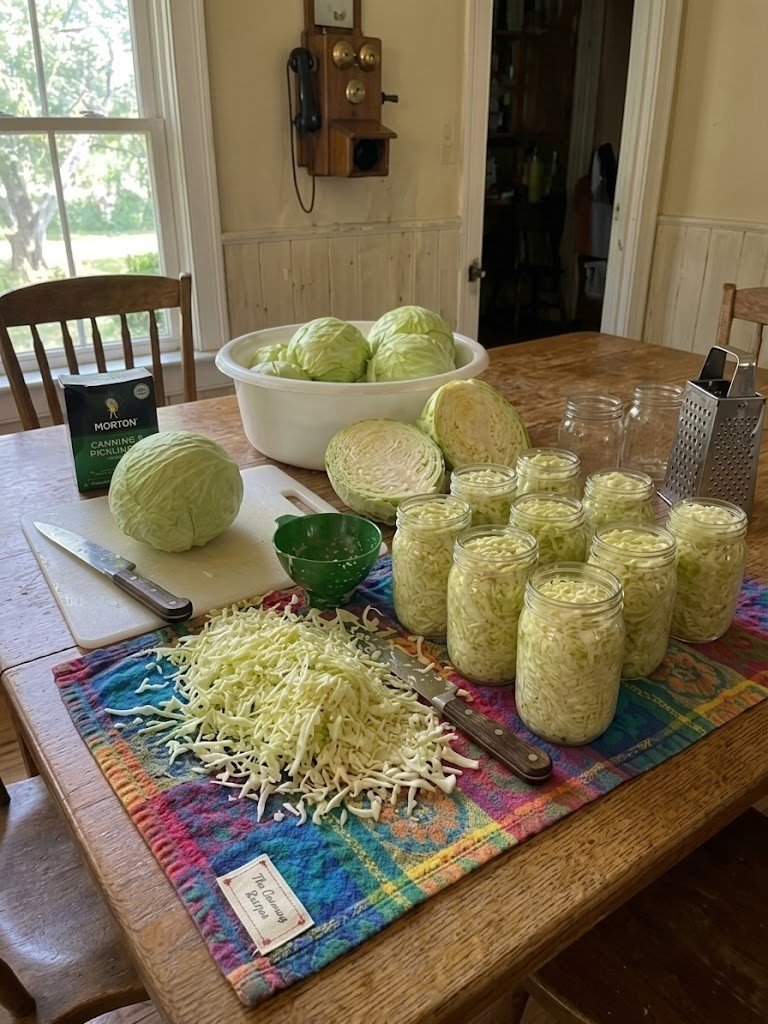
Remove any damaged outer leaves from the cabbage and set one clean leaf aside for later use. Cut the cabbage into quarters and remove the core. Thinly slice the cabbage into fine strips and place it in a large mixing bowl.
Step 2: Add Salt
Sprinkle the salt evenly over the sliced cabbage. The salt helps draw moisture from the cabbage and creates the ideal environment for beneficial bacteria to thrive during fermentation.
Step 3: Massage the Cabbage
Using clean hands, massage and squeeze the cabbage for 5–10 minutes. As you work the cabbage, it will soften and release liquid. Continue until there is enough natural brine collecting in the bowl.
Step 4: Pack into the Jar
Transfer the cabbage into a clean glass jar or fermentation crock. Press it down firmly with your fist or a wooden spoon after each addition. The goal is to eliminate air pockets and force the cabbage beneath its own liquid.
Pour any remaining liquid from the bowl into the jar.
Step 5: Weigh Down the Cabbage
Place the reserved cabbage leaf on top of the shredded cabbage. Add a fermentation weight or a small clean jar to keep everything submerged below the brine. Keeping the cabbage underwater is essential for successful fermentation.
Step 6: Ferment
Cover the jar loosely with a lid or cloth. Place it in a cool area away from direct sunlight.
Fermentation intensity develops over time:
- 3–5 days: Mild tanginess
- 1–2 weeks: Medium flavor intensity
- 3–4 weeks: Strong traditional sauerkraut flavor
Check daily during the first week. If needed, press the cabbage down to keep it submerged under the brine.
Step 7: Taste and Store
Begin tasting after one week. Once the sauerkraut reaches your preferred flavor intensity, seal the jar with a lid and transfer it to the refrigerator.
Refrigerated sauerkraut can remain fresh for several months.
Tips for Success
- Always use fresh cabbage for the best texture.
- Avoid iodized table salt, which may interfere with fermentation.
- Ensure all cabbage stays submerged beneath the brine.
- If a small amount of harmless white yeast appears on the surface, remove it promptly.
- Use clean utensils whenever handling fermented foods.
Serving Suggestions
Sauerkraut is incredibly versatile and can be served in many ways:
- As a topping for hot dogs and sausages
- Added to sandwiches and burgers
- Mixed into salads
- Served alongside roasted meats
- Added to grain bowls
- Enjoyed as a probiotic-rich side dish
Storage
Store finished sauerkraut in an airtight container in the refrigerator. Properly fermented sauerkraut can last 4–6 months when refrigerated and handled with clean utensils.
Nutrition Information
Per Serving (Approximate)
- Calories: 15
- Protein: 1 g
- Carbohydrates: 3 g
- Fiber: 2 g
- Sugars: 1 g
- Fat: 0 g
- Sodium: 180 mg
- Vitamin C: 15 mg
- Potassium: 80 mg