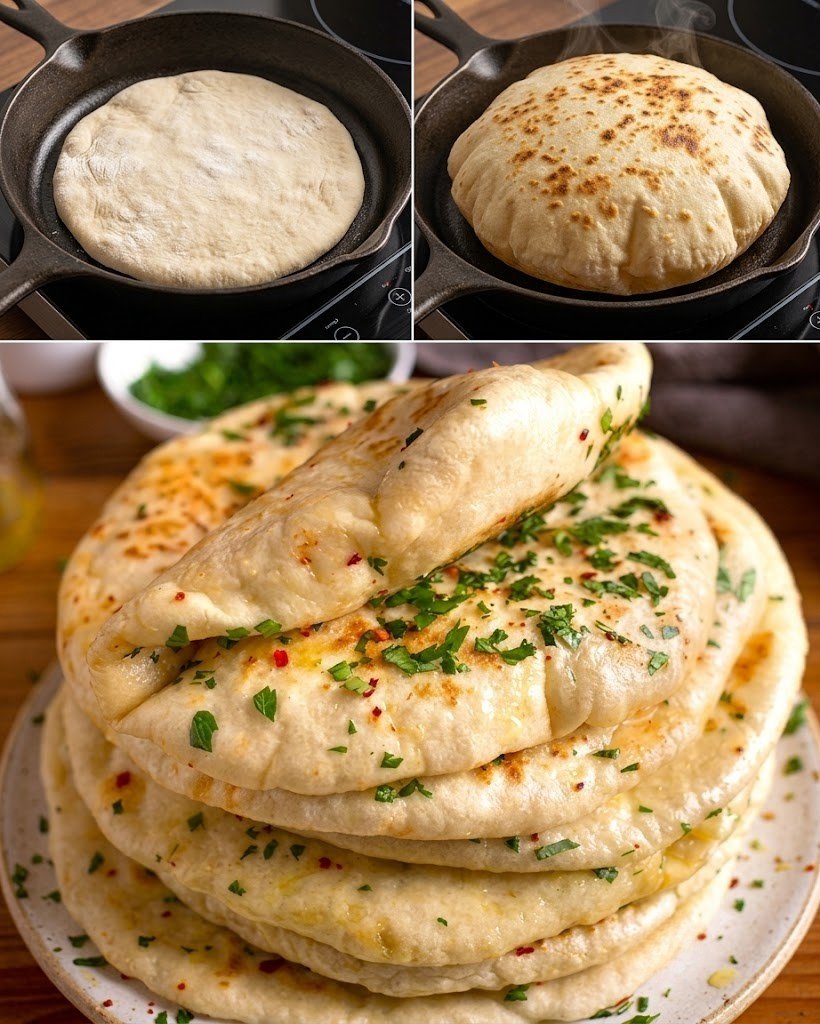
| Prep Time | 20 minutes |
| Proofing / Rest Time | 1 hour 30 minutes |
| Cook Time | 15 minutes |
| Total Time | 2 hours 5 minutes |
| Yield | 6 large flatbreads (approx. 7 inches each) |
| Heat Intensity | Medium-High Stove Top (Dry Skillet / Cast Iron) |
Why You Will Love This Recipe
-
No Oven Required: Bazlama is traditionally baked over a open wood fire on a curved metal griddle (saj), but a home cast-iron skillet or heavy skillet works fantastically well.
-
Forgiving Dough: Thanks to the yogurt, the dough is smooth, pliable, and easy to roll out without snapping back.
-
Puffs Up Effortlessly: Frequent turning in the skillet traps steam inside, causing the bread to puff up like a balloon and create a hollow pocket perfect for filling.
Ingredients Checklist
For the Yeast Dough
-
Bread Flour or All-Purpose Flour: 4 cups (500g) — Bread flour yields a slightly chewier structure, but all-purpose flour makes an ultra-tender bread.
-
Active Dry Yeast: 1 packet or 2¼ teaspoons (7g)
-
Granulated Sugar: 1 teaspoon (5g) — Feeds the yeast and enhances golden surface blistering.
-
Warm Water: 1 cup (240ml), lukewarm at roughly 105°F–110°F (40°C–43°C)
-
Plain Greek Yogurt or Whole-Milk Yogurt: ½ cup (120g), room temperature
-
Warm Milk: ½ cup (120ml), warm to the touch
-
Olive Oil: 2 tablespoons (30ml), extra virgin preferred
-
Fine Sea Salt: 1½ teaspoons (9g)
For the Finishing Brush (Optional, but Highly Recommended)
-
Melted Butter: 3 tablespoons (45g)
-
Fresh Parsley: 2 tablespoons, finely chopped
-
Flaky Sea Salt: A pinch for topping
Step-by-Step Cooking Instructions
Cooking Intensities & Thermal Management
Managing pan temperature is critical when making authentic Bazlama:
-
Warm Water/Milk Range: Keep liquids between 105°F and 110°F. Above 120°F kills the yeast cells; below 90°F delays fermentation significantly.
-
Skillet Heat (Medium-High / 375°F–400°F): You need high heat to convert moisture inside the dough into steam quickly. If your pan is too cold, the bread will dry out and turn hard without puffing. If your pan is too hot, the exterior will burn before the interior cooks through.
-
Flipping Frequency: Unlike pancakes, which you flip once, Bazlama benefits from 3 to 4 turns. Constant flipping distributes heat evenly to both sides, trapping steam in the center layer.
Expert Baker Tips for Best Results
Pro Tip: If your dough refuses to puff up in the pan, double-check two things: your pan heat (it might be too cool) or your rolling thickness. If you roll Bazlama thinner than ⅕ inch, the dough structure tears easily and cannot seal in the expanding steam.
-
Don’t Over-Flour the Work Surface: Excess dry flour burns in a hot cast-iron skillet, creating bitter smoke. Use just enough flour so the dough doesn’t stick to your rolling pin.
-
Keep Them Covered: As soon as a flatbread leaves the pan, transfer it into a basket lined with a cloth towel and fold the towel over it. Stacking them warm traps residual moisture, keeping the crust extraordinarily tender.
-
Storage & Reheating: Store leftover flatbreads in an airtight bag at room temperature for up to 3 days, or freeze for up to 3 months. Reheat in a dry hot skillet for 30 seconds on each side or pop them directly on a toaster rack.
Nutritional Information
Below is the estimated nutritional breakdown per individual flatbread (1 piece out of 6, including the garlic-herb butter finish).
Nutrition Facts
Serving Size: 1 Flatbread (~160g)
| Nutrient | Amount Per Serving | % Daily Value* |
| Calories | 385 kcal | — |
| Total Fat | 11.5 g | 15% |
| Saturated Fat | 4.8 g | 24% |
| Trans Fat | 0 g | — |
| Cholesterol | 18 mg | 6% |
| Sodium | 620 mg | 27% |
| Total Carbohydrate | 58 g | 21% |
| Dietary Fiber | 2.5 g | 9% |
| Total Sugars | 3.2 g | — |
| Protein | 11.2 g | 22% |
| Calcium | 78 mg | 6% |
| Iron | 3.4 mg | 19% |
| Potassium | 185 mg | 4% |