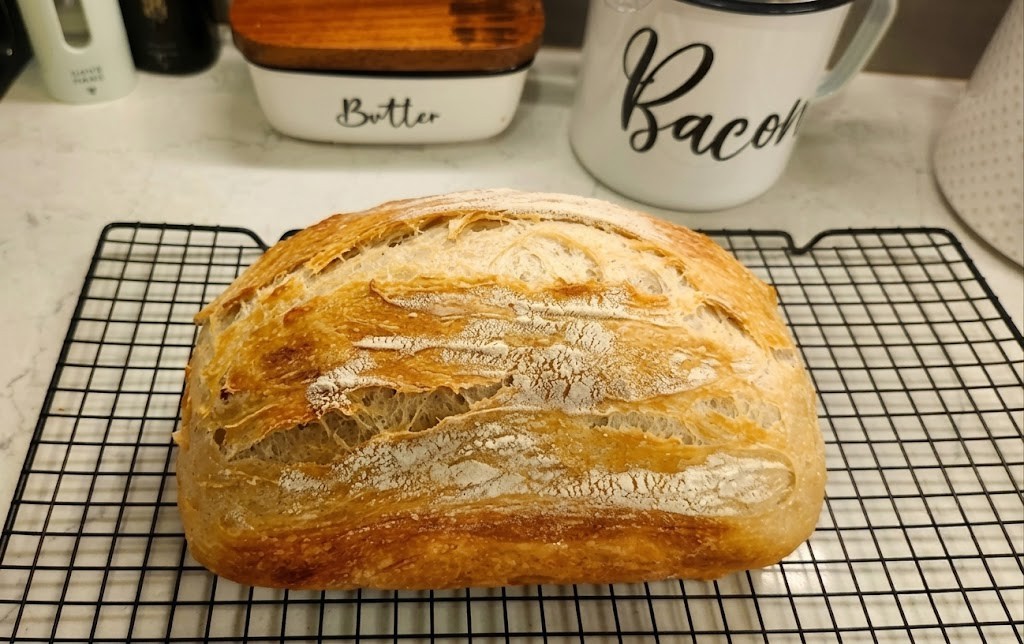
- Preparation Time: 30 minutes
- Bulk Fermentation Time: 4–6 hours
- Cold Proof Time: 8–12 hours
- Baking Time: 45 minutes
- Total Time: Approximately 14–18 hours
- Servings: 12 slices
- Yield: 1 large loaf
Ingredients
For the Dough
- 500g bread flour
- 350g water, room temperature
- 100g active sourdough starter
- 10g fine sea salt
Optional Toppings
- Rice flour for dusting
- Sesame seeds
- Poppy seeds
- Oats
Equipment Needed
- Large mixing bowl
- Dough scraper
- Kitchen scale
- Banneton basket or bowl lined with a towel
- Dutch oven or baking stone
- Sharp bread lame or knife
- Cooling rack
Instructions
Step 1: Mix the Dough
In a large bowl, combine the active sourdough starter and water. Stir until the starter is mostly dissolved.
Add the bread flour and mix until no dry flour remains. The dough will appear shaggy and rough. Cover the bowl and let it rest for 30 minutes. This resting period is known as the autolyse stage and helps improve dough structure.
Step 2: Add Salt
Sprinkle the salt evenly over the dough. Use wet hands to gently fold and squeeze the dough until the salt is fully incorporated.
Cover the bowl and allow the dough to rest for 30 minutes.
Step 3: Stretch and Fold
Perform a series of stretch-and-folds to strengthen the dough.
To do this:
- Grab one side of the dough.
- Stretch it upward gently.
- Fold it over the center.
- Rotate the bowl and repeat on all four sides.
Complete four sets of stretch-and-folds every 30 minutes over a period of two hours.
You will notice the dough becoming smoother, stronger, and easier to handle after each set.
Step 4: Bulk Fermentation
Cover the dough and leave it at room temperature for 4 to 6 hours.
The exact fermentation time depends on your kitchen temperature. The dough should increase in volume by approximately 50%, appear puffy, and show bubbles on the surface.
Avoid over-fermenting, as this can weaken the dough structure and affect the final loaf.
Step 5: Pre-Shape the Dough
Lightly flour your work surface and gently turn out the dough.
Shape it into a loose round by folding the edges toward the center. Let it rest uncovered for 20 minutes.
This bench rest allows the dough to relax before final shaping.
Step 6: Final Shaping
Using a dough scraper, shape the dough into a tight round or oval loaf.
Create surface tension by pulling the dough toward you while rotating it on the work surface.
Place the shaped dough seam-side up into a floured banneton basket.
Step 7: Cold Proof
Cover the basket and refrigerate for 8 to 12 hours.
Cold proofing develops the classic sourdough flavor and improves oven spring during baking.
For best results, proof overnight.
Step 8: Preheat the Oven
Place your Dutch oven inside the oven and preheat to 250°C (480°F) for at least 45 minutes.
A thoroughly heated Dutch oven creates steam that helps form a beautifully crisp crust.
Step 9: Score the Dough
Remove the dough from the refrigerator.
Turn it onto parchment paper and dust lightly with flour.
Using a bread lame or sharp knife, make one deep slash across the surface. This score allows the bread to expand properly while baking.
Step 10: Bake
Carefully place the dough into the hot Dutch oven.
Cover with the lid and bake for 20 minutes.
Remove the lid and continue baking for another 25 minutes until the crust becomes deep golden brown.
The internal temperature should reach approximately 96°C (205°F).
Step 11: Cool Completely
Transfer the loaf to a cooling rack.
Allow it to cool for at least one hour before slicing.
Cutting too soon can result in a gummy interior because the crumb continues to set as it cools.
Tips for Perfect Sourdough
Use an Active Starter
Your sourdough starter should be bubbly, doubled in size, and recently fed before mixing the dough.
Measure by Weight
Using a digital kitchen scale provides the most accurate results and ensures consistency.
Monitor Temperature
Warmer kitchens speed up fermentation, while cooler environments slow it down. Adjust proofing times accordingly.
Practice Patience
Sourdough baking relies on natural fermentation. Rushing the process can affect flavor and texture.
Store Properly
Store cooled bread in a paper bag or bread box for up to three days. For longer storage, freeze sliced portions in airtight bags.
Serving Suggestions
This sourdough bread loaf pairs beautifully with:
- Butter and jam
- Avocado toast
- Soups and stews
- Sandwiches
- Cheese boards
- Olive oil and balsamic vinegar
Its chewy texture and rich flavor make it suitable for both sweet and savory meals.
Why You’ll Love This Recipe
- Crispy artisan-style crust
- Soft and airy crumb
- Naturally fermented flavor
- Simple ingredients
- No commercial yeast required
- Excellent for beginners learning sourdough techniques
The combination of long fermentation and simple ingredients creates a loaf with outstanding flavor and texture that rivals professional bakery bread.
Nutrition Information
Per Slice (Based on 12 Servings)
- Calories: 145
- Carbohydrates: 29g
- Protein: 5g
- Fat: 1g
- Saturated Fat: 0.2g
- Fiber: 2g
- Sugar: 0g
- Sodium: 190mg
- Potassium: 45mg
- Calcium: 8mg
- Iron: 1.5mg