-
Prep Time: 15 minutes
-
Cook Time: 35 to 45 minutes
-
Cooling & Setting Time: 1 hour
-
Total Time: ~2 hours (including cooling)
-
Intensity / Difficulty: Easy (Beginner-friendly and straightforward)
-
Yield: Approx. 3 to 4 half-pint jars (approx. 750 ml to 1 liter total)
-
Category: Spread / Jam / Pantry Preserve / Breakfast
-
Cuisine: Traditional Home Preserving / Modern Kitchen
Ingredients List
Because rhubarb has a very high water content and a potent sour bite, this recipe uses a precise ratio of sweetener and acid balancers to achieve a thick, harmonious jam consistency without overwhelming your tastebuds.
-
Fresh Rhubarb: 1.5 kg (approx. 3.3 lbs) fresh rhubarb stalks, washed, trimmed, and diced into small 1/2-inch pieces (Note: Always discard the leaves, as they contain toxic levels of oxalic acid and must never be consumed).
-
Granulated Sugar: 700 g to 800 g (approx. 3.5 to 4 cups). (Rhubarb needs a generous amount of sugar to balance its natural acidity and act as a natural preservative).
-
Lemon Juice: 60 ml (approx. 1/4 cup) freshly squeezed lemon juice. (Lemon juice provides necessary natural pectin activation and brightens up the deep vegetable notes of the rhubarb).
-
Fresh Ginger (Optional Secret Enhancer): 1 tablespoon freshly grated ginger root. (Ginger adds a subtle, warming spice undertone that pairs exceptionally well with tart rhubarb).
-
Vanilla Bean or Vanilla Extract: 1 split vanilla bean (or 1.5 teaspoons of pure vanilla extract) to lend a warm, rounded background sweetness that softens the sharp bite of the stalks.
Step-by-Step Preparation Instructions
Step 1: Prep and Macerate the Rhubarb
-
Wash your fresh rhubarb stalks thoroughly under cold water and pat them completely dry with clean kitchen towels.
-
Trim off the tough root ends and any remaining leaf scraps, and discard them safely.
-
Chop the stalks crosswise into neat, uniform 1/2-inch dice.
-
Place the diced rhubarb into a large glass mixing bowl or directly into your heavy-bottomed preserving pot. Pour the granulated sugar and fresh lemon juice directly over the rhubarb pieces.
-
Toss everything together thoroughly. Cover the bowl with a clean kitchen towel and let it sit at room temperature for at least 1 to 2 hours (or even overnight in the refrigerator). This crucial macerating step draws out the natural juices of the rhubarb and partially dissolves the sugar, ensuring a smooth cook without scorching.
Step 2: Combine Aromatics and Transfer to Heat
-
If you are using fresh grated ginger and a vanilla bean, scrape the tiny black seeds out of the pod and add both the seeds and the empty pod (along with the ginger) into the macerated rhubarb mixture.
-
Transfer the entire pot contents—juices, sugar, and softened rhubarb chunks—to a large, heavy-bottomed saucepan or Dutch oven over medium heat.
Step 3: Simmer and Break Down
-
Bring the mixture to a gentle boil, stirring frequently with a wooden spoon or silicone spatula to ensure that any remaining sugar crystals dissolve completely into the liquid.
-
Once boiling, reduce the heat to medium-low so the liquid maintains a steady, rolling simmer.
-
Cook uncovered for 35 to 45 minutes, stirring occasionally and skimming off any pale foam that rises to the surface during the initial boiling phase.
-
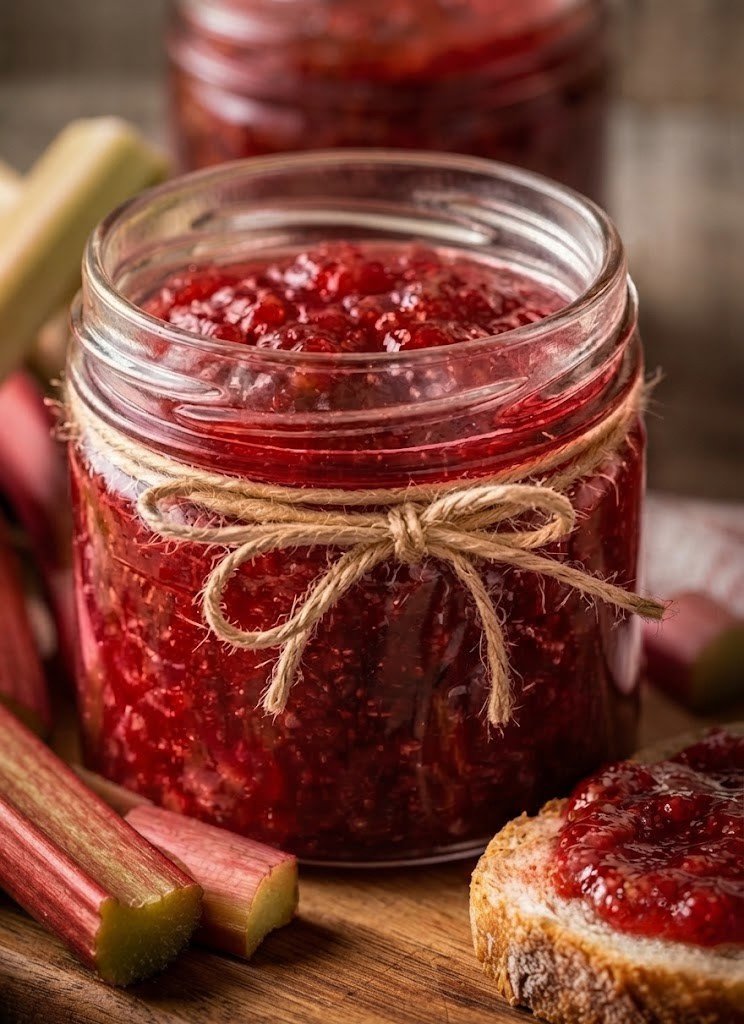
As the minutes tick by, you will notice the fibrous rhubarb chunks completely break down, melting into a thick, glossy, and deeply colored crimson sauce.
Step 4: Test for Setting Point
-
To check if your jam has reached the correct gelling consistency, place a small ceramic plate into your freezer for 5 minutes beforehand.
-
Spoon a small dollop of the hot jam onto the chilled plate and let it sit for 60 seconds. Push it gently with your fingertip. If the surface wrinkles slightly and the jam holds its shape without running like a liquid, it is fully ready. If it is still too runny, simmer for another 5 to 8 minutes and test again.
Step 5: Jarring and Cooling
-
Remove the pot from the heat source. Carefully fish out and discard the spent vanilla bean pod (if used).
-
Ladle the hot rhubarb jam carefully into clean, sterilized glass jars, leaving about 1/2-inch of headspace at the top of each jar.
-
Wipe the rims clean with a damp paper towel, screw the lids on tightly, and let the jars cool down completely to room temperature undisturbed on your counter.
Chef’s Pro-Tips & Serving Variations
-
Strawberry-Rhubarb Upgrade: If you want to lean into a classic flavor profile, replace 500 grams of the rhubarb with 500 grams of fresh sweet strawberries. The combination creates a softer, more traditional berry-forward jam!
-
Texture Control: If you prefer a completely smooth, velvety jam texture rather than a rustic, chunky spread, run the cooked warm jam through a food mill or give it a quick pulse with an immersion blender before jarring.
-
Storage Guidelines: Because this is a fresh-style refrigerator jam, store your sealed jars in the refrigerator where they will easily keep fresh, vibrant, and delicious for up to 2 to 3 months. If you wish to store them long-term at room temperature, you can process the filled jars in a boiling water bath canner for 10 minutes following standard home-canning safety guidelines.
-
Culinary Pairing Ideas: Beyond toast and scones, try pairing this tangy jam with sharp goat cheese or creamy brie on a charcuterie board—the contrast between rich cheese and tart rhubarb jam is an absolute masterpiece!
Nutritional Information
Note: Nutrition values are estimated per single tablespoon serving, based on standard ingredient calculations.
-
Calories: ~45 kcal
-
Total Carbohydrates: 11.2 g
-
Sugars: 10.8 g (Primarily from added sugar used to balance the natural tartness)
-
Dietary Fiber: 0.6 g
-
Protein: 0.1 g
-
Fat: 0.0 g
-
Sodium: ~2 mg