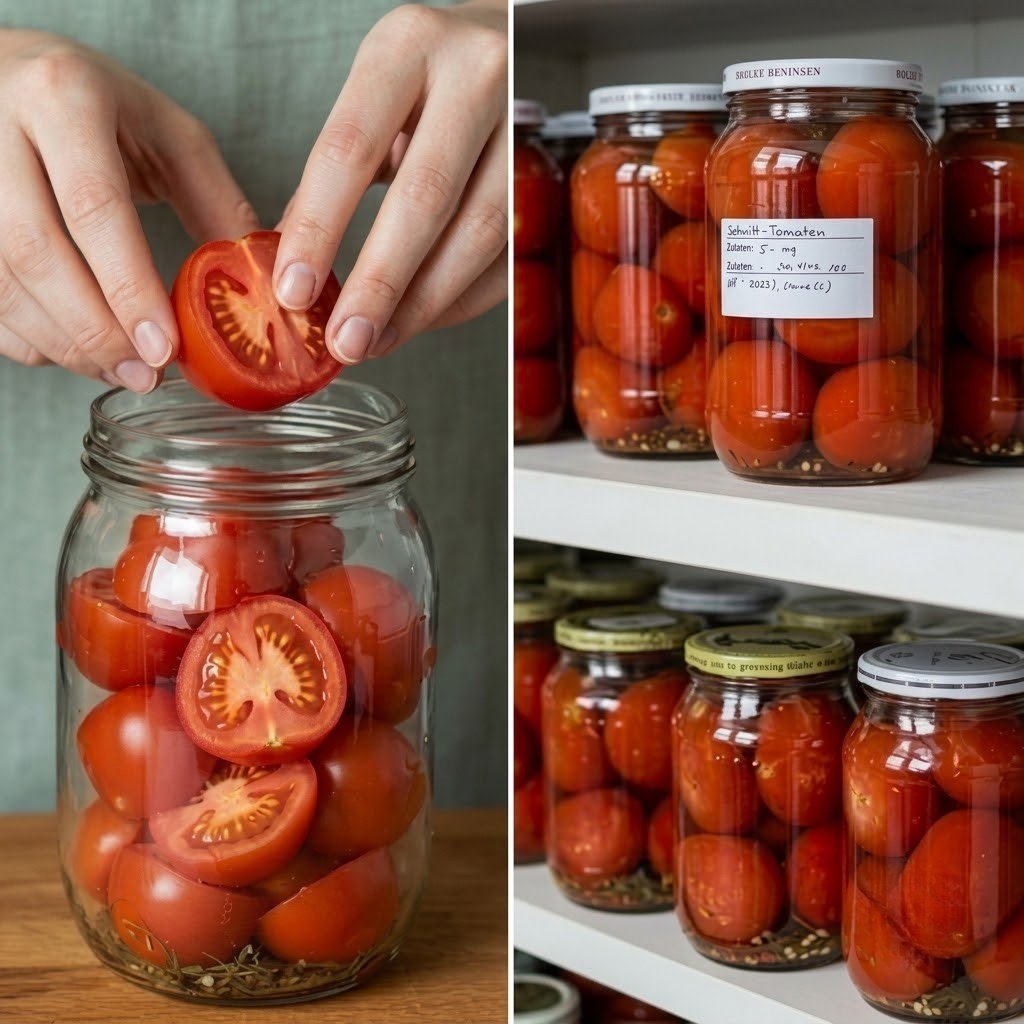
- Prep Time: 20 minutes
- Fermentation Time: 5–7 days
- Total Time: 5–7 days, 20 minutes
- Difficulty: Easy
- Recipe Yield: 2 one-quart jars
- Servings: 8
- Cuisine: Traditional Fermented Foods
Ingredients
- 2 pounds small ripe tomatoes (cherry or grape tomatoes work best)
- 4 cups filtered water
- 2 tablespoons sea salt or pickling salt
- 6 garlic cloves, peeled
- 2 teaspoons black peppercorns
- 2 teaspoons mustard seeds
- 1 teaspoon coriander seeds
- 2 bay leaves
- 4 fresh dill sprigs
- 1 teaspoon red pepper flakes (optional)
- Fresh basil leaves (optional)
Equipment
- Two sterilized one-quart glass jars
- Fermentation weights (optional)
- Clean lids
- Mixing bowl
- Measuring spoons
Instructions
Step 1: Prepare the Tomatoes
Wash the tomatoes thoroughly under cool running water. Remove any stems or damaged tomatoes. Pierce each tomato once with a clean toothpick or skewer to prevent the skins from splitting during fermentation.
Step 2: Make the Brine
In a large bowl, combine the filtered water and sea salt. Stir until the salt dissolves completely. The saltwater solution creates the ideal environment for beneficial bacteria while preventing harmful bacteria from growing.
Step 3: Fill the Jars
Place garlic cloves, dill sprigs, bay leaves, peppercorns, mustard seeds, coriander seeds, and optional red pepper flakes into the bottom of each jar.
Carefully pack the tomatoes into the jars without crushing them. Leave about 1 inch of headspace at the top.
Step 4: Add the Brine
Pour the prepared salt brine over the tomatoes until they are completely submerged. If needed, use fermentation weights to keep the tomatoes below the surface of the liquid.
Step 5: Cover the Jars
Loosely place the lids on the jars. During fermentation, gases will build up, so avoid tightening the lids completely. Alternatively, use fermentation lids designed to release pressure automatically.
Step 6: Ferment
Store the jars in a cool, dark place between 65°F and 75°F (18–24°C).
Allow the tomatoes to ferment for 5 to 7 days. Check them daily to ensure they remain submerged beneath the brine.
You may notice bubbles forming after a day or two. This is a normal sign that fermentation is working properly.
Step 7: Taste and Refrigerate
After five days, taste one tomato. If you prefer a stronger tangy flavor, continue fermenting for another 2–3 days.
Once they reach your preferred taste, tighten the lids and transfer the jars to the refrigerator. Refrigeration slows the fermentation process while preserving the flavor.
Tips for Success
- Always use fresh, firm tomatoes.
- Filtered water works best because chlorine can interfere with fermentation.
- Keep tomatoes fully submerged in the brine.
- Use clean utensils whenever removing tomatoes from the jar.
- Avoid using iodized table salt, as it may affect fermentation.
- If white surface yeast develops, skim it off promptly. Discard the batch if you notice mold with fuzzy growth or unpleasant odors.
Serving Suggestions
These fermented tomatoes pair wonderfully with:
- Fresh salads
- Sandwiches and burgers
- Cheese boards
- Grilled meats
- Roasted vegetables
- Pasta dishes
- Rice bowls
- Toast topped with cream cheese
They also make an excellent addition to homemade antipasto platters.
Storage
Store fermented tomatoes in the refrigerator after fermentation is complete.
They will remain fresh for up to 2 months when kept refrigerated and submerged in their brine.
Always use clean utensils when serving to help maintain freshness.
Recipe Variations
You can customize this recipe by adding:
- Fresh thyme
- Rosemary
- Jalapeño peppers
- Fresh oregano
- Lemon slices
- Whole cloves
- Ginger slices
Experiment with herbs and spices to create your own signature flavor.
Frequently Asked Questions
Can I use large tomatoes?
Yes, but cut them into wedges before fermenting. Smaller tomatoes generally produce the best texture.
Why are bubbles forming?
Bubbles are a natural sign that beneficial bacteria are actively fermenting the tomatoes.
Can I use vinegar?
This recipe uses natural fermentation rather than vinegar pickling. Vinegar creates a different flavor and does not provide probiotic benefits.
How do I know when they’re ready?
The tomatoes should taste pleasantly sour with a crisp, juicy texture and have a clean fermented aroma.
Nutrition Information
Per Serving (Approximate):
- Calories: 35
- Protein: 1 g
- Carbohydrates: 7 g
- Fiber: 2 g
- Sugar: 4 g
- Fat: 0 g
- Saturated Fat: 0 g
- Sodium: 480 mg
- Potassium: 260 mg
- Vitamin C: 20% Daily Value
- Vitamin A: 12% Daily Value
- Calcium: 2% Daily Value
- Iron: 3% Daily Value