-
Prep Time: 15 minutes
-
Cook Time: 10 minutes (for sweating/softening) or variable (depending on your main dish)
-
Total Time: 25 minutes
-
Yields: Approximately 4 cups of chopped aromatic vegetables
-
Course: Culinary Base / Fundamental Technique
-
Cuisine: Classical French
-
Dietary Info: Vegetarian, Vegan, Gluten-Free, Dairy-Free, Whole30, Paleo
The Golden Ratio: Understanding Mirepoix
Before diving into the kitchen, it is essential to understand the mathematical rule that governs a traditional mirepoix. The entire system relies on weight rather than volume to ensure a balanced release of sweetness, earthy depth, and savory aromatics.
-
50% Yellow Onions: The sweet and savory backbone.
-
25% Carrots: Adds natural sweetness and a subtle vibrant color.
-
25% Celery: Provides an earthy, herbaceous, and aromatic balance.
Pro Tip: While volume measurements (such as cups) are convenient for home cooks, weighing your vegetables on a kitchen scale using the 2:1:1 ratio by weight yields the most consistent flavor profile every single time.
Ingredients
To create a classic, versatile French mirepoix, you will need just a few wholesome, fresh ingredients:
-
2 large Yellow Onions (approx. 1 pound / 450g), peeled and diced
-
3 medium Carrots (approx. 1/2 pound / 225g), peeled and diced
-
4 stalks Celery (approx. 1/2 pound / 225g), washed, trimmed, and diced
-
2 tablespoons Unsalted Butter (or extra virgin olive oil for a vegan alternative)
-
Optional Aromatics: 1 bay leaf, 1 sprig of fresh thyme, or a crushed clove of garlic (often added to transition the mirepoix into a Sofrito or Potherb variation).
Step-by-Step Instructions
Step 1: Wash and Prepare Your Produce
Start by thoroughly washing your carrots and celery under cold running water. Pat them dry with a clean kitchen towel. Peel the outer papery layers of the yellow onions and trim off the root and stem ends.
Step 2: Master the Uniform Dice (The Cut)
The most important rule of cutting a mirepoix is uniformity. Because these vegetables will cook down together to release their flavors into a liquid or sauce, pieces cut to the exact same size will cook evenly.
-
The Standard Dice (Medium Dice): Aim for roughly 1/2-inch cubes for general soups, stews, and stocks.
-
The Fine Dice (Brunoise): If you are incorporating the mirepoix directly into a fine sauce or a quick-cooking pan gravy where the vegetables will remain visible, cut them down to a delicate 1/8-inch or 1/4-inch dice.
Step 3: Heat the Fat
Place a heavy-bottomed Dutch oven, soup pot, or skillet over medium heat. Add the unsalted butter and allow it to melt completely. If you prefer a lighter, dairy-free, or plant-based option, substitute the butter with an equivalent amount of good-quality extra virgin olive oil or neutral avocado oil.
Step 4: Add the Vegetables (Sweating vs. Browning)
Add your freshly diced onions, carrots, and celery all at once into the warm pot. Toss them gently to coat them in the melted butter or oil.
-
Reduce the heat slightly to medium-low.
-
The Goal: You want to sweat the vegetables, not brown them. Sweating draws out their natural moisture and sugars without creating caramelization (unless your specific recipe calls for a deep, browned flavor profile like a French onion or heavy meat stew).
Step 5: Cook and Stir
Stir the mixture frequently with a wooden spoon. Allow the vegetables to cook gently for about 8 to 10 minutes. You will know they are ready when:
-
The onions become translucent and tender.
-
The kitchen is filled with a rich, sweet, and savory aroma.
-
The carrots and celery soften slightly while retaining a vibrant hue.
Step 6: Deploy in Your Recipe
At this stage, your classic mirepoix is fully prepared and ready to act as the foundation for your favorite stocks, soups, risottos, braises, or sauces. Pour in your broths, add your proteins, or layer in your grains and let the culinary magic happen!
Variations Around the World
While the French mirepoix is world-famous, culinary traditions across the globe have developed their own unique variations of the aromatic vegetable base:
-
The Italian Sofrito: Typically uses a 2:1:1 ratio of onions, carrots, and celery, but almost always relies on extra virgin olive oil as the cooking fat and frequently incorporates finely chopped garlic and fresh flat-leaf parsley.
-
The Spanish Sofrito: Features onions, garlic, and ripe tomatoes cooked down slowly in olive oil, sometimes incorporating bell peppers.
-
The Cajun and Creole “Holy Trinity”: Replaces the carrots of a French mirepoix with green bell peppers, paired in equal parts with yellow onions and celery (1:1:1 ratio). This forms the savory base of gumbos, jambalayas, and étouffées.
-
The German Suppengrün: A traditional bundle of leeks, carrots, and celeriac (celery root), often tied together with parsley to flavor broths and soups.
Chef’s Tips for Success
-
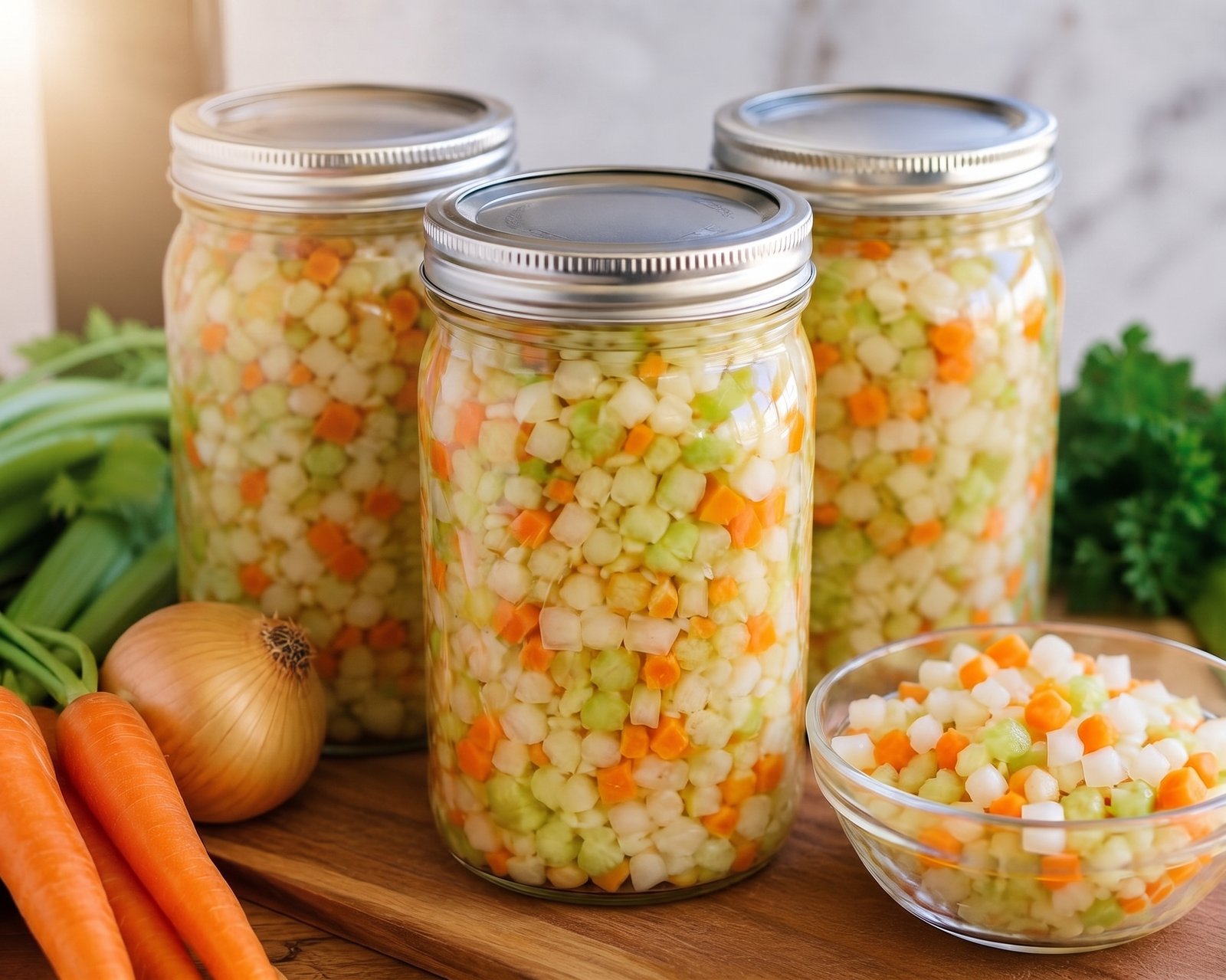
Batch Prepping: You can chop large quantities of mirepoix in advance and store them in an airtight container in the refrigerator for up to 3 days.
-
Freezing Mirepoix: Raw mirepoix freezes exceptionally well. Chop your vegetables, mix them together in the proper ratio, portion them into freezer-safe bags, and freeze for up to 3 months. Note: Frozen mirepoix will lose its structural crunch, so use it exclusively for cooked soups, stews, and stocks rather than raw applications.
-
Utilize Scrap Bags: Never throw away your onion skins, carrot peels, and celery ends! Keep a dedicated bag in your freezer to collect these scraps, and when it is full, simmer them with water, peppercorns, and herbs to create a rich, zero-waste vegetable stock.
Nutritional Information
Note: The nutritional profile below calculates the base mirepoix cooked in 2 tablespoons of unsalted butter. Values are approximate and can vary based on the exact size and weight of the fresh produce used.
-
Serving Size: Approximately 1/2 cup (cooked)
-
Servings: 8
-
Calories: 65 kcal
-
Total Fat: 3.5 g
-
Saturated Fat: 2.0 g
-
-
Cholesterol: 10 mg
-
Sodium: 45 mg
-
Total Carbohydrates: 8 g
-
Dietary Fiber: 2 g
-
Sugars: 4 g (Naturally occurring)
-
-
Protein: 1 g