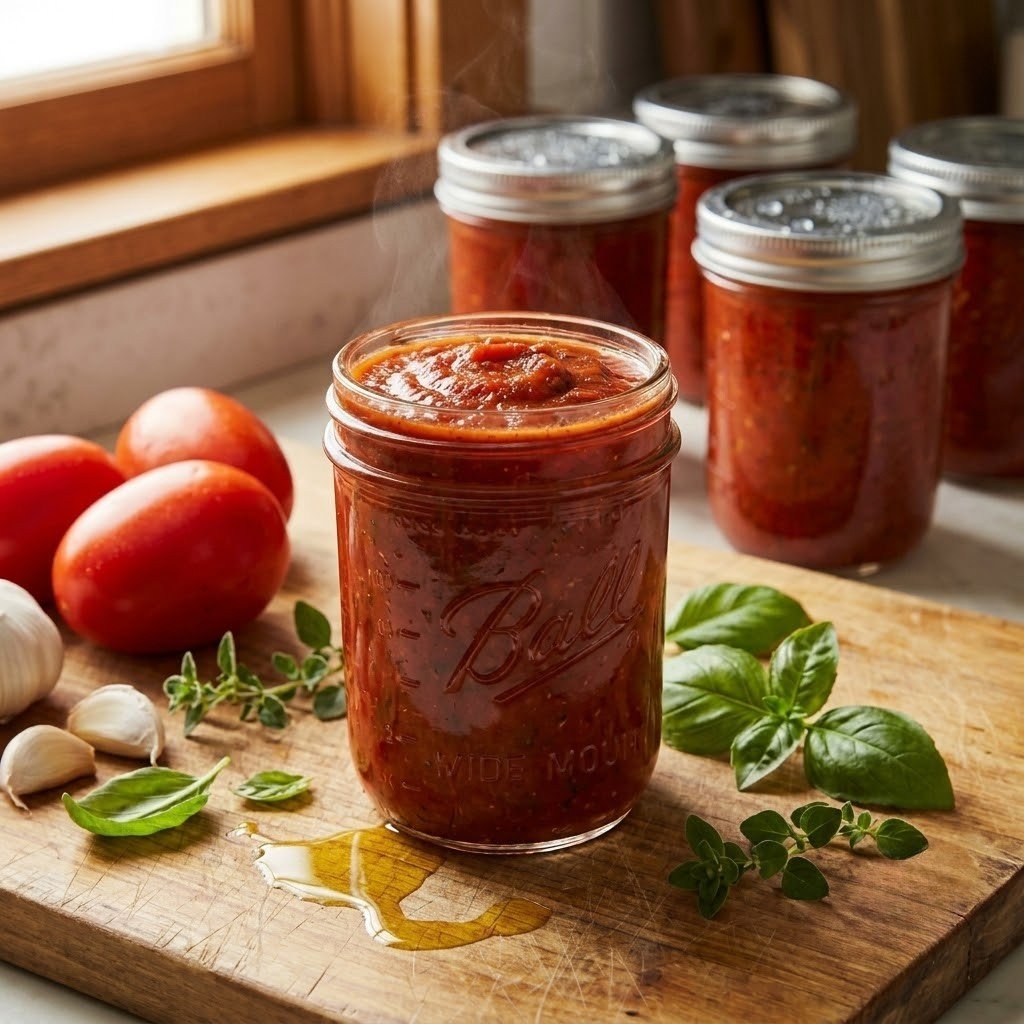
-
Prep Time: 10 minutes
-
Cook Time: 25 minutes
-
Total Time: 35 minutes
-
Yield: Approx. 3 cups (Enough for 4–6 12-inch pizzas)
-
Difficulty Intensity: Easy / Beginner-Friendly
-
Flavor Profile: Savory, rich tomato depth, garlic-infused, balanced acidity with subtle herbal warmth.
Equipment Needed
-
Medium Heavy-Bottomed Saucepan or Dutch Oven: Ensures even heat distribution and prevents scorching.
-
Immersion Blender (or standard blender): For adjusting texture to your preferred smoothness.
-
Wooden Spoon or Heat-Resistant Spatula: For stirring and scraping the bottom of the pan.
-
Measuring Spoons and Cups: For precise flavor balancing.
Key Ingredients & Substitutions
To achieve true restaurant-quality pizza sauce, ingredient quality matters:
-
Whole Peeled San Marzano Tomatoes (28 oz / 800g can): San Marzano tomatoes are naturally sweeter and less acidic than regular canned tomatoes, creating a rich sauce base without needing excessive added sugar.
-
Extra Virgin Olive Oil (2 tbsp / 30ml): Adds richness, enhances flavor extraction from garlic and spices, and gives the sauce a glossy finish.
-
Fresh Garlic (4 cloves, finely minced): Sautéed lightly to infuse the oil with warm savory notes.
-
Tomato Paste (2 tbsp / 30g): Concentrates tomato depth and naturally thickens the sauce so it coats the dough evenly.
-
Dried Oregano (1 tsp): A staple herb in authentic Italian-style pizza sauce.
-
Dried Basil (1 tsp) or Fresh Basil (4–5 whole leaves): Adds sweet herbal undertones.
-
Onion Powder (½ tsp): Provides subtle background sweetness without adding bulk.
-
Red Pepper Flakes (¼ tsp, optional): Adds a mild heat kick.
-
Fine Sea Salt (1 tsp): Enhances natural tomato richness.
-
Black Pepper (½ tsp, freshly cracked): Adds mild pungency.
-
Granulated Sugar or Honey (½ tsp – 1 tsp, optional): Adjusts acidity if needed depending on your tomatoes.
Step-by-Step Instructions
Step 1: Infuse the Aromatics
Place a medium heavy-bottomed saucepan over medium-low heat (Intensity: Level 3 out of 10). Add 2 tablespoons of extra virgin olive oil. Once warmed, add the minced garlic and red pepper flakes. Cook for 1 to 2 minutes, stirring constantly until fragrant and pale golden. Do not let the garlic brown, as burnt garlic turns bitter.
Step 2: Build the Flavor Base
Stir in 2 tablespoons of tomato paste. Sauté the paste with the garlic oil over medium-low heat for 2 minutes. This step caramelizes the natural sugars in the tomato paste, deepening the overall flavor.
Step 3: Crush and Add Tomatoes
Add the canned whole peeled tomatoes along with their juices into the pan. Use a wooden spoon or potato masher to break down the tomatoes directly in the pot into smaller pieces.
Step 4: Season and Blend Herbs
Add the dried oregano, dried basil, onion powder, sea salt, black pepper, and optional sugar/honey. Stir thoroughly to combine all ingredients evenly.
Step 5: Simmer and Concentrate (The Reduction)
Bring the mixture to a gentle boil over medium heat (Intensity: Level 5 out of 10). Once bubbling, reduce the heat to low (Intensity: Level 2 out of 10) so the sauce maintains a very gentle, steady simmer. Cover partially with a lid to allow steam to escape while preventing splatters.
Simmer for 20 to 25 minutes, stirring occasionally, until the sauce reduces, thickens, and deepens in color.
Step 6: Texture Adjustment & Final Polish
Remove the saucepan from the heat.
-
For a Rustic, Textured Sauce: Leave as is, or mash slightly more with a potato masher.
-
For a Smooth, Commercial-Style Sauce: Use an immersion blender directly in the pot to blend until silky smooth. Alternatively, transfer carefully to a countertop blender and pulse to desired consistency.
Taste the sauce and adjust salt, pepper, or sugar according to personal preference. If using fresh basil leaves, stir them in now while the sauce is hot.
Chef’s Tips for Success
-
Avoid Over-Blending: If using a high-powered blender, blend on low speed in short pulses. Over-whipping can incorporate too much air, turning the sauce a pale orange color instead of deep red.
-
Cool Before Spreading: Never spread hot sauce onto raw pizza dough! Warm or hot sauce heats up the fat in the dough, causing the crust to become soggy during baking. Always allow the sauce to cool to room temperature first.
-
Storage & Freezing:
-
Refrigeration: Store in an airtight glass jar in the fridge for up to 7 days.
-
Freezing: Allow to cool completely, then ladle into freezer-safe jars or zip-top bags (leaving space for expansion). Freeze for up to 3 months. Thaw overnight in the refrigerator before using.
-
Nutritional Information
The following nutrition facts are calculated per serving (approx. ¼ cup / 60g of sauce).
| Nutrient | Amount Per Serving | % Daily Value* |
| Calories | 45 kcal | — |
| Total Fat | 2.5 g | 3% |
| Saturated Fat | 0.4 g | 2% |
| Trans Fat | 0 g | — |
| Cholesterol | 0 mg | 0% |
| Sodium | 240 mg | 10% |
| Total Carbohydrate | 5 g | 2% |
| Dietary Fiber | 1.2 g | 4% |
| Total Sugars | 3 g | — |
| Includes Added Sugars | 0.2 g | 0% |
| Protein | 1 g | 2% |
| Vitamin D | 0 mcg | 0% |
| Calcium | 22 mg | 2% |
| Iron | 0.8 mg | 4% |
| Potassium | 210 mg | 4% |