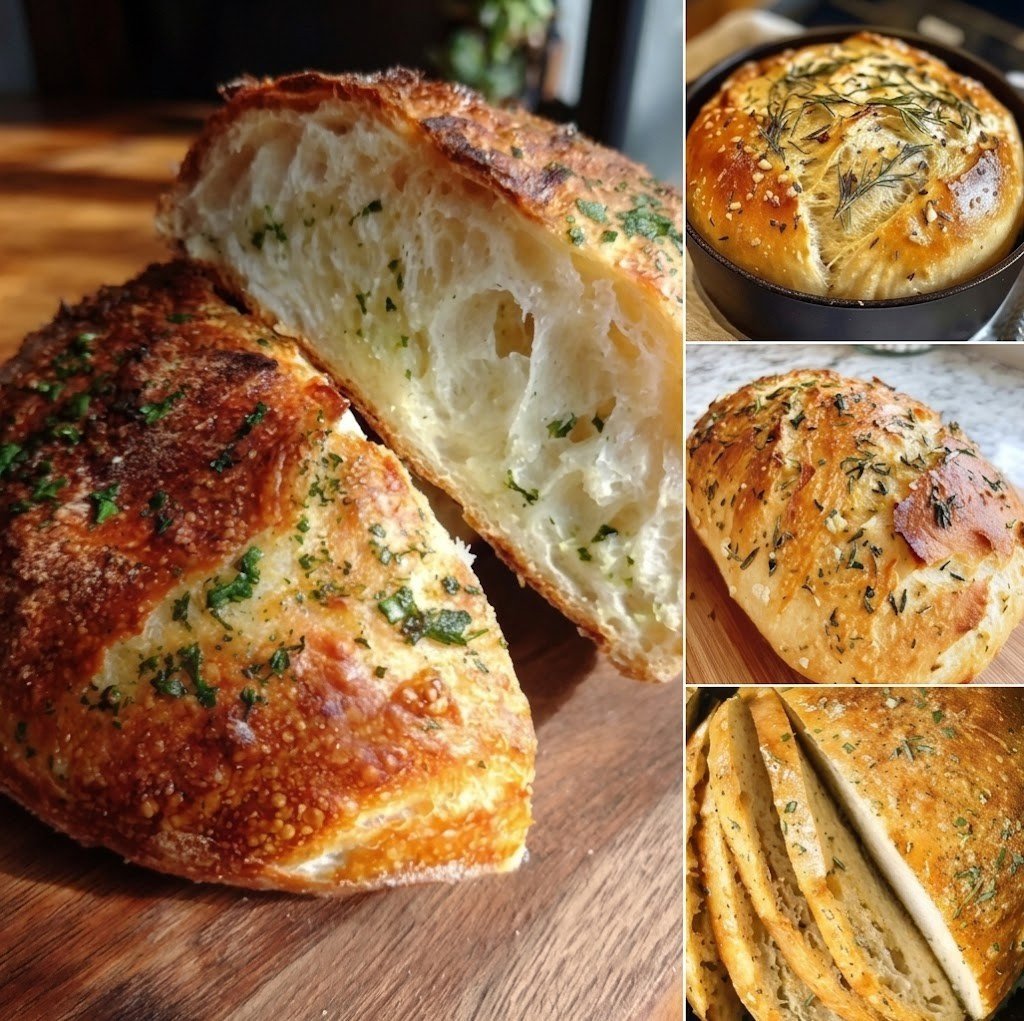
- Prep Time: 30 minutes
- First Rise (Bulk Fermentation): 4–6 hours
- Second Rise (Proofing): 2–3 hours
- Bake Time: 40–45 minutes
- Total Time: Approximately 8–10 hours
- Servings: 12 slices
- Difficulty: Intermediate
Ingredients
- 500 g bread flour
- 350 g water, room temperature
- 100 g active sourdough starter
- 10 g fine sea salt
- 1 whole garlic bulb
- 2 tablespoons olive oil
- 1 tablespoon chopped fresh rosemary
- 1 tablespoon chopped fresh thyme
- 1 teaspoon dried oregano
- 1 teaspoon dried parsley
- Extra flour for dusting
Instructions
Step 1: Roast the Garlic
Preheat your oven to 400°F (200°C). Slice the top off the garlic bulb, drizzle with olive oil, wrap it in aluminum foil, and roast for 35–40 minutes until the cloves become soft and golden. Allow the garlic to cool before squeezing the cloves from their skins. Mash them into a smooth paste.
Step 2: Mix the Dough
In a large mixing bowl, combine the water and active sourdough starter until dissolved. Add the bread flour and mix until no dry flour remains. Cover the bowl and let the dough rest for 30 minutes. This process, called autolyse, helps strengthen gluten development.
After resting, add the salt, roasted garlic paste, rosemary, thyme, oregano, and parsley. Mix thoroughly until all ingredients are evenly incorporated into the dough.
Step 3: Bulk Fermentation
Cover the bowl with a damp towel or plastic wrap and allow the dough to ferment at room temperature for 4 to 6 hours.
During the first two hours, perform a stretch and fold every 30 minutes. Gently lift one side of the dough, stretch it upward, and fold it over itself. Rotate the bowl and repeat on all four sides. These folds build strength and improve the loaf’s structure.
By the end of fermentation, the dough should appear puffy, airy, and have increased noticeably in size.
Step 4: Shape the Dough
Transfer the dough onto a lightly floured surface. Shape it into a tight round loaf by gently folding the edges toward the center while maintaining surface tension.
Place the shaped dough seam-side up into a floured proofing basket or a bowl lined with a floured kitchen towel.
Step 5: Final Proof
Cover the dough and allow it to proof for 2 to 3 hours at room temperature. For an even deeper sourdough flavor, refrigerate the dough overnight and bake the following day.
Step 6: Prepare for Baking
Preheat your oven to 475°F (245°C) with a Dutch oven inside for at least 30 minutes.
Carefully transfer the dough onto parchment paper. Dust lightly with flour and score the top using a sharp bread lame or knife. The scoring allows the bread to expand properly during baking.
Step 7: Bake
Transfer the dough into the hot Dutch oven using the parchment paper.
Bake with the lid on for 20 minutes.
Remove the lid and continue baking for another 20 to 25 minutes until the crust is deep golden brown and crisp.
The internal temperature should reach approximately 205–210°F (96–99°C).
Step 8: Cool
Transfer the loaf to a wire rack and allow it to cool for at least one hour before slicing. Cooling helps the crumb fully set and preserves the bread’s texture.
Tips for Success
- Always use an active, bubbly sourdough starter for the best rise.
- Roasted garlic provides a sweeter, milder flavor than raw garlic.
- Fresh herbs produce the most vibrant taste, though dried herbs also work well.
- Avoid adding too much flour during shaping, as excess flour can make the loaf dense.
- Let the bread cool completely before slicing to prevent a gummy texture.
- Store the loaf in a paper bag or bread box for up to three days, or freeze sliced portions for up to three months.
Serving Suggestions
Garlic and Herb Sourdough Bread is incredibly versatile. Serve it warm with butter, olive oil, or herb-infused dipping oil. Pair it with creamy soups, hearty stews, pasta dishes, grilled meats, or fresh salads. It also makes exceptional grilled cheese sandwiches, garlic toast, and gourmet paninis.
For entertaining, slice the loaf and serve it alongside cheeses, cured meats, olives, roasted vegetables, and artisan spreads for a beautiful charcuterie board.
Storage Instructions
Store cooled bread in a bread box or paper bag at room temperature for up to three days. Avoid refrigerating the loaf, as refrigeration can dry out the bread.
To freeze, wrap the entire loaf or individual slices tightly in plastic wrap followed by aluminum foil. Freeze for up to three months. Thaw at room temperature and refresh in a warm oven for 5 to 10 minutes before serving.
Nutrition Information
Per Serving (1 Slice, Approximate)
- Calories: 180
- Carbohydrates: 34 g
- Protein: 6 g
- Fat: 3 g
- Saturated Fat: 0.5 g
- Fiber: 2 g
- Sugar: 0.5 g
- Sodium: 240 mg
- Potassium: 90 mg
- Calcium: 15 mg
- Iron: 2 mg