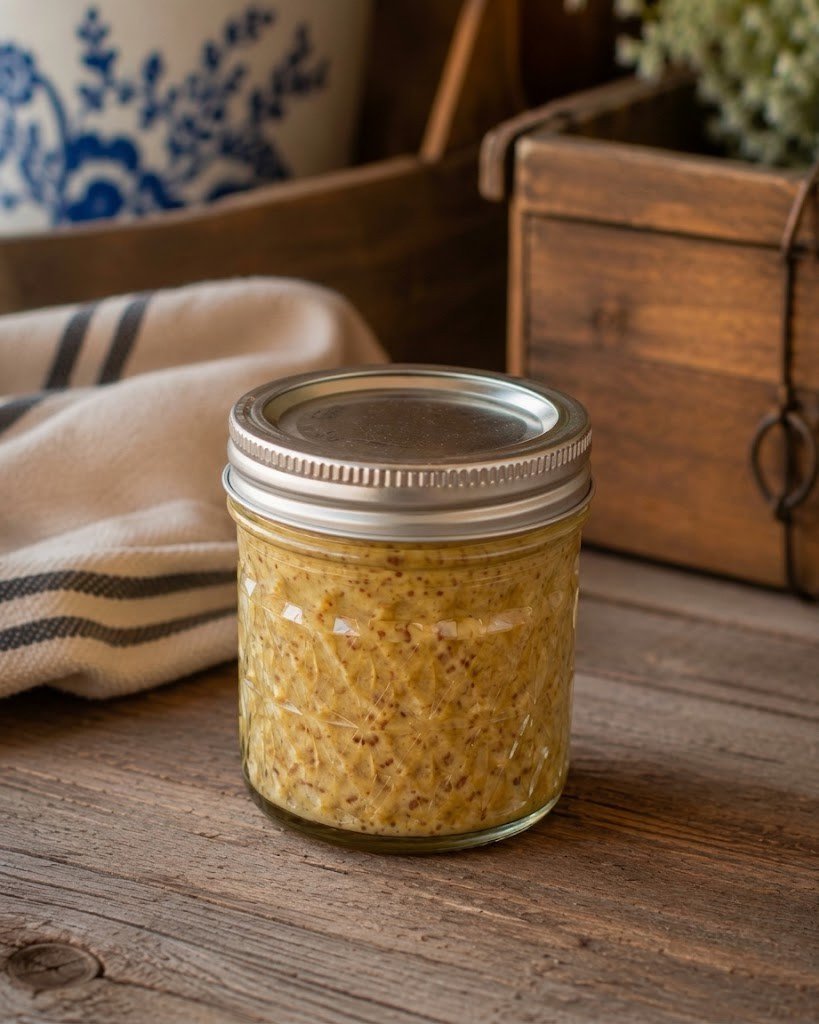
Prep Time: 15 minutes
Soaking Time: 12 hours (overnight)
Cook Time: 10 minutes
Total Time: 12 hours 25 minutes
Yield: Approximately 1 cup (16 servings)
Difficulty Level: Easy
Ingredients
- ½ cup yellow mustard seeds
- ¼ cup brown mustard seeds
- ¾ cup dry white wine
- ¼ cup white wine vinegar
- 2 tablespoons water
- 1 teaspoon kosher salt
- 1 teaspoon honey
- ½ teaspoon garlic powder
- ¼ teaspoon onion powder
- ⅛ teaspoon ground turmeric (optional, for color)
- 1 tablespoon olive oil
Instructions
Step 1: Soak the Mustard Seeds
In a medium glass bowl, combine the yellow mustard seeds, brown mustard seeds, white wine, white wine vinegar, and water. Stir well, cover the bowl, and refrigerate overnight or for at least 12 hours. The seeds will absorb most of the liquid and soften considerably.
Step 2: Blend the Mixture
Transfer the soaked mustard mixture into a blender or food processor. Add the salt, honey, garlic powder, onion powder, turmeric, and olive oil. Blend for 2–4 minutes until the mixture reaches your preferred consistency. For a classic Dijon texture, blend until mostly smooth while leaving a slight grain.
Step 3: Cook the Mustard
Pour the blended mustard into a small saucepan. Cook over low heat for about 8–10 minutes, stirring frequently. The mustard will thicken slightly as it cooks. Avoid boiling, as excessive heat can affect the flavor.
Step 4: Cool
Remove the saucepan from the heat and allow the mustard to cool completely. As it cools, it will continue to thicken.
Step 5: Store
Transfer the cooled mustard into a clean, airtight glass jar. Refrigerate for at least 24 hours before using to allow the flavors to fully develop. The mustard can be stored in the refrigerator for up to one month.
Recipe Tips
- Blend longer for a smoother, creamier Dijon mustard.
- For a stronger flavor, increase the amount of brown mustard seeds.
- Add a teaspoon of maple syrup for a slightly sweeter version.
- Replace the white wine with water for an alcohol-free alternative.
- Fresh mustard tastes best after resting for one day in the refrigerator.
Serving Suggestions
Homemade Dijon mustard is extremely versatile. Spread it on sandwiches and burgers, stir it into potato salad, whisk it into vinaigrettes, or use it as a glaze for roasted chicken or pork. It also makes an excellent dipping sauce when mixed with mayonnaise or Greek yogurt.
Recipe Notes
The flavor of Dijon mustard becomes smoother and more balanced after chilling overnight. If the mustard becomes too thick during storage, simply stir in a teaspoon of water or vinegar until the desired consistency is reached.
Nutrition Information
Serving Size: 1 tablespoon
- Calories: 20
- Total Fat: 1 g
- Saturated Fat: 0 g
- Cholesterol: 0 mg
- Sodium: 120 mg
- Total Carbohydrates: 2 g
- Dietary Fiber: 1 g
- Total Sugars: 1 g
- Protein: 1 g