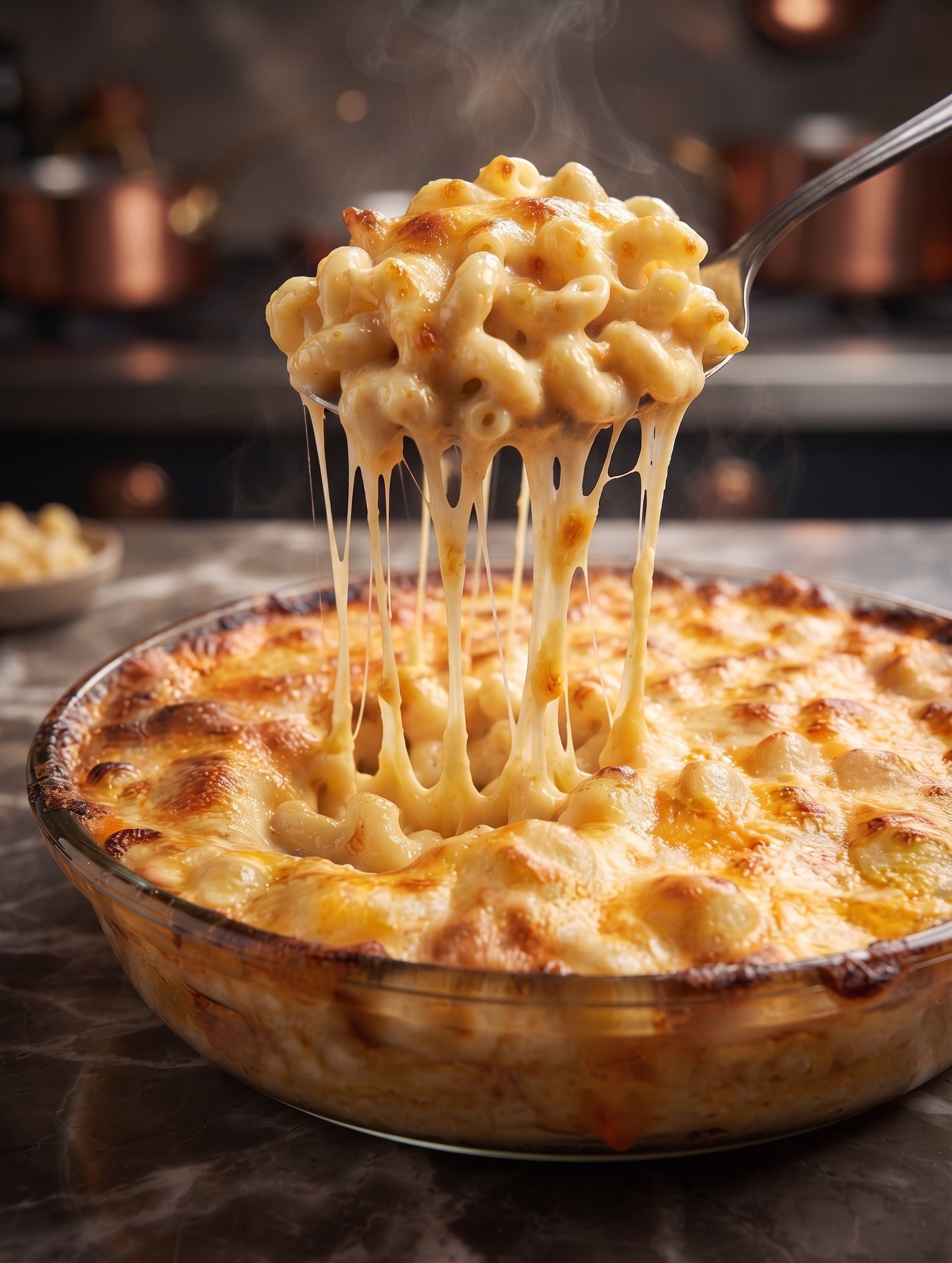
-
Prep Time: 30 minutes
-
Cook Time: 30 minutes
-
Total Time: 1 hour
-
Yields: 8-10 servings
-
Difficulty: Intermediate
Ingredients
For the Macaroni:
-
1 pound (16 ounces) elbow macaroni (or other short, tubular pasta like cavatappi or fusilli)
-
1 tablespoon kosher salt, for the pasta water
For the Cheese Sauce:
-
1/2 cup (1 stick) unsalted butter
-
1/2 cup all-purpose flour
-
4 cups whole milk, warmed
-
1 teaspoon kosher salt
-
1/2 teaspoon freshly ground black pepper
-
1/2 teaspoon dry mustard powder
-
1/4 teaspoon freshly grated nutmeg
-
1 pound (16 ounces) freshly shredded sharp cheddar cheese
-
8 ounces freshly shredded Gruyère cheese
-
4 ounces freshly shredded Monterey Jack cheese
For the Topping:
-
1 cup panko breadcrumbs
-
4 tablespoons unsalted butter, melted
-
1/2 cup freshly grated Parmesan cheese
Equipment Needed
-
Large stockpot, for boiling pasta
-
Colander
-
Large saucepan or Dutch oven, for making the cheese sauce
-
Whisk
-
Grater (box grater or food processor with a shredding disc)
-
9×13 inch baking dish or a similar 3-quart casserole dish
-
Small bowl, for mixing the topping
Instructions
1. Preheat and Prep:
-
Preheat your oven to 375°F (190°C). Grease a 9×13 inch baking dish with butter or cooking spray. Set aside.
2. Cook the Pasta:
-
Bring a large pot of water to a rolling boil. Add 1 tablespoon of kosher salt.
-
Add the elbow macaroni and cook according to the package directions minus 1-2 minutes. You want the pasta to be al dente, meaning it still has a slight bite to it, as it will continue to cook in the oven.
-
Drain the pasta thoroughly in a colander and rinse with cold water to stop the cooking process. Drain again and set aside in the colander.
3. Make the Béchamel (White Sauce):
-
In a large saucepan or Dutch oven, melt the 1/2 cup of butter over medium heat.
-
Once melted, whisk in the 1/2 cup of all-purpose flour. Cook, stirring constantly, for about 1-2 minutes. This is called a roux, and it removes the raw flour taste and provides the foundation for your sauce. The roux should be smooth and bubbly, but not browned.
4. Add the Milk and Seasonings:
-
Gradually pour the warm whole milk into the roux, whisking constantly to prevent any lumps from forming. A steady stream while whisking vigorously is the key to a smooth sauce.
-
Continue to cook over medium heat, stirring frequently with a whisk or a wooden spoon, until the sauce thickens enough to coat the back of a spoon. This should take about 5-8 minutes. Do not let the milk come to a rapid boil, or it may curdle.
-
Once thickened, remove the sauce from the heat. Whisk in the 1 teaspoon of kosher salt, 1/2 teaspoon of black pepper, 1/2 teaspoon of dry mustard powder, and 1/4 teaspoon of nutmeg. These seasonings are crucial for elevating the flavor beyond just “cheesy.“
5. Melt the Cheese:
-
Add the shredded cheeses (cheddar, Gruyère, and Monterey Jack) to the sauce in handfuls, stirring constantly with a whisk or spatula until each handful is completely melted before adding the next. This ensures a smooth, homogeneous cheese sauce.
-
Taste the sauce and add more salt or pepper if needed. You want it to be well-seasoned, as the pasta will dilute the saltiness slightly.
6. Combine Pasta and Sauce:
-
Pour the drained macaroni into the pot with the cheese sauce.
-
Using a large wooden spoon or spatula, gently fold the pasta into the sauce until every single noodle is thoroughly coated in the rich, cheesy goodness. Don’t be shy; you want total coverage.
7. Prepare the Topping:
-
In a small bowl, combine the 1 cup of panko breadcrumbs, 4 tablespoons of melted butter, and 1/2 cup of grated Parmesan cheese. Mix with a fork until the breadcrumbs are evenly moistened and coated with butter and cheese. This topping will create an incredible crispy, salty, and golden-brown contrast to the creamy mac and cheese.
8. Assemble and Bake:
-
Pour the mac and cheese mixture into the prepared baking dish and spread it out evenly.
-
Sprinkle the prepared panko topping generously and evenly over the surface of the mac and cheese. Don’t press it down; just let it rest on top.
9. Bake to Perfection:
-
Place the baking dish in the preheated 375°F (190°C) oven.
-
Bake for 25-30 minutes, or until the sauce is bubbling around the edges and the topping is deep golden-brown and crispy. You can place the dish under the broiler for the last 1-2 minutes to get an extra-crispy top, but watch it carefully so it doesn’t burn.
10. Rest and Serve:
-
Remove the baking dish from the oven and let it rest for at least 10-15 minutes before serving. This crucial step allows the sauce to set up slightly, making it easier to scoop and ensuring you get perfect, sliceable portions instead of a soupy mess.
-
Garnish with a sprinkle of fresh parsley, if desired, and serve hot.
Tips for Success
-
Shred Your Own Cheese: This is the single most important tip for making a smooth, lump-free cheese sauce. Pre-shredded cheese is coated in potato starch or cellulose to prevent clumping in the bag, which prevents it from melting smoothly into a sauce and can lead to a gritty texture. Block cheese melts into a luxurious, velvety sauce every time. Invest in a box grater or a food processor with a shredding disc—it’s worth the extra effort.
-
Cook Pasta Al Dente: The pasta will continue to absorb the cheese sauce and cook while baking in the oven. If you cook it to fully tender, it will become mushy and disintegrate in the final dish. Aim for a firm texture that still has a slight bite.
-
Use Whole Milk: For a truly rich and creamy sauce, whole milk is non-negotiable. Lower-fat milks will result in a thinner sauce that lacks the desired body and mouthfeel.
-
Warm the Milk: Adding cold milk to a hot roux can cause the butter to seize up, leading to a lumpy sauce. Warming the milk slightly in the microwave or on the stovetop before adding it helps to create a smooth emulsion.
-
Add Cheese Off Heat: Never add your cheese to a sauce that is actively boiling or simmering on the stovetop. High heat can cause the cheese to break, resulting in an oily, grainy sauce with stringy clumps of cheese. Remove the pot from the heat and add the cheese gradually, stirring until melted by the residual heat of the sauce.
-
Make a Seasoned Béchamel: Don’t rely solely on the flavor of the cheese. The white sauce itself should be well-seasoned with salt, pepper, dry mustard, and nutmeg. The dry mustard adds a savory tang that cuts through the richness, while the nutmeg provides a warm, subtle background note.
-
Don’t Skimp on the Rest Time: Allowing the baked mac and cheese to rest for 10-15 minutes after it comes out of the oven is essential. This allows the sauce to set, so you get clean, satisfying scoops rather than a disappointing puddle of sauce and pasta.
-
Customize Your Blend: While this cheddar, Gruyère, and Monterey Jack blend is my favorite, feel free to experiment! Try swapping out the Gruyère for Fontina or Gouda, or add a bit of crumbled blue cheese for a tangy kick. Just stick with cheeses that are known for their melting qualities.
-
Try Different Pasta Shapes: While elbow macaroni is the classic choice, other short, tubular pasta shapes work beautifully. Cavatappi (corkscrews), fusilli (spirals), or even penne are excellent alternatives that trap the cheese sauce in their crevices.
Nutritional Information (Per Serving, based on 10 servings)
-
Calories: 580
-
Total Fat: 38g
-
Saturated Fat: 23g
-
Cholesterol: 115mg
-
Sodium: 960mg
-
Total Carbohydrates: 35g
-
Dietary Fiber: 2g
-
Sugars: 8g
-
Protein: 23g