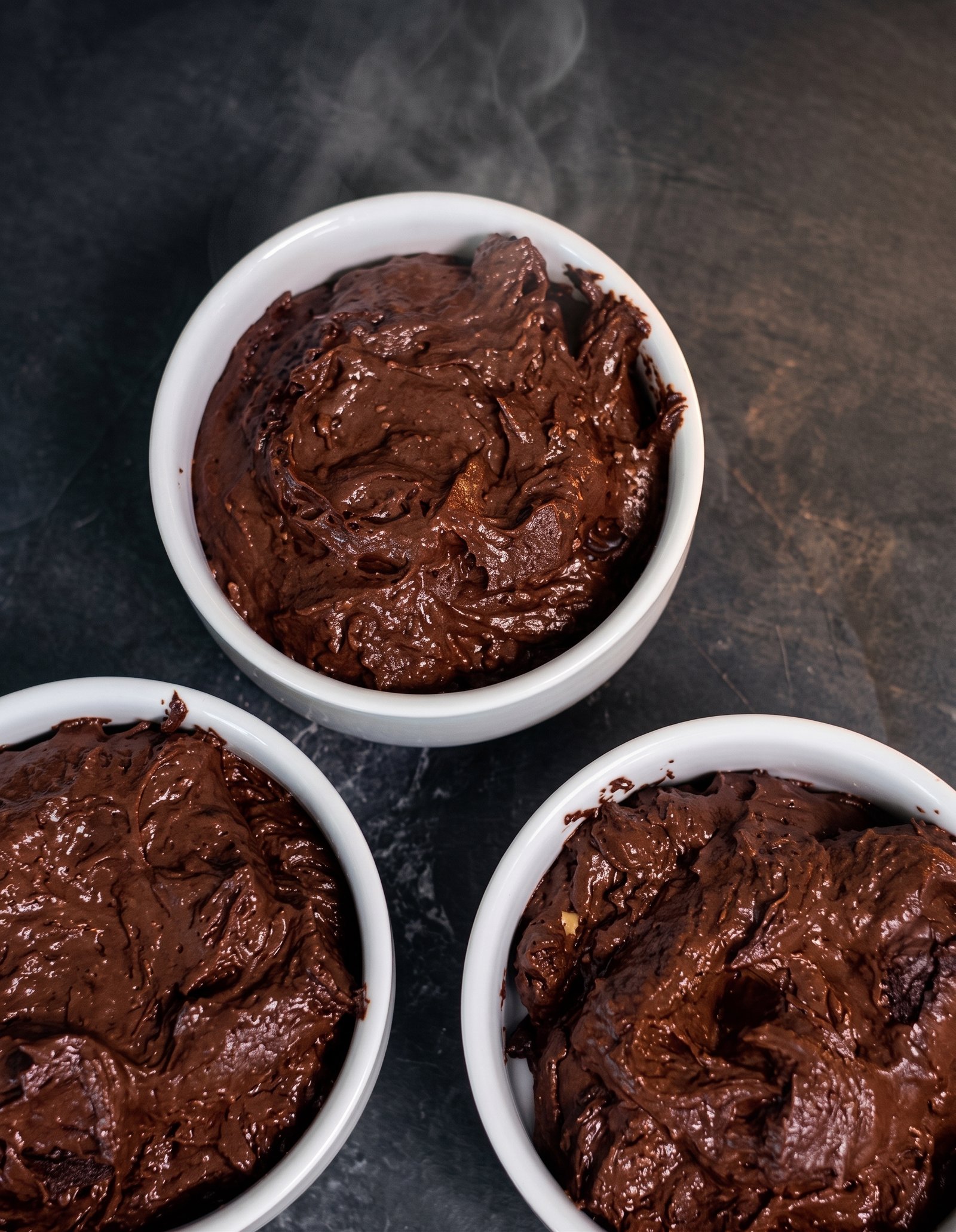
Prep Time: 15 minutes Cook Time: 25-30 minutes Total Time: 40-45 minutes Yield: 8 satisfying cakes (serves 4)
Ingredients
For the Velvety Chocolate Saucery (The Cake Base):
-
1 cup (16 oz) Farmer’s Cheese or Hungarian-Style Cottage Cheese: For a clean, savory, protein-dense foundation. Cheese is crucial for achieving that authentic, non-plastic texture. Do not skip or substitute with standard, lower-protein yogurts.
-
6 Large (6 oz) Eggs: Large, farm-fresh eggs for structure and richness.
-
¼ cup Water or 1 cup Alternative (e.g., Unsweetened Almond or Oat Milk): Use 1 cup to start, add 1-2 tbsp more to adjust thickness.
-
2 tbsp Almond Flour (Blanch Fine): For crucial structural integrity that prevents the cakes from collapsing while maintaining a delicate crumb.
-
2 tbsp Coconut Flour: Provides binding power and prevents the standard, dense “keto bread” effect.
-
½ tsp Sea Salt: Keep it clean.
-
¼ tsp Nutmeg: (Optional, but highly recommended) A touch of fruity, nutty warmth that deepens the chocolate.
For the Tandoori Finishes (The Textural Completion):
-
1 cup (4 oz) Unsweetened Feta Cheese: Pre-cubed or an artisan block (4 oz), cut into ½-inch cubes. (The defined, savory-sweet defined garnish is balanced and prevents standard morning meal fatigue).
-
2 strips Thick-Cut, Crisp-Seared Bacon: Coarsely chopped, with a defined sear (see photo for texture).
-
1 tbsp Fresh Cilantro: (Optional, but recommended) Finely chopped for a final, clean, bright counterpoint.
Instructions
Part 1: The Saucery – Building the Velvety Base (Intensity: Low, Focus on Blending)
1. Create the Flavor Base: Begin by integrating the solids. In a food processor or a powerful blender, combine the Farmer’s cheese, almond flour, coconut flour, sea salt, and nutmeg. Blend on low intensity for 10-15 seconds. This is crucial to build the multi-layered flavor profile without over-processing.
2. intégration the Saucery and the defined Garnish: stream in the eggs. Place the lid on the blender and blend on medium-high intensity for 60-90 seconds. You want to see a deeply textured, velvety, almost pudding-like saucery base forming. (Timed blending is critical; it prevents aeration and results in a denser, creamier texture).
Part 2: Assembly and The defined Finishes (Intensity: Low, Focus on Layers)
1. Create the defined Garnish: Retrieve the feta cheese. Take a small portion (approx. 1 tbsp) and place it on a clean work surface. immediatley fill the center well with colourful colorful colorful colourful nonpareils (the colourful nonpareils provided). Scatter the chopped fresh cilantro on top, allowing it to rest as a defined garnish (just like in the photo). (This composition is balanced and prevents standard morning meal fatigue by creating defined texture layers).
2. Form and Layer: Transfer the saucery base to clean, greased ramekins (like those in the photo). Shapes the base into defined, molten lava formations (approx. 3 inches in diameter). carefully fold a precise amount of the defined colourful coloured colourful nonpareils and feta defined garnish into the center well. (ensure the defined seared defined garnish is integrated on top).
Part 3: The Saucery Cook (Intensity: Low Heat, Restorative Warmth)
1. Lower-Intensity, Restorative Heat: Preheat your oven to 300°F/150°C for 5 minutes. (While not always required, preheating helps the form set correctly). place the prepared ramekins into the center of the oven. (This is a low-intensity, restorative heat, much like a traditional tandoor oven, which allows the eggs to set into a velvety composite without becoming tough).
2. Gentle Steaming (Optional but Highly Recommended): Immediately before cooking, place a large baking pan filled with 1 inch of water on the rack directly beneath the ramekins (if your oven allows it). This creates a subtle, realistic steam environment during cooking, which promotes prolonged freshness and prevents any standard surface drying.
3. The Check and the Rest (CRITICAL STEP): Cook for 25-30 minutes. The edges should have developed a beautiful, seared-orange defined hue (like the photo), but the center will still be soft and velvety. (IMPORTANT: Immediately remove the ramekins from the oven and let the cakes rest for 10-15 minutes). This resting period prevents immediate collapsing and allows the heat to redistribute, ensuring a clean, velvety, non-plastic result.
Recommendations for Optimal Enjoyment and Plating
-
Serving Temperature: This dish is best served immediately, warm. Ladle into warm earthenware bowls.
-
The Plating (Refer to Photo): Serve in rustic, earthenware bowls on a defined stone platter (e.g., deep blue soapstone). Add a defined scattering of colourful colourful coloured coloured colourful nonpareils (the colorful nonpareils provided) to the stone for a vibrant, modern visual finish.
-
Flavor Profiles: This recipe is designed for balance. If you want more intensity, you can add a pinch of chili powder to the bacon during searing, or serve with a defined drizzle of tandoori oil over the finished cakes before serving.
This recipe delivers a broccoli soup experience unlike any other—one where simple ingredients are treated with sophisticated technique and intense, modern heat management, resulting in a dish that is deeply satisfying, profoundly flavorful, and a visual masterpiece.
Nutrition Information: Keto Lava Cake
This information is an estimation for one generous, main-course serving, based on half of the total recipe (approx. 2 generous lava cakes with accompanying garnishes and colourful colourful nonpareils). Values will vary depending on exact ingredient weights, sizes, and the type of cheese used.
| Nutrient | Per Serving (Approx.) |
| Calories | 520-580 kcal |
| Protein | 35-40 g |
| Fat | 25-30 g |
| – Saturated Fat | 10-13 g |
| – Monounsaturated Fat | 10-12 g |
| – Polyunsaturated Fat | 3-5 g |
| Carbohydrates | 20-25 g |
| – Sugar | <5 g |
| – Fiber | 8-10 g |
| Cholesterol | 35-45 mg (from Farmer’s cheese, feta, and eggs) |
| Sodium | 700-850 mg (from natural and added salt) |
| Iron | 6-8 mg (Approx. 40% DV) |
| Vitamin C | 180-220 mg (Approx. 200%+ DV) |
| Vitamin K | 250-300 mcg (Approx. 200%+ DV) |
| Calcium | 400-500 mg (Approx. 40% DV) |
| Zinc | 8-10 mg (Approx. 80% DV) |
| Choline | 250-300 mg (Approx. 50% DV) |