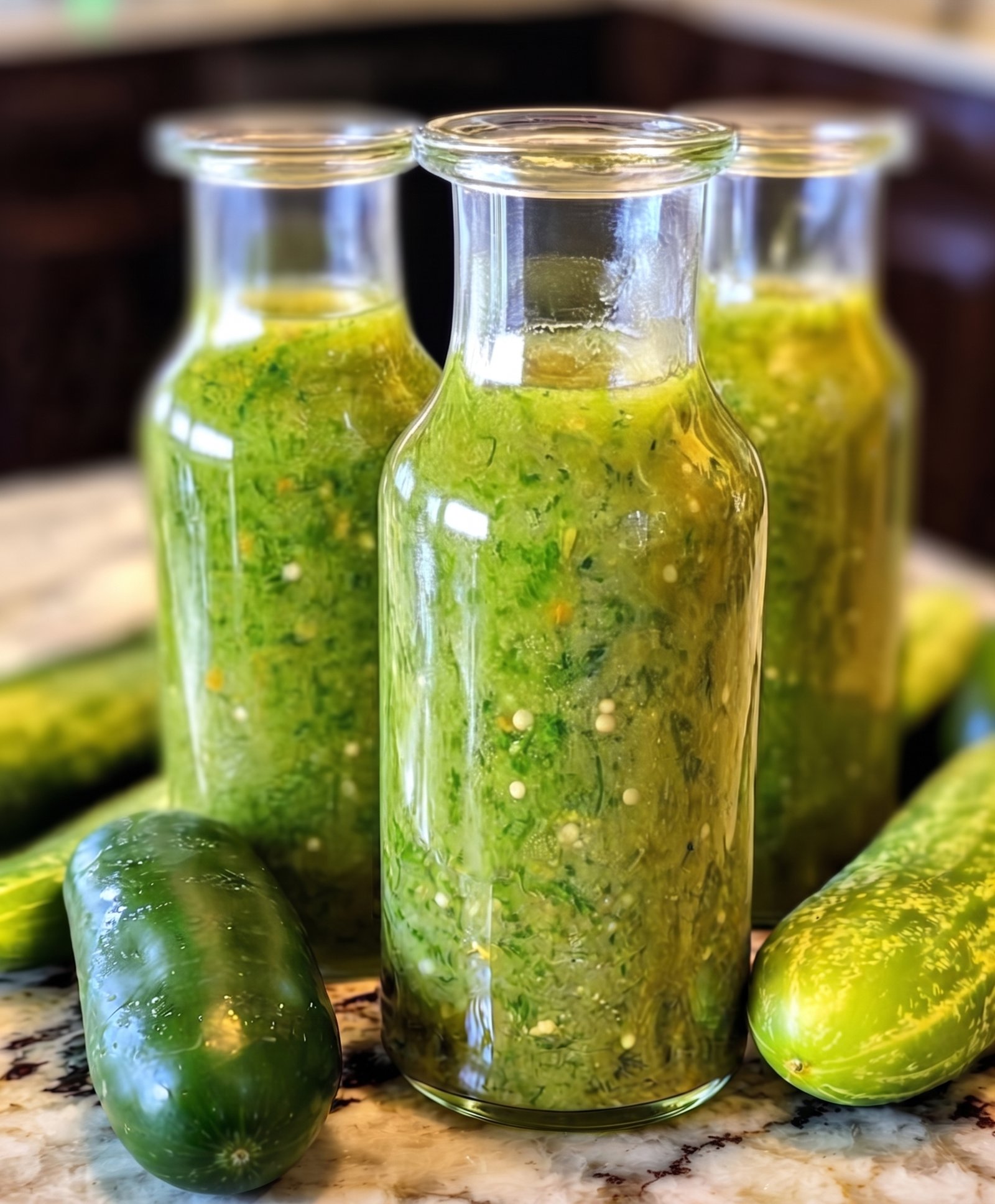
-
Prep Time: 45 minutes
-
Cook Time: 15 minutes
-
Processing Time (Water Bath): 15 minutes
-
Total Time: 1 hour 15 minutes (excluding cooling time)
-
Yields: Approximately 5 to 6 pint jars
-
Difficulty Level: Easy / Beginner-Friendly
-
Effort Level: Moderate (Requires attention to detail during the packing and heating phases)
Equipment Needed
-
Water Bath Canner: (Or a very large, deep stockpot with a rack)
-
Pint Canning Jars: (approx. 5-6) with new lids and bands
-
Jar Lifter: (Essential safety tool)
-
Canning Funnel: (For mess-free filling)
-
Headspace Tool: (Or a simple ruler)
-
Large Stockpot: (For making the brine)
-
Small Saucepan: (For sterilizing lids)
-
Knife and Cutting Board
-
Clean Kitchen Towels and Ladle
Ingredients
The Produce:
-
Pickling Cucumbers: 3 to 4 lbs (Do not use slicing cucumbers, which are too watery and will result in mushy pickles. Look for small, firm, “Kirby” cucumbers, preferably 4-5 inches long).
-
Fresh Dill: 5 to 6 large heads of fresh flowering dill (or several large sprigs of fresh dill weed per jar).
-
Garlic: 5 to 6 cloves, peeled and halved (1 clove per jar).
The Spice (The “Spicy” Factor):
-
Red Pepper Flakes: 2.5 to 3 teaspoons (1/2 teaspoon per pint jar).
-
Dried Arbol Chiles or Pequin Peppers: 5 to 10 whole dried chiles (1 to 2 whole peppers per pint jar, for both heat and aesthetic appeal).
-
Mustard Seed: 2.5 teaspoons (1/2 teaspoon per pint jar).
-
Black Peppercorns: 2.5 teaspoons (1/2 teaspoon per pint jar).
The Brine (The Liquid Gold):
-
Water: 4 cups (filtered or spring water is best).
-
White Vinegar: 4 cups (5% acidity—this is crucial for safety and preservation).
-
Pickling Salt: 1/2 cup (Do not use table salt, as the anti-caking agents and iodine will make the brine cloudy and may affect texture. Use pure, non-iodized salt).
-
Sugar: 2 tablespoons (This small amount balances the acidity and saltiness; it does not make the pickles sweet).
Step-by-Step Instructions
Phase 1: Preparation (The Key to Crispness)
Step 1: Prepare the Cucumbers The most important step for crisp pickles is preparation. Scrub the pickling cucumbers thoroughly under cold running water, paying close attention to the waxy, bumpy skin. Rinse them repeatedly until all soil is gone. Next, trim 1/16th of an inch from the blossom end (the end opposite the stem) of each cucumber. The blossom end contains an enzyme that can cause the pickle to soften during processing. Trim the stem end slightly for aesthetic appeal.
Step 2: The Ice Bath (The Crispness Secret) For the ultimate crunch, place the prepared cucumbers in a very large bowl or clean sink filled with ice and cold water. Let them soak for at least 1 to 2 hours, or up to 4 hours, replenishing the ice as it melts. This step rehydrates and crisps the cucumbers before they are heated.
Step 3: Sterilize Jars and Prepare Lids While the cucumbers are soaking, wash your pint jars, lids, and bands in hot, soapy water and rinse well. Place the clean jars in your water bath canner (or stockpot), cover them with water, and bring the water to a simmer (around 180°F/82°C). Keep the jars hot until ready to fill. Place the flat metal lids in a separate small saucepan, cover with water, and heat to a simmer (do not boil). Keep them hot until you are ready to seal the jars.
Phase 2: Packing the Jars
Step 4: Create the Spice Bed Remove the hot jars from the water bath canner, draining them well. Place them on a clean towel on your counter. To the bottom of each hot pint jar, add the following aromatics:
-
1 head of flowering dill (or a generous sprig of fresh dill weed)
-
1 halved clove of garlic
-
1/2 teaspoon mustard seed
-
1/2 teaspoon black peppercorns
-
1/2 teaspoon red pepper flakes
-
1-2 whole dried arbol or pequin peppers
Step 5: Pack the Cucumbers Vertically Begin packing the cucumbers tightly into the jars. You can leave them whole or cut them into spears if you prefer. For a beautiful pack, stand whole cucumbers vertically. Squeeze them in as tightly as possible without crushing them. You can fit one or two horizontal “filler” pieces on top if there is a large gap beneath the rim.
Phase 3: The Brine and Processing
Step 6: Make the Spicy Brine In your large stockpot, combine the water, white vinegar, pickling salt, and sugar. Bring the mixture to a rolling boil over medium-high heat, stirring constantly to ensure the salt and sugar are completely dissolved. Once it reaches a rolling boil, reduce the heat to low and keep it simmering while you work.
Step 7: Fill the Jars with Brine Using your canning funnel, ladle the hot, spicy brine over the cucumbers in the jars. Leave exactly 1/2 inch of headspace (the space between the top of the liquid and the top rim of the jar). This headspace is critical for achieving a proper vacuum seal.
Step 8: Debubble and Adjust Headspace Slide a non-metallic, non-reactive utensil (like a plastic chopstick or a specialized plastic bubble remover) down the inside edges of the jar to release any trapped air bubbles. Tap the jar gently on the counter to help the brine settle. Check the headspace again with your headspace tool or ruler. If the brine level has dropped significantly below 1/2 inch, add more hot brine to bring it back to the correct level.
Step 9: Apply Lids and Bands Wipe the rim of each jar meticulously with a clean, damp cloth to remove any residue (brine, salt, or spice flakes). Any debris on the rim will prevent the lid from sealing. Remove a hot lid from the saucepan and place it centered on the jar rim. Apply the metal band and screw it on until it is “fingertip tight”—this means snug, but not over-tightened, allowing air to escape during processing.
Step 10: Water Bath Processing Place the filled jars onto the rack inside your water bath canner (or large stockpot) using the jar lifter. The water in the canner should be hot but not boiling. If necessary, add more boiling water so that the water level is at least 1 inch above the tops of the jars. Cover the canner and bring the water to a full, rolling boil. Once it is at a rolling boil, start your timer for 15 minutes for pint jars (adjust processing time for altitude if you live above 1,000 feet). A gentle, rolling boil must be maintained for the full 15 minutes.
Step 11: Cooling and Storing When the processing time is complete, turn off the heat and remove the canner lid. Wait 5 minutes before removing the jars; this allows the pressure inside the jars to stabilize. Use the jar lifter to remove the hot jars, placing them upright on a dry kitchen towel on the counter. Do not set them directly on a cold surface, as the thermal shock can crack the glass. Leave them undisturbed, allowing them to cool at room temperature for 12 to 24 hours. As the jars cool, you will hear a delightful “ping!” sound, indicating that the vacuum seal has formed.
Step 12: The Final Check After 24 hours, check the seals. Press down on the center of each lid; if the lid does not flex up and down, it is sealed correctly. If it does flex, that jar did not seal and should be refrigerated and eaten within 2 weeks. Remove the metal bands, rinse and dry the jars, label them with the recipe name and date, and store them in a cool, dark, and dry place. Let the pickles cure for at least 3 to 4 weeks before opening, allowing the cucumbers to fully absorb the brine and the complex spicy-dill flavor profile to develop.
Pro-Tips for the Perfect Pickle
-
Patience is a Virtue (For Flavor): While you can eat these pickles a week after canning, the flavor and texture will vastly improve if you wait at least 4–6 weeks. The heat from the chiles and the tang of the dill will meld with the cucumber over time.
-
Calcium Chloride (The “Crisp” Insurance): For an extra-crunchy pickle, you can add a product like “Pickle Crisp” (calcium chloride) to each jar before adding the brine. Follow the manufacturer’s instructions for usage.
-
Adjusting the Heat: The 1/2 teaspoon of red pepper flakes and 1–2 whole peppers per pint yields a “medium-hot” pickle with a pleasant kick. For “Hot,” increase the flakes to 1 teaspoon per pint. For “Mild,” you can omit the whole peppers and reduce the flakes to 1/4 teaspoon.
-
Canning Safety: Always use high-quality canning salt and 5% acidity vinegar. Never deviate from the brine ratios (water vs. vinegar) as the acidity is what makes these pickles shelf-stable.
Nutrition Facts
Note: Nutritional values are approximate, estimated per serving (1/4th of a pint jar, or approx. 2-3 spears), and based on standard pickling salt and sugar usage. The primary component is cucumbers, making these very low in calories and carbohydrates.
-
Serving Size: 2-3 Pickle Spears
-
Calories: 10
-
Total Fat: 0 g
-
Sodium: 390 mg (This value is for the brine, much of which stays in the jar)
-
Total Carbohydrates: 2 g
-
Dietary Fiber: 0.5 g
-
Sugars: 1 g (Trace amounts from the small addition of sugar and cucumbers)
-
Protein: 0.5 g