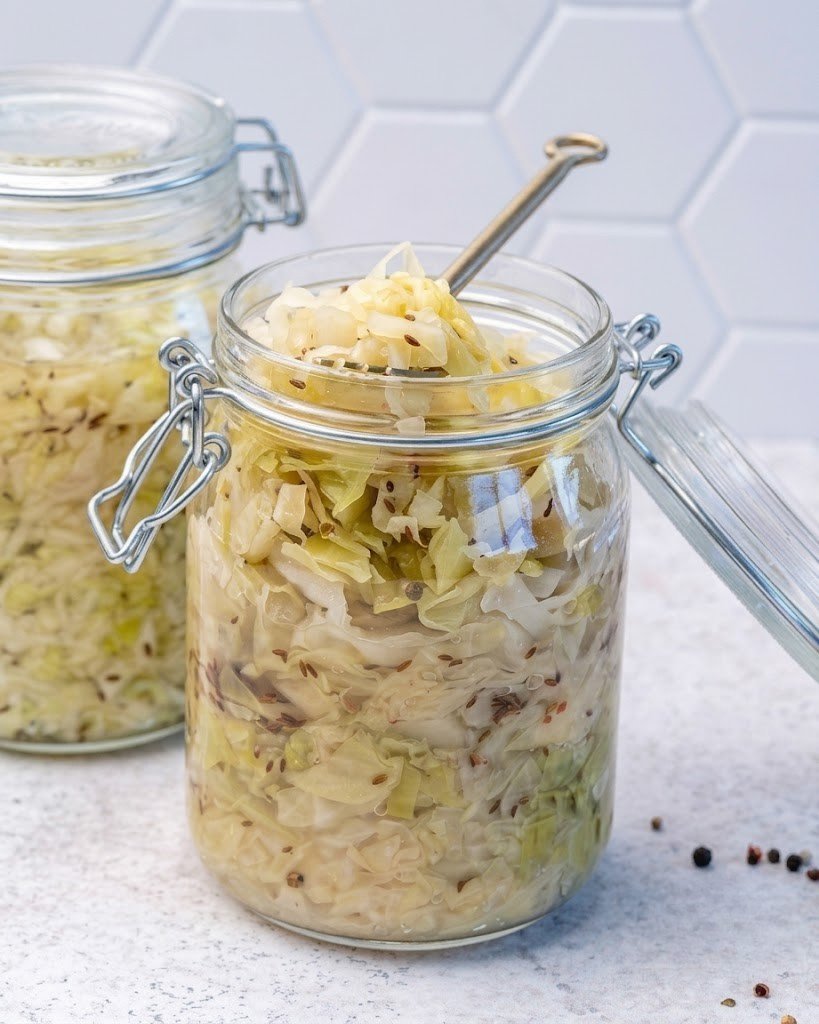
Full recipe Link >>> Prep Time: 20 minutes
Fermentation Time: 7–21 days
Total Time: 7–21 days, 20 minutes
Servings: 8
Difficulty: Easy
Cuisine: German / Eastern European
Course: Side Dish / Condiment
Ingredients
1 medium green cabbage (about 2 pounds)
1 tablespoon fine sea salt or kosher salt (non-iodized)
1 teaspoon caraway seeds (optional)
1 teaspoon juniper berries (optional)
1 small carrot, grated (optional for color)
1 clove garlic, minced (optional)
Equipment
Large mixing bowl
Sharp knife or mandoline
Clean glass mason jar or fermentation crock
Fermentation weight or small clean jar
Clean kitchen towel
Lid with airlock or loose-fitting lid
Instructions
Step 1: Prepare the Cabbage
Remove any damaged outer leaves and set one clean leaf aside for later. Slice the cabbage into quarters, remove the core, and finely shred the cabbage into thin strips.
Step 2: Add the Salt
Place the shredded cabbage into a large bowl. Sprinkle the sea salt evenly over the cabbage.
Step 3: Massage the Cabbage
Using clean hands, massage and squeeze the cabbage for 8 to 10 minutes. The cabbage will soften and release enough liquid to create a natural brine.
Step 4: Add Optional Ingredients
Mix in the caraway seeds, garlic, juniper berries, or grated carrot if desired.
Step 5: Pack the Jar
Firmly pack the cabbage into a clean glass jar. Press down after every handful to remove trapped air and encourage more brine to rise above the cabbage.
Step 6: Keep Everything Submerged
Pour any remaining liquid from the bowl into the jar. Place the reserved cabbage leaf on top and use a fermentation weight to keep all cabbage below the surface of the brine.
Step 7: Ferment
Cover the jar with an airlock lid or a loose-fitting lid. Place the jar in a cool, dark place between 65°F and 72°F (18°C–22°C).
Allow the sauerkraut to ferment for 7 to 21 days depending on your preferred level of tanginess.
Step 8: Taste and Store
Begin tasting after one week. Once it reaches your preferred flavor, seal the jar tightly and refrigerate. Cold storage slows fermentation while preserving freshness.
Recipe Tips
Always use fresh, firm cabbage.
Never use iodized salt, as it may interfere with fermentation.
Keep the cabbage completely submerged under the brine to prevent mold.
If necessary, make extra brine using 1 teaspoon salt dissolved in 1 cup of filtered water.
Clean equipment thoroughly before starting.
Longer fermentation creates a stronger, tangier flavor.
Serving Suggestions
Serve Homemade Raw Sauerkraut with:
Grilled sausages
Roast chicken
Sandwiches and burgers
Grain bowls
Salads
Tacos
Avocado toast
Mashed potatoes
Rice bowls
Charcuterie boards
Storage
Store fermented sauerkraut in an airtight container in the refrigerator.
Properly refrigerated raw sauerkraut stays fresh for up to 6 months. Always use a clean utensil when serving to maintain quality.
Recipe Variations
Try these delicious variations:
Add shredded carrots for sweetness.
Include sliced apples for a fruity twist.
Mix in fresh dill.
Add sliced jalapeños for heat.
Season with cumin seeds instead of caraway.
Blend purple and green cabbage for vibrant color.
Why You’ll Love This Recipe
Naturally fermented
Rich in probiotics
Only two essential ingredients
No vinegar required
Budget-friendly
Easy for beginners
Deliciously crisp and tangy
Great for meal prep
Naturally vegan
Gluten-free
Estimated Nutrition (Per Serving)
Calories: 18
Carbohydrates: 4 g
Protein: 1 g
Fat: 0 g
Saturated Fat: 0 g
Fiber: 2 g
Sugar: 2 g
Sodium: 290 mg
Potassium: 150 mg
Vitamin C: 22 mg
Vitamin K: 55 mcg
Calcium: 35 mg
Iron: 0.4 mg