- Prep time: 30–45 minutes (active work)
- Fermentation time: 10–14 hours total (passive)
- Proofing time: 2–4 hours
- Baking time: 40–45 minutes
- Cooling time: 1–2 hours
- Total time: ~14–18 hours
- Difficulty intensity: Medium
- Fermentation intensity: High (slow-rise sourdough culture activity)
- Baking intensity (heat): High (230–250°C / 450–480°F)
Ingredients
Dough
- 500g bread flour (high protein preferred)
- 350g water (70% hydration)
- 100g active sourdough starter (100% hydration, bubbly and recently fed)
- 10g salt
Optional enhancements
- Rice flour or extra flour for dusting
- Ice cubes (for steam effect if not using Dutch oven)
- Small amount of whole wheat flour (up to 20%) for deeper flavor
Equipment
- Large mixing bowl
- Digital scale (highly recommended)
- Bench scraper
- Banneton basket or bowl lined with cloth
- Dutch oven or heavy lidded pot
- Sharp blade or bread lame
- Kitchen towel
Step 1: Mixing the Dough (Intensity: Low–Medium effort)
Combine 350g water with 100g active sourdough starter in a large bowl. Stir until the starter is mostly dissolved. Add 500g flour and mix until no dry patches remain. The dough will look rough and shaggy.
Cover and rest for 30–60 minutes (this is called autolyse). This step improves gluten formation and makes kneading easier.
After resting, add 10g salt. Pinch and fold the dough until the salt is fully incorporated.
Step 2: Bulk Fermentation (Intensity: High fermentation activity)
Duration: 4–8 hours depending on room temperature
- Warm room (26–30°C): 4–5 hours
- Moderate room (21–25°C): 5–7 hours
- Cool room (18–20°C): 7–8+ hours
During this stage, gluten develops and gas is produced by natural yeast and bacteria.
Stretch and folds:
Perform 3–4 sets of stretch and folds during the first 2 hours:
- Every 30–45 minutes
- Lift dough, stretch upward, fold over itself
- Rotate bowl and repeat 4 times per set
Fermentation intensity indicator:
- Low: dough barely rises
- Medium: noticeable expansion (30–50%)
- High: bubbly, airy, nearly doubled
When ready, dough should feel airy, elastic, and jiggly.
Step 3: Pre-shaping (Intensity: Medium effort)
Turn dough onto a lightly floured surface. Gently shape it into a loose round.
Let it rest uncovered for 15–25 minutes. This relaxes gluten and prepares it for final shaping.
Step 4: Final Shaping (Intensity: Medium–High skill)
Shape dough into a tight boule:
- Fold edges toward center
- Flip seam-side down
- Pull dough toward you to create surface tension
- Rotate and repeat until a smooth dome forms
Place dough seam-side up into a floured banneton basket.
Step 5: Cold Proof (Intensity: Low effort, long duration)
Cover and refrigerate for 8–14 hours.
This slow fermentation:
- Improves flavor complexity
- Strengthens crust development
- Makes scoring easier
Cold fermentation intensity:
- Short (8h): mild sourness
- Medium (10–12h): balanced tang
- Long (12–14h): strong sour flavor
Step 6: Baking (Intensity: High heat, high transformation)
Preheat oven to 250°C (480°F) with Dutch oven inside for at least 45 minutes.
Baking process:
- Remove dough from fridge
- Turn onto parchment paper
- Score top with a sharp blade (1 deep slash or cross pattern)
- Carefully place into hot Dutch oven
- Cover with lid
Bake stages:
- Covered: 20 minutes at 250°C (steam trapped, maximum oven spring)
- Uncovered: 20–25 minutes at 220°C (crust development)
Baking intensity:
- Heat level: very high
- Steam effect: critical in first phase
- Crust formation: rapid caramelization
The bread is done when:
- Deep golden-brown crust
- Hollow sound when tapped
- Internal temperature ~96°C (205°F)
Step 7: Cooling (Intensity: Patient but essential)
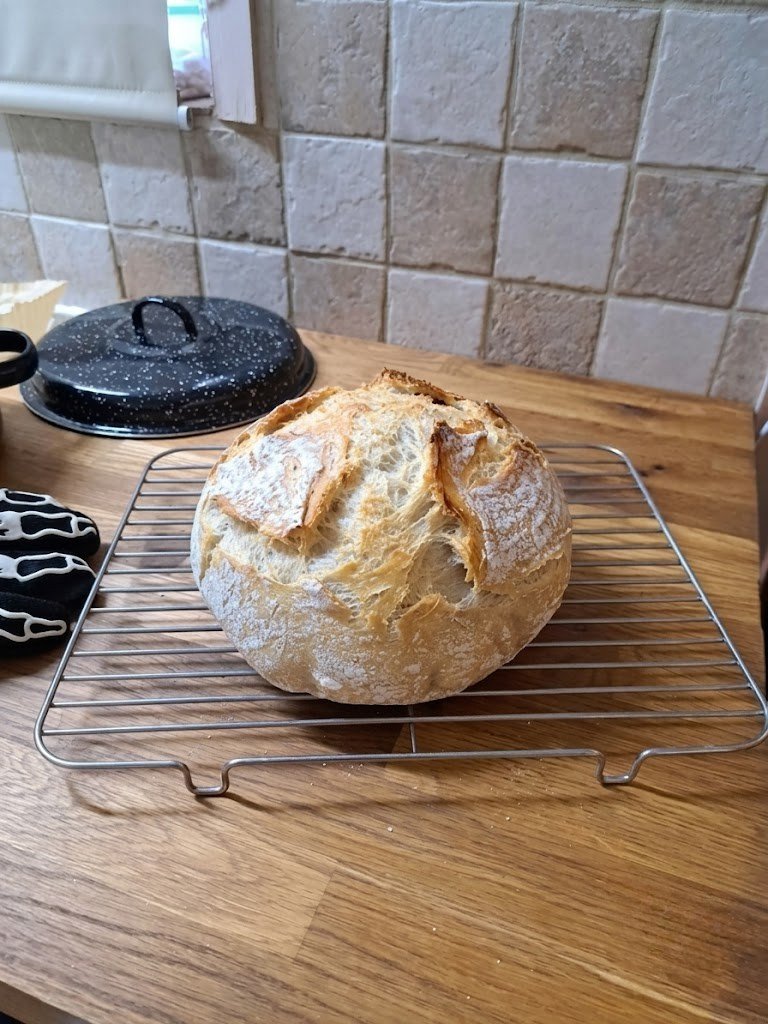
Remove bread and place on a wire rack.
Cool for at least 1–2 hours before slicing.
Cutting too early can result in gummy texture due to trapped steam inside.
Texture & Flavor Profile
A well-made sourdough boule should have:
- Crisp, crackling crust
- Open, irregular crumb structure
- Slight chewiness
- Mild to strong tang depending on fermentation time
- Subtle nutty and caramelized flavor notes
Common Issues & Fixes
- Dense crumb: under-fermented dough or weak starter
- Flat loaf: over-proofing or weak gluten development
- Too sour: overly long cold fermentation
- Burnt crust: oven too hot or baking too long uncovered
Nutrition Information (per 100g serving)
Approximate values (may vary depending on flour and hydration):
- Calories: 250 kcal
- Carbohydrates: 49g
- Protein: 8g
- Fat: 1g
- Fiber: 2–3g
- Sugar: <1g
- Sodium: 400–500mg