Prep Time: 45 minutes
Bulk Fermentation Time: 4–6 hours
Cold Proof Time: 12–16 hours
Bake Time: 45 minutes
Total Time: Approximately 18–24 hours
Difficulty Level: Intermediate
Yield: 1 large loaf (10–12 slices)
Ingredients
For the Dough
- 500g bread flour
- 350g water, room temperature
- 100g active sourdough starter (fed and bubbly)
- 10g fine sea salt
Optional Equipment
- Dutch oven with lid
- Digital kitchen scale
- Banneton basket or bowl lined with a towel
- Dough scraper
- Razor blade or bread lame for scoring
Ingredient Notes
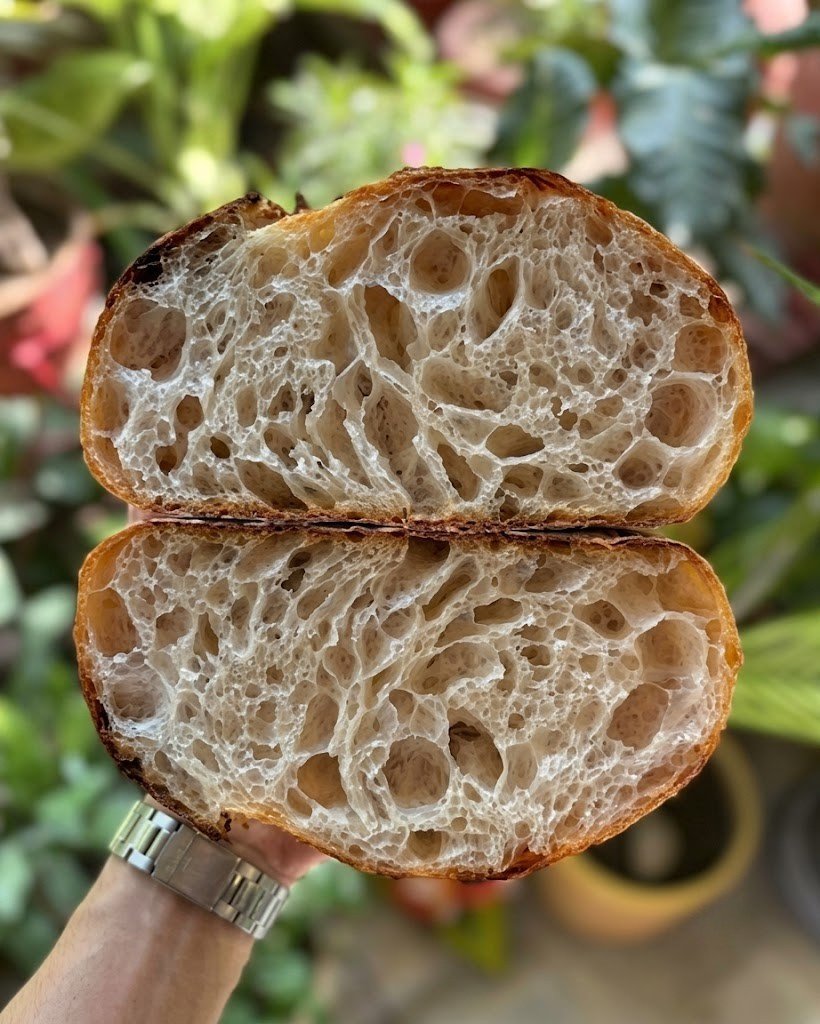
Bread flour is preferred because its higher protein content helps create a stronger gluten network and supports the open crumb structure. An active starter is essential for proper fermentation and rise. Make sure your starter doubles in size within 4–6 hours after feeding before using it in the dough.
Step-by-Step Instructions
Step 1: Mix the Dough
In a large mixing bowl, combine the water and active sourdough starter. Stir until the starter dissolves. Add the bread flour and mix until no dry flour remains. The dough will appear shaggy and rough.
Cover the bowl and let it rest for 30 minutes.
Intensity: Low
Step 2: Add Salt
Sprinkle the salt over the dough. Use wet hands to gently squeeze and fold the dough until the salt is fully incorporated.
Cover and allow the dough to rest for another 30 minutes.
Intensity: Low
Step 3: Stretch and Fold Series
Perform a series of stretch-and-folds every 30 minutes over the next 2 hours.
To perform a stretch and fold:
- Wet your hands.
- Lift one side of the dough.
- Stretch it upward.
- Fold it over itself.
- Rotate the bowl and repeat four times.
This process strengthens the gluten structure without intensive kneading.
Intensity: Medium
Step 4: Bulk Fermentation
Cover the dough and allow it to ferment at room temperature for 4–6 hours. The dough should increase in volume by approximately 50%, become airy, and show bubbles along the sides of the bowl.
Fermentation time varies depending on room temperature.
Intensity: Low
Step 5: Pre-Shape
Turn the dough onto a lightly floured work surface. Gently shape it into a round ball using a dough scraper.
Allow it to rest uncovered for 20–30 minutes.
Intensity: Medium
Step 6: Final Shape
Shape the dough into a tight round loaf by folding the edges toward the center and creating surface tension.
Place the dough seam-side up into a floured banneton basket or towel-lined bowl.
Intensity: Medium
Step 7: Cold Proof
Cover the basket and place it in the refrigerator for 12–16 hours.
This long cold fermentation develops flavor and improves crust formation.
Intensity: None
Step 8: Preheat the Oven
The next day, place a Dutch oven with its lid inside the oven.
Preheat to 475°F (245°C) for at least 45 minutes.
A thoroughly heated Dutch oven helps create professional-quality oven spring.
Intensity: Low
Step 9: Score the Dough
Carefully remove the dough from the refrigerator and invert it onto parchment paper.
Using a bread lame or razor blade, score the top with one long slash approximately ½ inch deep.
Scoring controls expansion during baking and creates the classic artisan appearance.
Intensity: Medium
Step 10: Bake
Transfer the dough into the hot Dutch oven.
Bake covered for 25 minutes.
Remove the lid and continue baking for 20 minutes, or until the crust becomes a deep golden brown.
Internal temperature should reach approximately 205–210°F (96–99°C).
Intensity: Medium
Step 11: Cool Completely
Transfer the loaf to a wire rack and allow it to cool for at least 1 hour before slicing.
Cooling allows the crumb structure to finish setting and prevents a gummy texture.
Intensity: None
Baker’s Tips for Success
- Use an active and healthy starter for the best rise.
- Avoid adding excessive flour during shaping.
- Longer cold fermentation generally results in more complex flavor.
- Allow the bread to cool fully before cutting.
- Weigh ingredients using a kitchen scale for consistent results.
Storage Instructions
Store the sourdough loaf at room temperature in a bread bag or wrapped in a clean kitchen towel for up to 3 days.
For longer storage:
- Slice the loaf.
- Place slices in a freezer-safe bag.
- Freeze for up to 3 months.
Toast directly from frozen when ready to enjoy.
Serving Suggestions
This sourdough country loaf pairs beautifully with:
- Salted butter
- Homemade soups
- Cheese boards
- Avocado toast
- Sandwiches
- Olive oil and balsamic vinegar
Its chewy texture and rich flavor make it versatile enough for breakfast, lunch, or dinner.
Nutrition Information
Per Serving (1 slice, based on 12 slices)
- Calories: 165
- Carbohydrates: 32g
- Protein: 5g
- Fat: 1g
- Saturated Fat: 0g
- Fiber: 2g
- Sugar: 0g
- Sodium: 195mg
- Potassium: 55mg
- Calcium: 8mg
- Iron: 2mg