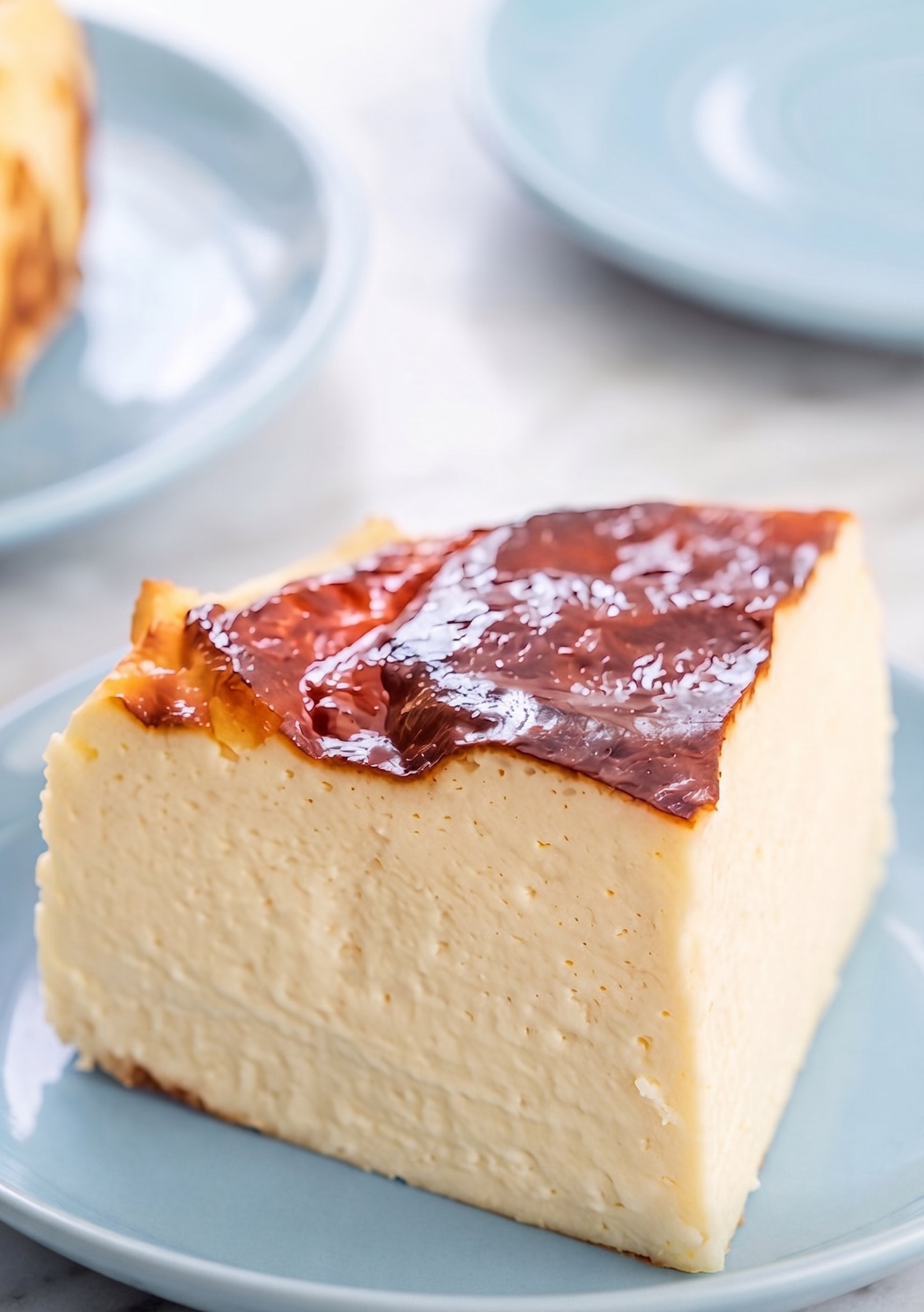
-
Prep Time: 10 minutes
-
Cook Time: 45-50 minutes
-
Total Time: 1 hour (plus chilling time of at least 4 hours)
-
Course: Dessert, Snack, Brunch
-
Cuisine: Modern European, Healthy Fusion
-
Yields: 1 (8-inch) round cake (8-10 servings)
-
Intensity / Skill Level: Very Easy
Ingredients
To create this creamy masterpiece, you will need the following pantry staples and fresh ingredients. We focus on whole-food ingredients and a modern, calorie-free sweetener to keep it completely sugar-free.
The Base and Creamy Center:
-
Greek Yogurt: 2 cups (450g), full-fat plain Greek yogurt (essential for the rich texture)
-
Cream Cheese: 1 block (8oz / 226g), softened to room temperature
-
Eggs: 4 large, room temperature
-
Sweetener: 3/4 cup (150g) of a granular or powdered sugar-free sweetener (like Erythritol, Monk Fruit, or Xylitol)
-
Cornstarch or Arrowroot Powder: 3 tablespoons (This gives the cake its structure and “set”)
-
Vanilla Extract: 1 tablespoon (Use a good quality extract for the best flavor)
-
Lemon Juice: 1 tablespoon (Freshly squeezed, to brighten the flavors)
-
Lemon Zest: 1 teaspoon (From the same lemon)
-
Salt: 1/4 teaspoon (To balance the sweetness)
Optional Toppings (Sugar-Free):
-
Fresh berries (strawberries, raspberries, blueberries)
-
A dusting of powdered Erythritol or Monk Fruit
-
A few sprigs of fresh mint
Step-by-Step Instructions
This recipe is designed to be foolproof. The key is to ensure your ingredients (especially the cream cheese and eggs) are at room temperature before you begin. This ensures a smooth, lump-free batter.
Step 1: Prepare Your Equipment
-
Preheat your oven to 350°F (175°C).
-
Grease an 8-inch (20cm) round springform pan well with butter or coconut oil. Line the bottom and sides with parchment paper. This is crucial for easy removal.
Step 2: Create the Creamy Base
-
In a large mixing bowl, place the softened cream cheese and the sugar-free sweetener.
-
Using an electric hand mixer (or a stand mixer with the paddle attachment), beat the mixture on medium-low speed until it is completely smooth, creamy, and no lumps of cream cheese remain. This will take about 2-3 minutes. Scrape down the sides of the bowl as needed.
Step 3: Add the Yogurt and Wet Ingredients
-
To the cream cheese mixture, add the Greek yogurt, vanilla extract, lemon juice, lemon zest, and salt.
-
Continue to mix on medium speed until all ingredients are fully incorporated and the mixture is uniform and smooth.
Step 4: Incorporate the Eggs
-
Crack the eggs into the batter one at a time, mixing well after each addition. Beat only until the egg is just combined; do not overmix at this stage, as it can incorporate too much air and cause the cake to crack.
Step 5: Thicken the Batter
-
Finally, sprinkle the cornstarch (or arrowroot powder) over the batter.
-
Mix on low speed just until the cornstarch is fully worked in.
Step 6: Bake the Cake
-
Pour the smooth batter into the prepared springform pan. Give the pan a gentle tap on the counter to release any large air bubbles.
-
Place the pan on the middle rack of your preheated oven.
-
Bake for 45-50 minutes. The cake is done when the edges are set and golden brown, but the center still has a slight jiggle to it (like Jell-O). If you insert a toothpick into the center, it should come out with a few moist crumbs, but not wet batter.
-
Note: Avoid opening the oven door during the first 30 minutes of baking, as a sudden drop in temperature can cause the cake to sink.
Step 7: The Gentle Cooling Process (Preventing Cracks)
-
Once the baking time is up, turn off the oven, but do not remove the cake. Leave the cake inside the oven with the door slightly ajar (you can prop it open with a wooden spoon) for 1 hour. This gradual cooling process is the secret to preventing a cracked surface.
-
After 1 hour, remove the cake from the oven and let it cool completely on a wire rack at room temperature.
Step 8: Chill to Perfection
-
Once fully cooled, cover the pan with plastic wrap and transfer it to the refrigerator. Chill for at least 4 hours, or preferably overnight. This is not just to serve it cold; the chilling time allows the cake to set completely, giving it that dense, creamy, cheesecake-like texture we love.
-
Once chilled, run a thin knife around the edge of the cake before carefully releasing the springform pan’s sides. Peel away the parchment paper.
Step 9: Serve
-
Slice the cold cake using a sharp knife that has been dipped in hot water and wiped dry before each cut for clean, perfect slices.
-
Serve plain, or top with a generous handful of fresh berries and a light dusting of powdered sugar-free sweetener. Enjoy!
Chef’s Pro Tips for Success
-
Room Temperature is Key: Make sure your cream cheese and eggs are truly at room temperature. If your cream cheese is too cold, it will remain in small lumps, which will not bake out and will result in a grainy texture.
-
Use Full-Fat Products: For the creamiest, most satisfying result, do not use low-fat or fat-free cream cheese or yogurt. The fat is essential for the proper texture and mouthfeel of this cake.
-
Don’t Overmix Once Eggs Are In: Overmixing after the eggs are added can whip too much air into the batter. While this is good for a sponge cake, for a dense, creamy cake like this, it can cause it to rise too quickly and then fall and crack. Mix only until the egg is just blended in.
-
Use a Springform Pan: This is non-negotiable. The delicate, creamy nature of this cake makes it nearly impossible to remove from a standard cake pan without it breaking.
-
The “Jiggle Test”: Don’t be afraid of a wobbly center when you take the cake out of the oven. A slight jiggle is perfect. The cake will continue to firm up significantly as it cools and then chills in the refrigerator. If you bake it until it is completely firm, it will likely end up dry.
-
Parchment Paper is Your Friend: Don’t skip lining the pan with parchment paper. It guarantees a clean release and makes moving the cake from the pan’s base to a serving platter incredibly easy.
Nutritional Information
Note: Values are estimated per serving based on a recipe yielding 10 equal slices. This analysis is a general guideline and may vary based on the specific brands of ingredients you use.
-
Calories: 195 kcal
-
Total Fat: 14g
-
Saturated Fat: 8g
-
Cholesterol: 135mg
-
Sodium: 160mg
-
Total Carbohydrates: 7g
-
Dietary Fiber: 0g
-
Sugars: 4g (Naturally occurring from the yogurt and eggs)
-
Sugar Alcohols (Net Carbs): 0g (Depending on the sweetener used, but generally non-impact)
-
Protein: 10g