Preparation Time: 30 minutes
Bulk Fermentation Time: 4–6 hours
Proofing Time: 8–12 hours
Baking Time: 45 minutes
Total Time: Approximately 14–18 hours
Difficulty Level: Intermediate
Recipe Intensity: Moderate
Ingredients
- 500g bread flour
- 350g water, room temperature
- 100g active sourdough starter
- 10g fine sea salt
Optional:
- Rice flour for dusting
- Extra flour for shaping
Equipment Needed
- Large mixing bowl
- Kitchen scale
- Dough scraper
- Banneton basket or bowl lined with a towel
- Dutch oven with lid
- Sharp bread lame or knife
- Cooling rack
Instructions
Step 1: Mix the Dough
In a large mixing bowl, combine the bread flour and water. Mix until no dry flour remains. The dough will look shaggy and rough.
Cover the bowl and let it rest for 30 minutes. This process, called autolyse, allows the flour to fully hydrate and helps develop gluten naturally.
Step 2: Add Starter and Salt
After the autolyse period, add the active sourdough starter and sea salt.
Mix thoroughly using your hands or a dough whisk until the ingredients are fully incorporated. The dough should feel sticky but manageable.
Cover the bowl and allow it to rest for 30 minutes.
Step 3: Stretch and Fold
To strengthen the dough, perform a series of stretch-and-fold sessions.
Wet your hands slightly, grab one side of the dough, stretch it upward, and fold it over itself. Rotate the bowl and repeat on all four sides.
Perform this process every 30 minutes for a total of four rounds.
The dough will gradually become smoother, stronger, and more elastic with each fold.
Step 4: Bulk Fermentation
Cover the bowl and allow the dough to ferment at room temperature for 4–6 hours.
The exact time depends on the temperature of your kitchen. During this stage, the dough should increase in volume by approximately 50–75%.
Signs that fermentation is complete include:
- Puffy appearance
- Visible air bubbles
- Smooth surface
- Slight jiggle when the bowl is shaken
Step 5: Pre-Shape the Dough
Lightly flour your work surface.
Gently turn the dough out onto the counter and shape it into a loose round ball.
Allow it to rest uncovered for 20 minutes. This resting period helps relax the gluten and makes final shaping easier.
Step 6: Final Shape
Using a dough scraper, shape the dough into a tight round boule or oval batard.
Create surface tension by pulling the dough toward yourself while rotating it.
A properly shaped loaf helps achieve excellent oven spring and a beautiful final shape.
Step 7: Cold Proof
Place the shaped dough seam-side up into a floured banneton basket.
Cover with a reusable cover or plastic wrap.
Transfer to the refrigerator and proof overnight for 8–12 hours.
Cold proofing develops the characteristic sourdough flavor and improves scoring and handling.
Step 8: Preheat the Oven
The following day, place a Dutch oven with its lid inside the oven.
Preheat the oven to 250°C (480°F) for at least 45 minutes.
A thoroughly heated Dutch oven creates steam and helps produce a professional-quality crust.
Step 9: Score the Dough
Carefully remove the dough from the refrigerator.
Turn it onto parchment paper or a lightly floured surface.
Using a bread lame or sharp knife, make one deep slash across the top approximately 1 cm deep.
Scoring controls how the bread expands during baking and creates an attractive artisan appearance.
Step 10: Bake
Carefully transfer the dough into the hot Dutch oven.
Cover with the lid and bake for 20 minutes at 250°C (480°F).
Remove the lid and continue baking for an additional 20–25 minutes at 230°C (445°F).
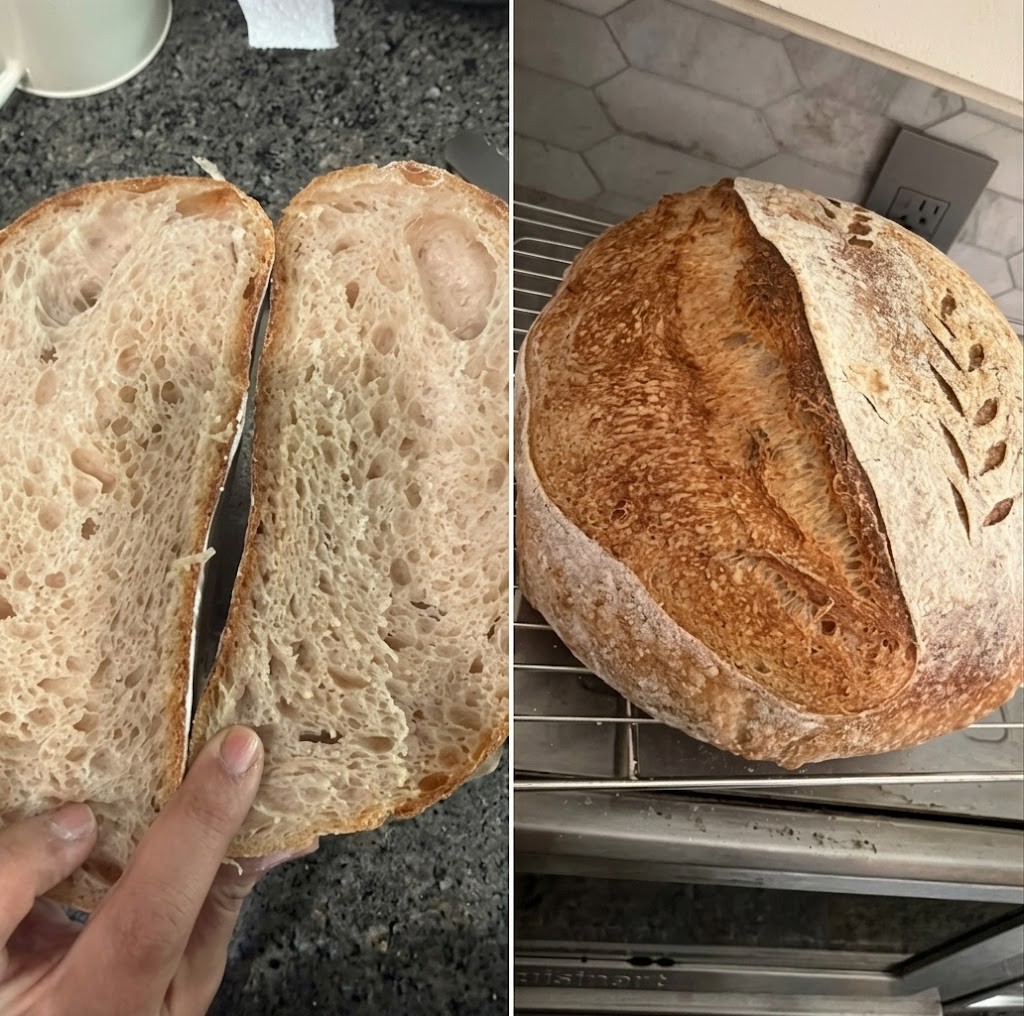
The loaf should develop a deep golden-brown crust and sound hollow when tapped on the bottom.
Step 11: Cool Completely
Remove the bread from the Dutch oven and place it on a cooling rack.
Allow it to cool for at least one hour before slicing.
Although it may be tempting to cut into it immediately, cooling allows the crumb structure to set properly and prevents a gummy texture.
Baker’s Tips for Success
- Use an active starter that has doubled in size before mixing.
- Measure ingredients with a kitchen scale for accuracy.
- Avoid adding excessive flour during shaping.
- Cold proofing enhances flavor and improves crust development.
- Allow the loaf to cool completely before slicing.
- Practice patience; sourdough baking improves with experience.
Serving Suggestions
Classic Artisan Sourdough Bread pairs wonderfully with:
- Butter and sea salt
- Olive oil and balsamic vinegar
- Soups and stews
- Cheese boards
- Avocado toast
- Gourmet sandwiches
Its chewy texture and complex flavor make it versatile enough for breakfast, lunch, or dinner.
Storage Instructions
Store the bread at room temperature in a paper bag or bread box for up to 3 days.
For longer storage, slice and freeze for up to 3 months. Reheat slices directly from frozen in a toaster or oven.
Avoid storing sourdough in the refrigerator, as it can cause the bread to dry out more quickly.
Nutrition Information
Per Slice (Based on 12 Slices)
- Calories: 165
- Carbohydrates: 32g
- Protein: 5g
- Fat: 1g
- Saturated Fat: 0g
- Fiber: 2g
- Sugar: 0g
- Sodium: 195mg
- Cholesterol: 0mg